Blog
A Homeowner’s Guide to Insulating the Rim Joist

That sneaky draft you feel slithering across your floorboards isn’t your imagination. Chances are, it’s coming from a seriously overlooked spot in your home’s foundation. Insulating the rim joist is one of the most effective, high-impact fixes you can make to stop this energy leak cold, instantly making your home more comfortable and cutting down on those painful heating bills.
Why Your Rim Joist Is a Hidden Energy Drain
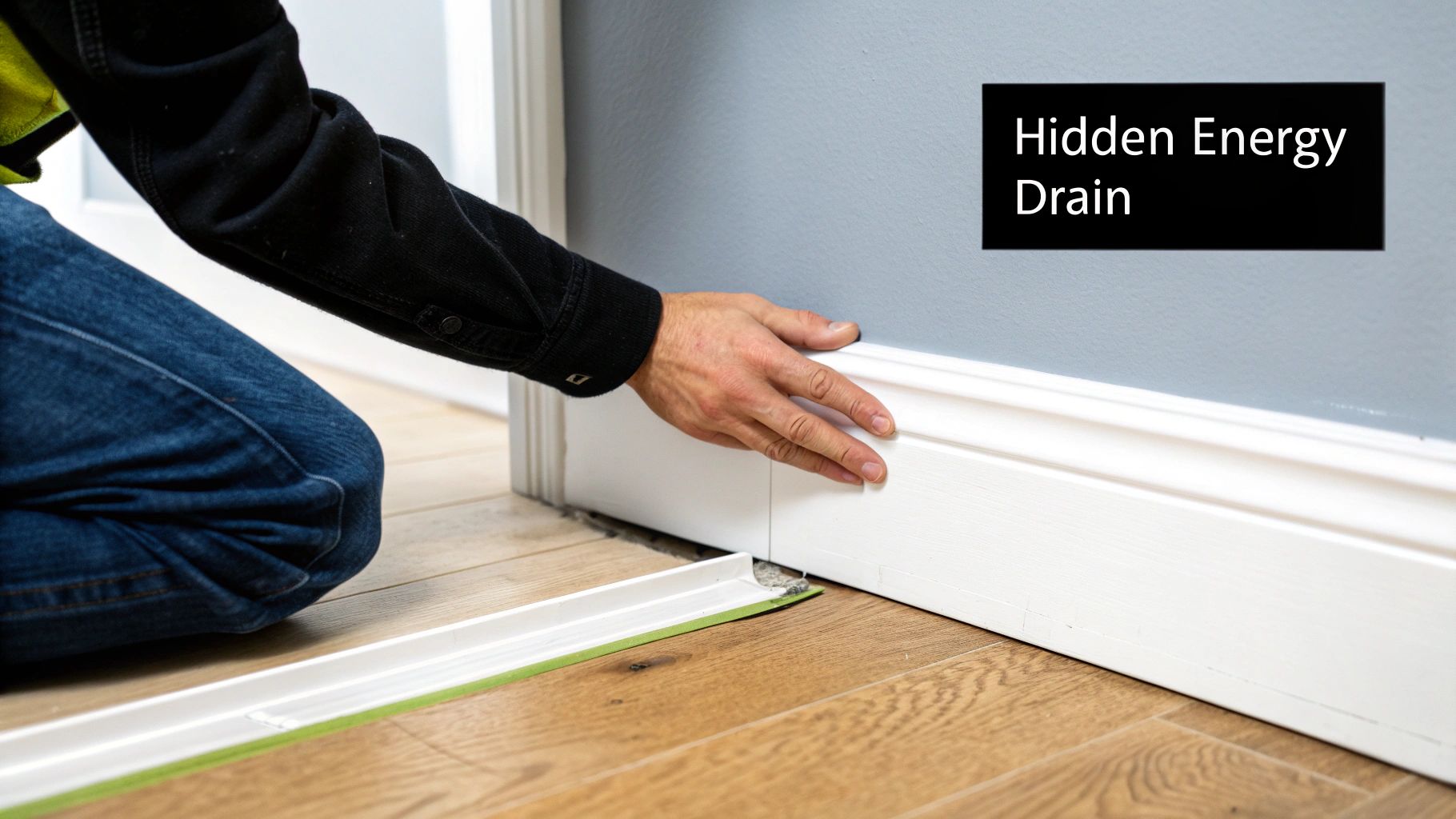
When most people think “insulation,” they picture fluffy pink stuff in the attic. But one of the biggest energy vampires in your home is hiding in plain sight, right where your house meets its foundation. We’re talking about the rim joist—that band of wood that makes up the outer frame of your floor system, sitting directly on the concrete foundation wall.
Think of it as the weak link in your home’s thermal armor. It’s just a thin piece of wood separating your cozy, air-conditioned living space from the brutal temperatures outside. In the winter, it acts like a radiator in reverse, constantly bleeding expensive heat out of your home. And in the summer, especially here in South Florida, it’s an open invitation for scorching heat and sticky humidity to creep inside.
The Real Impact of a Bare Rim Joist
Leaving this area uninsulated creates a ton of problems that homeowners often blame on old windows or an overworked AC unit. The consequences are real, and they show up on your utility bill.
- Those Pesky Drafts and Cold Floors: This is the number one complaint we hear. Rooms feel drafty, especially along the exterior walls. Cold air is heavy, so it sinks and pools across your floors, making the whole first level feel chilly and uncomfortable.
- Wasted Energy and Sky-High Bills: Your HVAC system has to run constantly just to keep up with the heat that’s escaping. It’s a never-ending cycle of heating (or cooling) air only to have it pour out through the foundation. This directly translates to wasted energy and inflated utility bills, month after month.
- A Welcome Mat for Moisture and Mold: In our humid climate, warm, moist air from outside hits that cooler, uninsulated rim joist and condenses. This creates the perfect breeding ground for mold, wood rot, and pests. It’s a triple threat that can damage your home’s structure and tank your indoor air quality.
Key Takeaway: An uninsulated rim joist isn’t a small quirk; it’s a major thermal bridge that sabotages your home’s efficiency and comfort. It’s a surprisingly small area that causes a massive headache.
The Numbers Don’t Lie
This energy loss isn’t just a feeling—it’s a measurable fact. For a typical home, properly air sealing and insulating the rim joist can slash the entire house’s heating load by a whopping 3–8%.
That might not sound like much, but it adds up to hundreds of kilowatt-hours in energy savings every year. That makes this project one of the best-value insulation jobs you can tackle. For more on how the global insulation market is driving energy savings, check out these insights.
Choosing The Right Insulation For Your Rim Joist
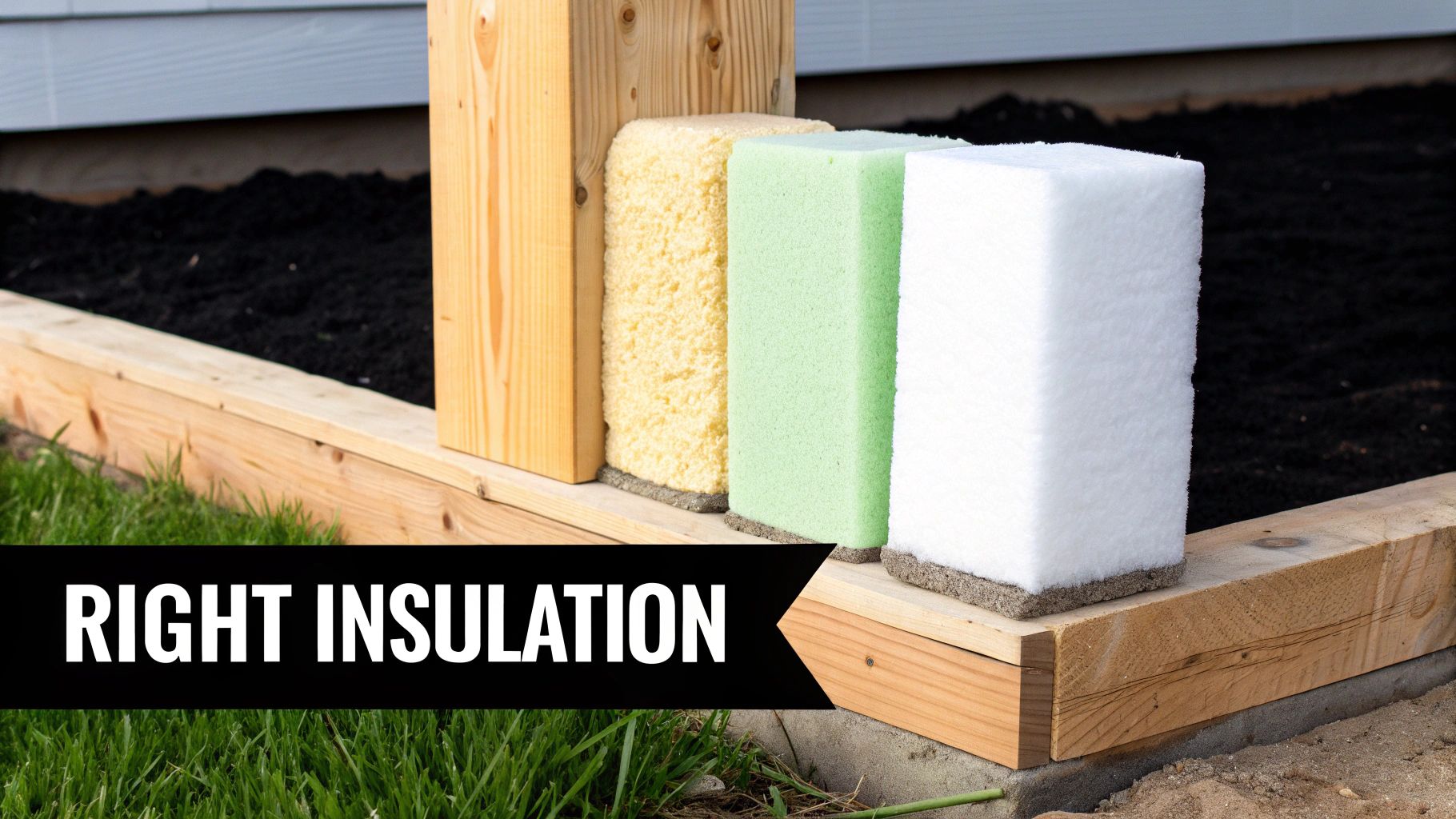
When you’re insulating a rim joist, the material you pick matters a whole lot more than in other spots in your home. This isn’t just about R-value; it’s about creating a complete, impenetrable barrier against both air and moisture. The unique challenges of this space demand a solution that goes way beyond just trapping heat.
The three main contenders for this job are spray foam, rigid foam boards, and traditional fiberglass batts. While each has its place, two of them clearly outperform the other for this specific task. Let’s break down why.
Spray Foam: The Airtight Champion
Spray polyurethane foam (SPF) is, without a doubt, the gold standard for sealing and insulating rim joists. We apply it as a liquid that expands on contact, filling every single crack, gap, and irregularity. This creates a monolithic, airtight seal that’s simply impossible to replicate with any other material. That air-sealing power is its biggest advantage.
There are two types of spray foam, and knowing the difference is key. For a deeper dive, you can explore our in-depth comparison of spray foam vs. blown-in insulation, which touches on similar air-sealing principles.
- Closed-Cell Spray Foam: This is our top recommendation for rim joists, especially in a humid climate like South Florida. It’s dense, rigid, and completely impermeable to moisture. It acts as an all-in-one air barrier, insulator, and vapor barrier, stopping condensation from forming on the cool wood surfaces.
- Open-Cell Spray Foam: While more budget-friendly and an excellent sound dampener, open-cell foam is vapor-permeable, meaning moisture can pass through it. It still creates a fantastic air seal, but it isn’t the best choice where direct contact with potential moisture is a concern.
Rigid Foam Board: The DIY Favorite
For homeowners looking to tackle this project themselves, rigid foam board is a solid alternative. These stiff panels, made from materials like expanded polystyrene (EPS) or extruded polystyrene (XPS), offer good insulating properties.
The key to a successful rigid foam install is the “cut-and-cobble” method. You have to meticulously measure and cut each board to fit snugly between the floor joists. The real work, though, comes in sealing every single edge and seam with canned spray foam or a high-quality caulk to stop air leaks in their tracks.
Pro Tip: If you go the rigid foam route, do not skip the sealing step. An unsealed foam board installation is little better than no insulation at all. Drafts will just bypass the boards right through the gaps you left behind.
Why You Should Avoid Fiberglass Batts Here
While fiberglass is a familiar sight in attics and walls, it’s a terrible choice for rim joists. It acts more like an air filter than an air barrier. Warm, moist air from inside your home easily passes through the fluffy fibers, hits the cold rim joist, and condenses. This traps moisture directly against the wood—a perfect recipe for mold and rot.
This fundamental flaw makes it completely unsuitable for this critical boundary. Proper rim joist insulation has to stop airflow, period. The global spray-foam insulation market, valued at around USD 3.1 billion, keeps growing because it excels at this very task in a way traditional materials just can’t. You can see how popular it’s becoming by checking out the latest foam insulation market insights.
Comparing Rim Joist Insulation Materials
To make the choice clearer, here’s a quick side-by-side look at how the most common materials stack up for this specific job. Pay close attention to air sealing and moisture control—these are the factors that matter most at the rim joist.
| Material | R-Value (Per Inch) | Air Sealing Power | Moisture Control | Best For |
|---|---|---|---|---|
| Closed-Cell SPF | R-6.5 to R-7 | Excellent | Excellent (Vapor Barrier) | Homeowners in humid climates (like Florida) seeking the highest performance and total moisture protection. |
| Open-Cell SPF | R-3.5 to R-3.8 | Excellent | Fair (Vapor Permeable) | Drier climates or situations where sound dampening is also a priority and moisture isn’t a primary concern. |
| Rigid Foam (XPS/EPS) | R-4 to R-5 | Good (If Sealed) | Good (Vapor Retarder) | DIY enthusiasts who are meticulous about sealing every single seam and gap to create an air barrier. |
| Fiberglass Batts | R-3.1 to R-3.7 | Poor | Poor (Traps Moisture) | Almost never recommended for rim joists due to its inability to stop air movement, leading to condensation. |
Ultimately, while rigid foam can work with enough effort, closed-cell spray foam provides a truly permanent, worry-free solution that addresses air leakage, insulation, and moisture control all in one step.
How to Prepare Your Rim Joists for Insulation
Think of this part as the essential pre-flight checklist. The best insulation in the world won’t do its job if it’s slapped over a dirty, leaky, or damaged surface. Proper prep work is completely non-negotiable for insulating a rim joist; it’s what guarantees a perfect bond and a truly effective air seal.
Before you even think about cutting foam board or calling us, your first job is simple: clean the entire area. Grab a shop vacuum and a stiff brush and get rid of all the dust, cobwebs, and any loose junk clinging to the wood. This step is critical. You need your sealant or spray foam to stick directly to the joist itself, not to a layer of grime.
Inspect for Problems Before You Cover Them Up
Once the surface is clean, it’s time to play detective. Get a good, bright flashlight and take a close look at the wood and the foundation it rests on. You’re hunting for any underlying issues that absolutely must be fixed before they get sealed away behind insulation.
- Signs of Moisture: Look for any dark stains, water marks, or wood that feels soft and punky. These are major red flags for water getting in. Covering up a moisture problem is just asking for mold and structural rot down the road.
- Pest Activity: Keep an eye out for that sawdust-like stuff called “frass” (termite droppings), little mud tubes running along the foundation, or any chewed-up wood. Pests love the dark, undisturbed space around a rim joist, and sealing them in will only make the situation a whole lot worse.
- Existing Air Gaps: Pay close attention to where pipes, wires, or vents punch through the rim joist. You’ll almost always find noticeable gaps around these penetrations, and they are huge sources of air leakage.
If you find evidence of active water leaks or serious pest damage, stop right there. You have to call a plumber or a pest control expert to resolve those problems first. Insulating over an active issue is a costly mistake you don’t want to make.
The Critical Step of Air Sealing
After you’ve confirmed the area is clean, dry, and structurally sound, the next focus is sealing every last crack and gap. This is the step that takes your insulation job from just “decent” to truly exceptional. Use a high-quality acrylic latex caulk or canned spray foam to meticulously seal all those penetrations you found.
A common mistake is thinking the insulation itself will handle all the air sealing. It won’t. Sealing the gaps around pipes and where the sill plate meets the foundation before you insulate creates a redundant, bulletproof barrier. It maximizes the performance of the entire system.
This pre-sealing step is absolutely essential for creating a truly airtight barrier. It’s the foundation of a high-performance insulation strategy and a core part of what makes a thermal envelope effective. To see how this fits into a complete, whole-home approach, check out how our Airtight Comfort System targets these critical leakage points.
Taking the time to prep properly is the only way to guarantee your investment in insulating the rim joist pays off for years to come.
Alright, with all the prep work squared away, it’s time for the fun part: actually installing the insulation. This is where you’ll start to see a real difference in your home’s comfort, but getting the technique right is just as critical as picking the right material.
Whether you’ve opted for rigid foam board or a DIY spray foam kit, the mission is the same: create a seamless, airtight seal that kills drafts and stops condensation in its tracks. Let’s walk through how to tackle both methods like a pro, pointing out the little details that make a huge difference.
Remember, that prep work is the foundation for everything that follows. This simple visual is a great reminder of the essentials before a single piece of insulation goes in.

A good insulation job is about more than just R-value. It’s about creating a perfectly clean and sealed surface for the insulation to adhere to, leaving no path for air or moisture to sneak through.
The Cut-and-Cobble Method with Rigid Foam Board
For a lot of DIY folks, rigid foam board is the top pick. It’s budget-friendly, easy to find, and does a fantastic job when you install it correctly. We call this the “cut-and-cobble” method because you’re essentially cutting custom pieces to fit into each bay between the joists.
First things first: get out your tape measure. Measure the height and width of every single joist bay. Don’t just measure one and assume they’re all identical—trust me, they’re not. Variations are the norm in construction.
With your measurements in hand, transfer them to a sheet of rigid foam. A sharp utility knife or a specialty foam board knife works best for cutting. You’re aiming for a snug, friction-fit. The board should hold itself in place without you having to jam it in and compress the edges.
Crucial Tip: A snug fit is a great start, but the sealant does the real heavy lifting. Once each piece of foam is in place, you have to go back and meticulously seal the entire perimeter with canned spray foam or a quality, flexible caulk. This is the non-negotiable step that turns a bunch of foam pieces into a true air barrier.
Think of it this way: the foam board is the brick, but the sealant is the mortar. Without that mortar, air just streams right through the gaps, completely defeating the purpose.
Using a DIY Spray Foam Insulation Kit
If you want a truly seamless, monolithic seal, nothing out there beats spray foam. While calling in a professional is the best way to ensure perfect results and safety, DIY spray foam kits have brought this technology within reach for the hands-on homeowner.
Safety is absolutely non-negotiable when you’re working with these two-part kits. The chemicals are no joke before they cure.
Here’s your essential safety checklist:
- A properly fitted respirator with organic vapor cartridges. A simple dust mask won’t cut it.
- Full-coverage clothing—long sleeves, pants, and a hood. Disposable coveralls are perfect for this.
- Safety goggles to protect your eyes.
- Chemical-resistant gloves to keep the product off your skin.
Before you start spraying, get the area ventilated. Open windows, or better yet, use a fan to push fumes outside. You’ll also want to drape plastic sheeting over anything nearby you don’t want coated in foam. Overspray is a nightmare to remove.
When you’re ready, apply the foam in a steady, sweeping motion. You’re aiming for a thickness of about one to two inches. The foam expands like crazy to fill the whole cavity, so be careful not to overfill it. The goal is even, consistent coverage that completely seals the rim joist and the wood around it. Let it cure completely according to the kit’s instructions before you touch it.
Insulating Rim Joists in Hot and Humid Climates
When you’re insulating a rim joist in a place like South Florida, the rules of the game change completely. Up north, the main goal is to keep frigid winter air out. Down here, your primary enemy is humidity, and your whole strategy has to be built around managing moisture.
The air in our region is just thick with it. When that warm, humid air finds its way into your crawl space or basement and hits the cooler surface of the rim joist—often chilled by your home’s air conditioning—it instantly condenses.
This turns a critical structural component of your home into a perfect breeding ground for mold, mildew, and wood rot. It happens faster than you’d think.
Why Air Permeability Is a Deal-Breaker
This is exactly why traditional fiberglass batts are a terrible choice for insulating rim joists in our climate. It’s air-permeable, meaning it does absolutely nothing to stop that moisture-heavy air from reaching the wood.
In fact, it just makes the problem worse. The fiberglass essentially acts like a damp sponge held against your home’s foundation, trapping moisture and accelerating decay.
To win this battle, you need an insulation material that is air-impermeable. It has to create a complete, monolithic seal that stops airflow dead in its tracks.
This is where closed-cell spray foam becomes the undisputed champion.
- It forms an airtight seal: Closed-cell foam expands to fill every tiny crack and crevice, leaving no path for humid air to penetrate.
- It’s a vapor barrier: Unlike other materials, it’s completely waterproof. It doesn’t just slow down moisture; it stops it cold, preventing condensation from ever forming on the rim joist itself.
By creating a perfect air and vapor seal in one application, closed-cell spray foam effectively eliminates the condensation risk that plagues homes in hot, humid climates. It’s not just insulation; it’s foundation protection.
Part of a Bigger Strategy
Effectively insulating the rim joist is a huge step, but it’s often just one piece of a much larger puzzle. Here in South Florida, this project works best as part of a comprehensive crawl space encapsulation plan.
Encapsulation involves sealing the entire crawl space—vents, walls, and floor—with a durable vapor barrier. When you combine that with a properly insulated rim joist, you transform a damp, dirty crawl space into a clean, dry, and conditioned part of your home.
This approach drastically improves your indoor air quality, helps with pest control, and creates a more stable, comfortable environment throughout the entire house. Think of insulating your rim joist as the critical first move in creating a healthier home from the ground up.
Common Questions About Rim Joist Insulation
When it comes to insulating rim joists, a few questions always pop up. Here are the answers we give homeowners in South Florida to help clear things up.
How Much Does It Cost to Insulate a Rim Joist?
The price tag really depends on the size of your house and the material you go with. If you’re tackling it yourself with rigid foam board, you might spend a few hundred dollars on materials.
On the other hand, professional closed-cell spray foam installation is a bigger investment, usually landing between $5 to $10 per square foot. While it costs more upfront, the complete air and moisture seal you get from spray foam pays for itself in energy savings and peace of mind.
Can I Just Use Fiberglass Batts for My Rim Joist?
We strongly advise against using fiberglass batts in this specific spot. The problem is, fiberglass insulation doesn’t stop airflow. In our humid climate, that means warm, damp air moves right through it and hits the cooler wood of the rim joist, where it condenses.
This process traps moisture right where you don’t want it—against the wood. It’s a perfect recipe for mold and rot. To make fiberglass work, you’d need to add a separate, meticulously installed air barrier, which is a lot more hassle and far less reliable than just using an all-in-one solution like closed-cell spray foam from the get-go.
Is Insulating the Rim Joist a Good DIY Project?
For the experienced DIYer, absolutely. Installing rigid foam board is a manageable project if you have the patience for precise cuts and are diligent about sealing every single seam with canned foam. You can also find DIY spray foam kits, but they require strict safety measures—we’re talking a proper respirator and excellent ventilation.
The biggest difference people feel after sealing their rim joist is a huge improvement in comfort. Drafts disappear, and floors stay warmer, making the whole house feel more stable.
Beyond just warmth, proper insulation also quiets things down. You can learn more about how certain materials act as an effective insulation and sound barrier in our guide. But for the best possible seal, especially in a larger or more complicated crawlspace, hiring a professional is the only way to guarantee the job is done right.
Ready to stop energy leaks and protect your foundation from moisture? The team at Airtight Spray Foam Insulation has the experience to seal your rim joists perfectly, creating a more comfortable and efficient home. Request your free quote today and feel the difference.