Blog
Protect Your Home with closed cell spray foam insulation waterproof


Yes, closed-cell spray foam insulation is functionally waterproof when it's installed correctly. It creates a solid, non-permeable barrier that stops both liquid water and moisture vapor in its tracks.
While the technically precise term is "water-resistant," in the real world, its performance is what matters. It effectively prevents water from getting through, making it one of the most powerful tools we have against leaks and humidity.
Understanding How Closed-Cell Spray Foam Is Waterproof
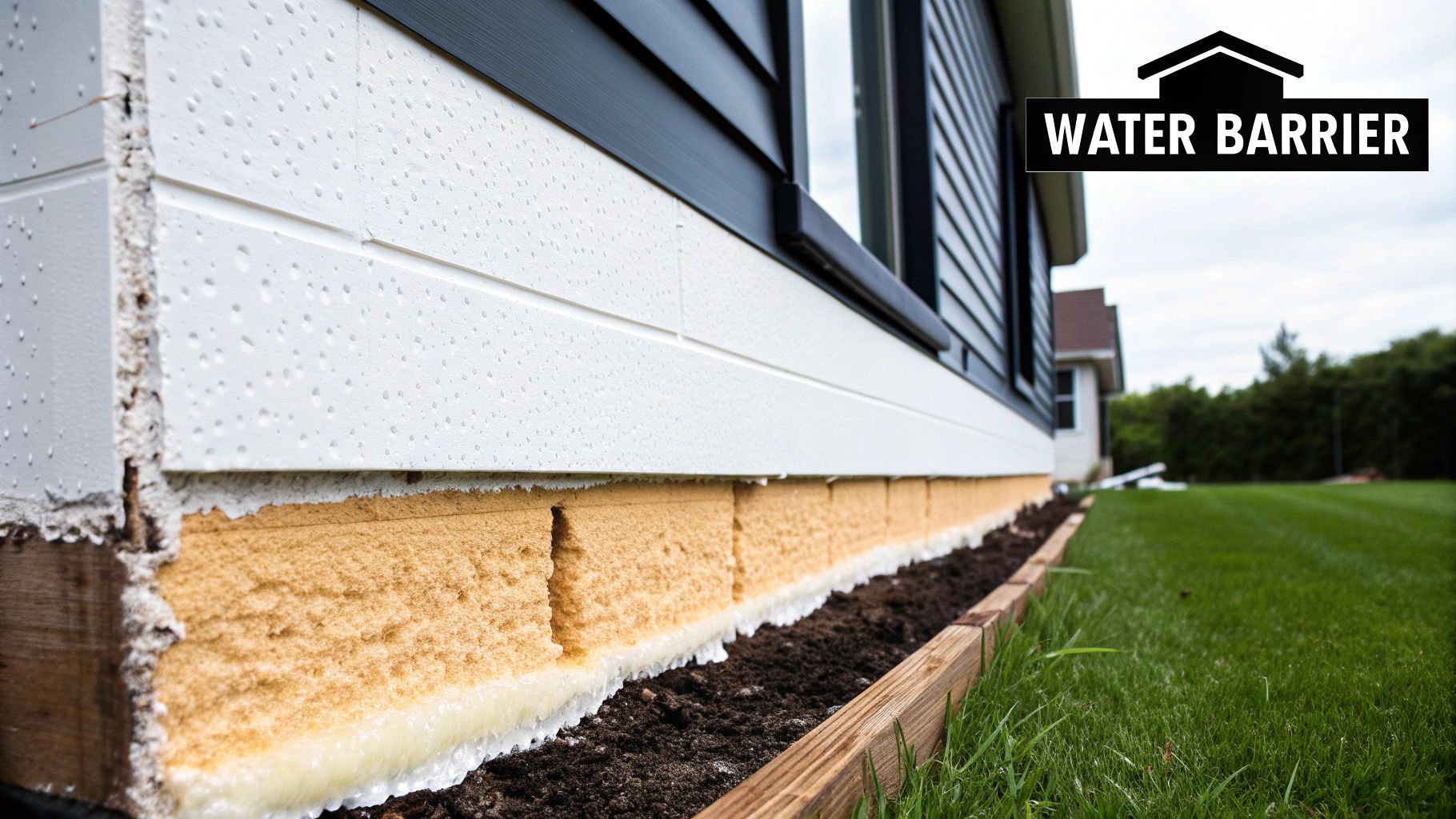
When we talk about something being "waterproof," most people think of a material you could submerge in a pool without a problem. For closed-cell spray foam, being waterproof means it acts as a formidable, seamless barrier that simply won't let water pass through it.
Think of it this way: a standard raincoat will keep you dry for a while, but it can eventually get saturated in a downpour. Closed-cell foam is more like the hull of a boat—it's engineered to completely reject water at its surface.
This difference is absolutely critical, especially here in South Florida where we deal with intense humidity and storm-driven rain. The magic is all in its cellular structure. Unlike open-cell foam, which is soft and spongy, closed-cell foam is made of countless tiny plastic cells that are completely sealed off from one another and packed together tightly. This dense, rigid structure leaves no interconnected pathways for water to wiggle its way through.
Why Its Structure Is Everything
The incredible performance of closed-cell spray foam as a water barrier comes down to its physical makeup. It doesn't just resist water; it actively blocks it. This gives your home a few huge advantages:
- Stops Moisture Intrusion: When applied, it creates a single, monolithic layer that seals every crack and gap. This is what stops wind-driven rain and humid air from getting into your walls, attic, or crawl space.
- Discourages Mold Growth: By cutting off the water supply, you're taking away the number one ingredient mold and mildew need to survive. The foam itself is an inert plastic, so it doesn't offer any organic food for mold to grow on.
- Adds Structural Strength: A fantastic side benefit is that the dense, rigid foam acts like a glue, bonding to framing and sheathing. This actually adds significant racking strength to walls and roof decks, helping your home stand up to high winds.
The bottom line is this: Closed-cell spray foam's non-permeable nature makes it a cornerstone of modern moisture management. It doesn't just insulate; it creates an all-in-one air, vapor, and water barrier with a single application.
To get a better sense of how different foams handle moisture, it's helpful to understand if expanding foam is waterproof in various forms. But when you need uncompromising defense against water, closed-cell is the undisputed champion for protecting your property.
For a quick reference, here’s a breakdown of its key waterproofing characteristics.
Waterproofing Properties of Closed Cell Spray Foam at a Glance
This table provides a snapshot of why closed-cell foam is so effective at managing moisture in and around your home.
| Property | Technical Detail | Real-World Benefit for Your Home |
|---|---|---|
| Water Absorption | Less than 0.3% by volume | Essentially does not soak up water, even in direct contact. |
| Permeability | Perm rating below 1.0 | Acts as a true vapor barrier, stopping humidity from passing through. |
| Air Sealing | Forms a monolithic air barrier | Blocks air leaks that can carry moisture into your wall cavities. |
| Cell Structure | 90%+ sealed, individual cells | There are no connected pathways for water to seep or wick through the material. |
Ultimately, these technical specs translate into a tougher, drier, and more resilient home that's better equipped to handle the elements.
Decoding Waterproof, Moisture Barrier, and Vapor Barrier
In the world of construction and home insulation, you’ll hear terms like "waterproof," "moisture barrier," and "vapor barrier" thrown around a lot. It’s easy to assume they all mean the same thing, but the differences are critical, especially in a humid, storm-prone place like South Florida.
Let's break it down with some simple analogies.
Think of something that's truly waterproof as a solid rubber boot. Its job is crystal clear: stop liquid water, period. You can step in a massive puddle, and your foot stays bone dry because the boot creates a solid shield against bulk water.
A moisture barrier is a bit different—think of it more like a high-tech rain jacket. It’s built to shed liquid water, like rain rolling off your back, but it's not always designed to handle water in its gaseous state (humidity).
Understanding the Role of a Vapor Barrier
This brings us to the most precise of the three: the vapor barrier. The best way to picture this is plastic wrap. When you cover a bowl of food, the wrap doesn't just stop spills; it stops air and water vapor from getting in or out, keeping the food from getting soggy or drying out.
A vapor barrier does the same thing for your home. It’s specifically designed to block the movement of water vapor—that invisible, gaseous moisture that travels right through most building materials. This is a huge deal. While a waterproof material stops an active leak, a vapor barrier prevents the slow, silent migration of humidity that causes condensation, mold, and rot inside your walls. You can dive deeper into how a proper vapor barrier in the ceiling is crucial for protecting your attic and the rest of your home.
Closed-cell spray foam insulation is a game-changer because it nails all three of these roles at once. It’s the rubber boot, the rain jacket, and the plastic wrap, all rolled into one seamless application. Its rigid, non-permeable structure of tiny sealed cells stops liquid water, airborne moisture, and water vapor dead in their tracks.
Creating a Complete Moisture Defense System
Because it’s such a triple-threat, closed-cell spray foam waterproofs and protects your home from multiple angles. It stops rainwater from getting in, blocks humid air from seeping into your wall cavities, and prevents damaging condensation from forming on cool surfaces inside your home.
This all-in-one performance makes it an incredibly effective tool for stopping moisture problems before they can even start. Of course, insulation is just one piece of the puzzle. While closed-cell foam creates a fantastic barrier, you still need smart moisture management, like ensuring proper ventilation in bathrooms to whisk away steam.
By pairing a rock-solid insulation barrier with good ventilation, you create a complete defense system. That integrated approach is the secret to protecting your home’s structural integrity and keeping your indoor air healthy for the long haul.
How Closed Cell Foam Protects Homes from Extreme Weather
When a hurricane or tropical storm is on the horizon, the wind is only half the battle. The real enemy is often the wind-driven rain—a relentless assault that pushes water into the tiniest cracks and crevices of your home.
This is where closed-cell spray foam changes the game. It acts as a powerful waterproofing agent by creating a rigid, seamless shield. Unlike old-school insulation that soaks up water like a sponge, this dense foam bonds directly to your home's sheathing and framing, literally gluing the whole structure together.
This creates a single, unbroken barrier with absolutely no seams or gaps for water to sneak through. Imagine it like a custom-molded, waterproof shell for your home, one built to stand up to the horizontal rain that extreme weather hurls at it. In one application, you get both high-performance insulation and an incredibly effective water barrier.
Starving Mold Before It Starts
Stopping active leaks is one thing, but closed-cell foam also takes on a more subtle threat in humid climates like ours: condensation. Warm, moist air is always looking for a way into your cooler, air-conditioned living space.
When that humid air hits a cold surface inside your walls—think of a metal stud or drywall chilled by the AC—it condenses into water droplets. This moisture creates the perfect breeding ground for mold and mildew.
Closed-cell spray foam shuts this process down completely. It forms an airtight seal that also acts as a non-permeable vapor barrier, preventing that warm, humid air from ever reaching the cooler interior surfaces.
By blocking this moisture migration, you're essentially starving mold of the water it needs to survive. It’s a proactive defense that protects not just your home's structure but your family's air quality, too.
Adding Strength When It Matters Most
Here’s a benefit that often flies under the radar: closed-cell spray foam adds serious structural integrity to your home. Its dense, rigid nature acts like a powerful construction adhesive, bonding studs, joists, and sheathing into one solid, reinforced unit.
How much of a difference does it make? Studies have shown it can increase the racking strength of walls by up to 300%.
During a high-wind event, that extra rigidity helps your walls and roof deck fight back against the immense pressures that can tear a home apart. It’s an added layer of defense that can mean the difference between keeping your roof on and your walls standing. You can see how this same technology is applied in our guide to spray polyurethane foam roofing systems.
The global market for closed-cell spray foam was valued at $451 million and is expected to climb to $691 million by 2032, largely because of a push for stricter, more resilient building codes.
While spray foam is a fantastic line of defense against wind-driven rain and humidity, it's not a solution for rising floodwaters. For comprehensive protection, you also need to focus on external strategies. Understanding how to protect your property by addressing flood risk through proper grading is a critical piece of the puzzle. Combining a well-sealed home with smart landscaping provides the most robust defense possible.
Choosing Between Open Cell and Closed Cell Foam for Moisture
When you're trying to protect your home from moisture, the decision between open-cell and closed-cell spray foam isn't just a minor detail—it's one of the most critical choices you'll make. They might both be "spray foam," but when water enters the picture, they couldn't be more different. Getting this right is fundamental to your home's long-term health.
Let's use a simple analogy to cut through the jargon.
Think of open-cell foam as a big, fluffy kitchen sponge. Its cells are interconnected and "open," so it readily soaks up and holds onto water. If it gets wet, it becomes a saturated mess, losing its insulating power and trapping moisture right up against your home's framing. That’s a recipe for rot and mold.
Now, imagine closed-cell spray foam as a rigid, solid plastic board. Its cells are completely sealed off from one another, packed tightly together. Water simply can't get in. It doesn't absorb moisture; it actively blocks it, forming a tough, non-permeable shield.
Open Cell vs Closed Cell Foam for Moisture Resistance
This fundamental difference in cell structure is why closed-cell foam is the only real contender for any area that might see moisture. Let's break down exactly how they stack up against each other.
| Feature | Open-Cell Spray Foam | Closed-Cell Spray Foam |
|---|---|---|
| Cell Structure | Spongy and interconnected, allowing water absorption. | Rigid and sealed, blocking water completely. |
| Density | Low density (approx. 0.5 lbs per cubic foot). | High density (approx. 2.0 lbs per cubic foot). |
| Vapor Permeability | Highly permeable; lets water vapor pass through easily. | A true vapor barrier (perm rating <1.0). |
| Structural Strength | Flexible and soft; offers no structural reinforcement. | Rigid and strong; adds significant strength to walls. |
As you can see, from its density to its ability to stop water vapor in its tracks, every aspect of closed-cell foam is built for superior moisture defense.
This diagram helps visualize how a home's defenses against wind, rain, and moisture all work together, with closed-cell foam acting as a key fortifying layer.
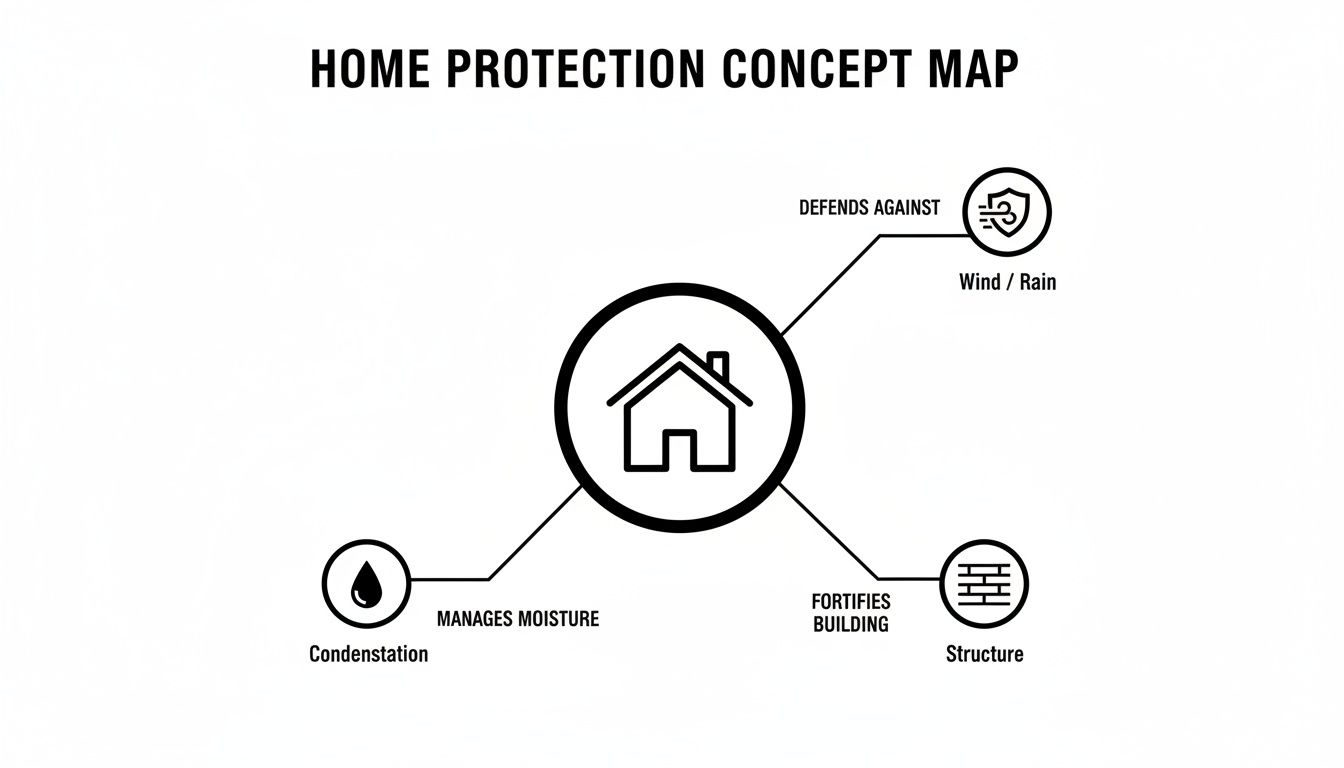
A truly resilient home doesn't just block rain; it manages internal humidity and strengthens the building envelope itself.
The Clear Winner for Waterproofing
When it comes down to it, the choice is clear. For any job where a bulletproof moisture barrier is a must—think crawl spaces, exterior walls, or attics in our humid coastal climate—closed-cell foam is the only way to go. Its unique ability to be an insulator, air barrier, and vapor barrier all in one makes it a powerhouse for protecting a building.
A Quick Word of Caution: Open-cell foam certainly has its place, primarily for soundproofing interior walls in dry parts of a home. But it should never be used where water or humidity is a potential issue. For uncompromising protection, only closed-cell spray foam delivers the performance you need.
The combination of a high R-value, added structural integrity, and near-perfect water resistance gives you a level of protection other insulation materials just can't touch. It’s an essential part of building a home that can truly stand up to the elements, especially in a place like South Florida.
Where to Use Waterproof Insulation for Maximum Protection
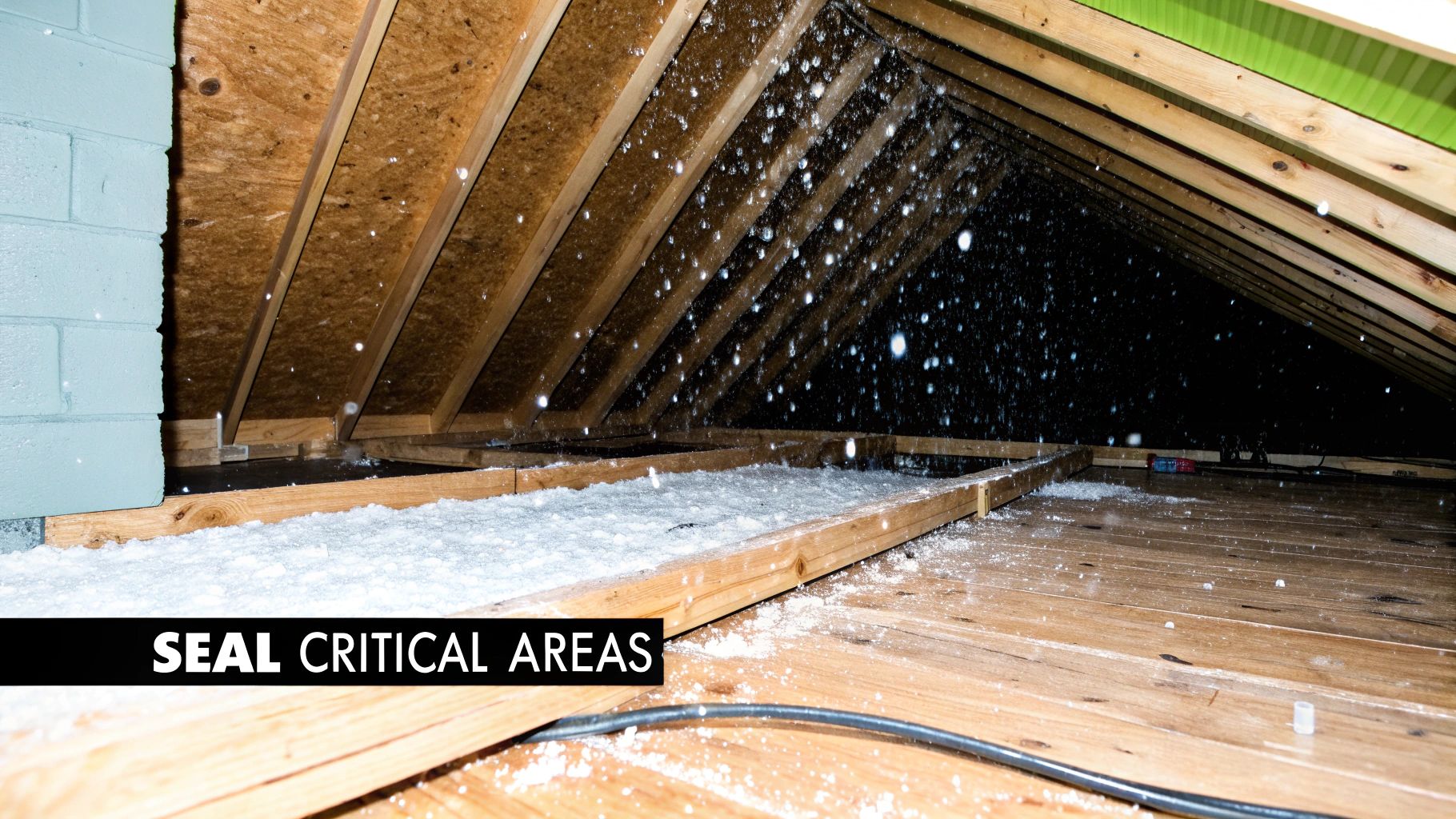
Knowing the science behind closed-cell spray foam is great, but the real magic happens when you know exactly where to put it. Applying it in the right places is how you truly bulletproof your home against moisture. Its unique, rigid structure makes it a specialized tool for the most vulnerable spots.
The trick is to think like water. Where is it most likely to try and get in? Focus on any part of your home that touches the outside world, the ground, or areas known for high humidity. When you apply this waterproof barrier strategically, you're creating a seamless defense exactly where you need it most.
Here are the prime locations where closed-cell spray foam really shines:
- Attics and Roof Decks: Think of this as your home’s first line of defense against the sky. Applying closed-cell foam directly to the underside of the roof deck seals every crack and crevice, preventing wind-driven rain from a tropical storm from ever finding a way into your attic.
- Crawl Spaces and Basements: These below-ground spaces are in a constant battle with ground moisture. Spraying the foundation walls stops that dampness from seeping through, which is the key to preventing rot, mold, and that musty "basement smell."
- Exterior Walls: In new construction or during a major renovation, insulating exterior walls with closed-cell foam creates an incredibly strong thermal and moisture envelope. This protects your home's structural framing from the inside out.
Fortifying Specific Building Types
Some buildings are just naturally prone to moisture problems, and this is where closed cell spray foam insulation waterproof solutions have become the go-to fix.
Metal buildings are a classic example. They're notorious for "sweating" as condensation forms when the cool metal meets warmer, humid air. Spray foam sticks directly to the metal panels, completely eliminating the surface where condensation can form. This is a game-changer for protecting stored equipment, inventory, or just making a workshop comfortable.
The best way to think about it is this: closed-cell spray foam isn't just insulation. It’s an integrated part of your home's waterproofing system, acting as a permanent shield in the places most vulnerable to water damage.
The Global Trend Toward Resilient Buildings
This intense focus on moisture control isn't just a local concern here in South Florida; it’s part of a massive global shift in construction. There's a growing demand for energy-efficient materials, driven by an increase in residential construction and green building projects worldwide. Closed-cell foam's rise in popularity is directly tied to its ability to both air seal and manage moisture, proving its value in modern building science. You can learn more about this global market expansion on Research and Markets.
By targeting these specific, high-risk areas, you’re not just insulating—you're leveraging the full power of closed-cell foam to build a drier, stronger, and more resilient home.
Why Professional Installation Is Crucial for a Waterproof Seal
Even the best closed-cell spray foam on the market is only as good as its installation. This isn’t a weekend warrior project; getting that perfect waterproof seal is a technical process that demands professional expertise, specialized equipment, and a deep understanding of building science.
Think of it like getting a protective coating put on a boat hull. You wouldn't just slap it on and hope for the best. You need to prep the surface, prime it, and apply the coating under just the right conditions to get a bond that stands up to the elements. Spray foam is no different—the real investment is in the meticulous process, not just the product itself.
A professional installation guarantees that the two-part liquid chemicals are mixed at the exact right ratio and sprayed at the perfect temperature. This chemical reaction is what creates the rigid, waterproof structure. Get it wrong, and the foam may not cure properly, compromising its integrity.
The success of the application truly hinges on the technician's skill. They know how to navigate complex framing, seal tricky penetrations around pipes and wires, and apply the foam in consistent layers (we call them "lifts") to build the required thickness. This creates a seamless, monolithic barrier with no gaps for moisture to exploit.
From Preparation to Perfection
The secret to a truly waterproof seal begins long before the spraying ever starts. A professional crew follows a strict protocol that ensures the foam performs exactly as designed for decades to come.
This process involves a few non-negotiable steps:
- Rigorous Surface Preparation: The surface, or substrate, has to be perfectly clean, dry, and free of any dust, oils, or loose debris. This is absolutely essential for achieving a tenacious bond that prevents the foam from delaminating or pulling away over time.
- Climate Control: Pros constantly monitor the ambient temperature and humidity levels on site. Applying foam outside the manufacturer's recommended conditions can lead to a poor cell structure and seriously impact its long-term performance.
- Layered Application: You can't just spray the full depth all at once. Building the foam up in lifts of about two inches at a time is the right way to do it. This allows each layer to cure properly and ensures the final barrier is a uniform, solid mass without any hidden voids.
Ultimately, hiring a certified installer is your assurance that the closed-cell spray foam insulation waterproof system you paid for actually delivers on its promise. It’s peace of mind, built right into the structure of your home.
Your Top Questions About Waterproof Spray Foam, Answered
Even with all the facts, it’s natural to have a few lingering questions. Let’s tackle some of the most common ones we hear from homeowners trying to decide if closed-cell foam is right for them.
Can Closed Cell Spray Foam Actually Stop a Major Flood Leak?
This is a great question. While the waterproof qualities of closed-cell spray foam insulation are exceptional, it’s not designed to act like a submarine hatch. It’s best to think of it as flood-resistant, not flood-proof.
FEMA even classifies it as a flood-resistant material precisely because it won’t absorb water or fall apart. It’s fantastic at stopping wind-driven rain from blasting through your roof deck during a hurricane. But it can’t defy the laws of physics and hold back the immense hydrostatic pressure from several feet of standing floodwater.
It's a crucial piece of your home's defense system, but it won't seal off a house against a major flood that's coming in through windows, doors, or large foundation cracks.
How Much Maintenance Does Waterproof Spray Foam Need?
Practically none. Once it’s installed and cured by a professional, closed-cell spray foam is an inert, solid material. It’s what we call "set it and forget it."
It doesn't shrink, settle, or break down over the years. The only time you'll ever need to think about "maintenance" is if you do something that physically damages the foam barrier.
For example, if you decide to remodel and cut into a wall or your roof, you’ll want to have that specific area touched up. A professional can easily repair the spot to ensure your home's air and moisture seal remains perfectly seamless for decades.
What Happens if Water Somehow Gets Behind the Foam?
This is an important one. Because closed-cell foam is non-permeable, it acts like a true barrier. If water finds its way behind the foam (say, from a single missing shingle on your roof), the foam will do its job and stop that water from entering your attic.
However, that water is now trapped between the foam and your roof sheathing. The good news is your house stays dry. The bad news is that trapped moisture can eventually cause rot if the source of the leak isn't fixed.
The foam gives you a massive advantage by preventing immediate interior damage, but it's not a substitute for fixing the root problem on the exterior.
Ready to make your home stronger and drier with a seamless waterproof barrier? The experts at Airtight Spray Foam Insulation have the experience to deliver a perfect installation every time. Get your free, no-obligation quote today!