Blog
A Homeowner’s Guide to Block Foam Insulation in Florida

You've probably seen those big, sturdy panels of foam at a construction site. That's block foam insulation, also known as rigid foam. It’s cut to fit perfectly, creating what’s essentially a continuous thermal shield around your home.
Unlike fluffy insulation that can sag or leave hidden gaps over time, these solid blocks create an unbroken barrier against heat and moisture. It’s a workhorse material, and for good reason, especially in a demanding climate like ours in South Florida.
What Is Block Foam Insulation?
Think of your home like a high-end cooler you’d take to the beach. You want it to keep the brutal Florida heat out and the refreshing cool air in, right? That's exactly what block foam insulation does. These solid panels wrap your home in a protective shell, helping to maintain a comfortable and consistent temperature inside all year long.
The real strength of block foam insulation is its structure. Because it’s manufactured in solid, dense sheets, it isn't going to compress, sag, or shift over time like fiberglass batts often do. That structural integrity means its performance stays consistent for decades. It’s a reliable barrier that doesn’t just help with temperature control but also adds to the overall strength of your walls and roof.
The Three Main Players
When you hear "block foam," it usually means one of three common types. Each has its own strengths and is suited for different jobs. Getting a handle on these is the first step to picking the right one for your project.
- Expanded Polystyrene (EPS): This is the lightweight, white foam you'd recognize from a disposable coffee cup or packaging material. It's a great value, offering solid insulation performance for its cost.
- Extruded Polystyrene (XPS): A bit denser and usually colored pink or blue, XPS boasts higher R-values and better moisture resistance than EPS. This makes it a go-to for below-ground applications like foundations.
- Polyisocyanurate (Polyiso): This is the high-performance option. Polyiso panels almost always come with a foil facing that acts as a radiant barrier—it literally reflects heat away from your home. That’s a massive advantage under the intense South Florida sun.
The whole idea behind block foam is to create what we in the industry call 'continuous insulation.' This means getting rid of "thermal bridges"—those uninsulated spots like wall studs where heat can sneak right past your insulation. It ensures you have a complete and much more effective thermal shield.
This is a huge deal for the concrete block homes so common in our area. The thermal performance of a concrete wall gets a massive boost from a continuous layer of rigid foam. You can dive deeper into the specifics of the insulation value of concrete block walls and see how it directly benefits local homes. Once you grasp these fundamentals, it's easy to see how block foam works as a complete system to make your home more comfortable, durable, and cheaper to cool.
Comparing The Main Types Of Rigid Block Foam
Choosing the right block foam insulation isn't a one-size-fits-all decision. Think of it like picking the right tool for a specific job—each type has a distinct set of skills. While all rigid foams are excellent insulators, understanding their core differences is the key to maximizing your home's performance, especially in South Florida's tough climate.
Let's break down the three main players in the game: Expanded Polystyrene (EPS), Extruded Polystyrene (XPS), and Polyisocyanurate (Polyiso). Knowing when and where to use each one can make a huge difference in your home's comfort, energy bills, and long-term durability.
This diagram gives a quick visual of the three primary categories, showing how their distinct forms lead to different performance traits.
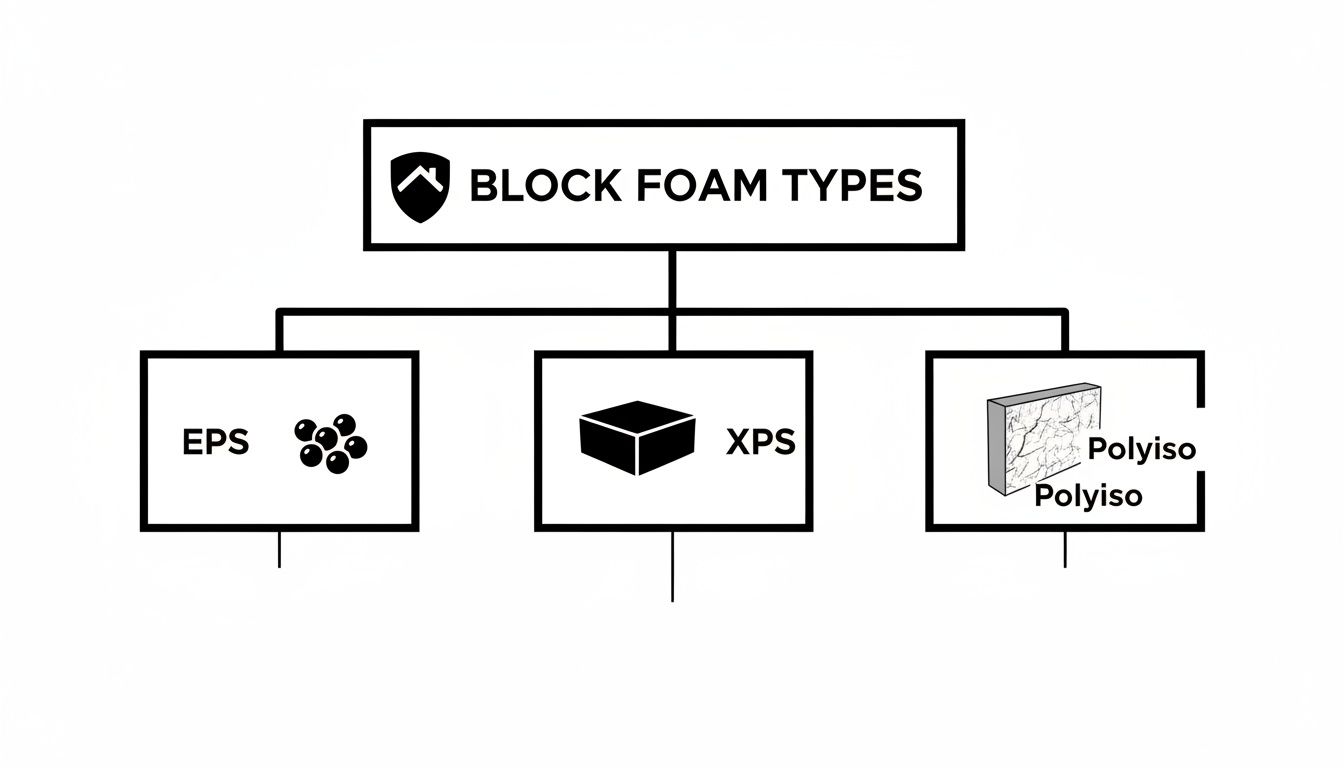
As you can see, the basic structure of each—from fused beads to dense, foil-faced boards—is what really dictates how it will perform in your home.
Expanded Polystyrene (EPS): The Versatile Workhorse
Expanded Polystyrene, or EPS, is probably the rigid foam you’re most familiar with. It's that lightweight, white material you see in things like shipping coolers or protective helmets. It’s made by taking tiny polystyrene beads and expanding them with steam, which fuses them together into a solid, but light, block.
Because of how it's made, EPS has a slightly more open-cell structure compared to other rigid foams. This means it's a bit more permeable to water vapor, but it also gives it the unique ability to dry out if it ever gets wet—a handy feature in certain wall assemblies.
- Best For: Above-grade walls, roofs, and situations where getting the most bang for your buck is a priority.
- Key Advantage: It offers the best R-value per dollar, making it a fantastic value proposition for larger projects.
Extruded Polystyrene (XPS): The Moisture Fighter
Next up is Extruded Polystyrene (XPS), the denser, more uniform cousin of EPS. You'll recognize it by its signature colors—usually pink, blue, or green. The manufacturing process is totally different here: polystyrene beads are melted down into a liquid and then pushed (or extruded) through a die to form a solid, continuous panel. This creates a closed-cell structure that’s incredibly resistant to moisture absorption.
This incredible moisture resistance makes XPS the go-to choice for any application below ground level or in areas prone to dampness. It also has a higher compressive strength, meaning it can handle a lot more pressure. That's why you’ll often find it insulating under concrete slabs or foundation walls, where it won't get crushed over time.
Polyisocyanurate (Polyiso): The High-Performance Shield
Finally, we have Polyisocyanurate, or "Polyiso," which is the premium option in the block foam world. It packs the biggest punch, boasting the highest R-value per inch of any rigid foam, typically ranging from R-6 to R-7. This means you get more insulating power out of a thinner panel, which is a lifesaver in applications where space is tight.
But what really makes Polyiso a standout for Florida homes is its foil facing. Most Polyiso panels come with a reflective foil layer on one or both sides. This facing acts as a radiant barrier, literally reflecting the sun's intense heat away from your home before it can even start to penetrate your walls or roof.
This reflective quality is a game-changer in hot climates. It doesn’t just slow down heat transfer like other insulations; it actively pushes radiant heat away, giving you a powerful, dual-action defense against our relentless summer sun.
To give you a sense of the market, the demand for high-performance materials like these is booming. The global foam insulation market, which includes these essential block forms, was valued at USD 94.41 billion in 2022 and is projected to climb to USD 143.97 billion by 2031. This growth is fueled by materials that can slash heat loss by up to 50% in buildings. You can dig into more data on the foam insulation market growth and trends on skyquestt.com.
Block Foam Insulation Types Compared
To make it even clearer, here’s a side-by-side look at how these three materials stack up against each other. Each has its own strengths, making the "best" choice entirely dependent on your specific project needs.
| Feature | EPS (Expanded Polystyrene) | XPS (Extruded Polystyrene) | Polyiso (Polyisocyanurate) |
|---|---|---|---|
| R-Value per Inch | R-3.6 to R-4.2 | R-4.5 to R-5.0 | R-6.0 to R-7.0 |
| Moisture Resistance | Good (Permeable, but can dry out) | Excellent (Highly resistant) | Very Good (Foil facing helps) |
| Compressive Strength | Good | Excellent | Good |
| Cost | Lowest | Moderate | Highest |
| Best For | General use, large areas, budget-conscious projects | Below-grade, foundations, damp environments | Walls, roofs, and tight spaces where max R-value is needed |
| Key Feature | Best value (R-value per dollar) | Superior moisture control | Highest R-value & radiant barrier |
Ultimately, whether you need the budget-friendly versatility of EPS, the moisture-blocking power of XPS, or the high-performance shielding of Polyiso, there's a block foam that’s perfect for the job.
The Real-World Benefits For Your Home
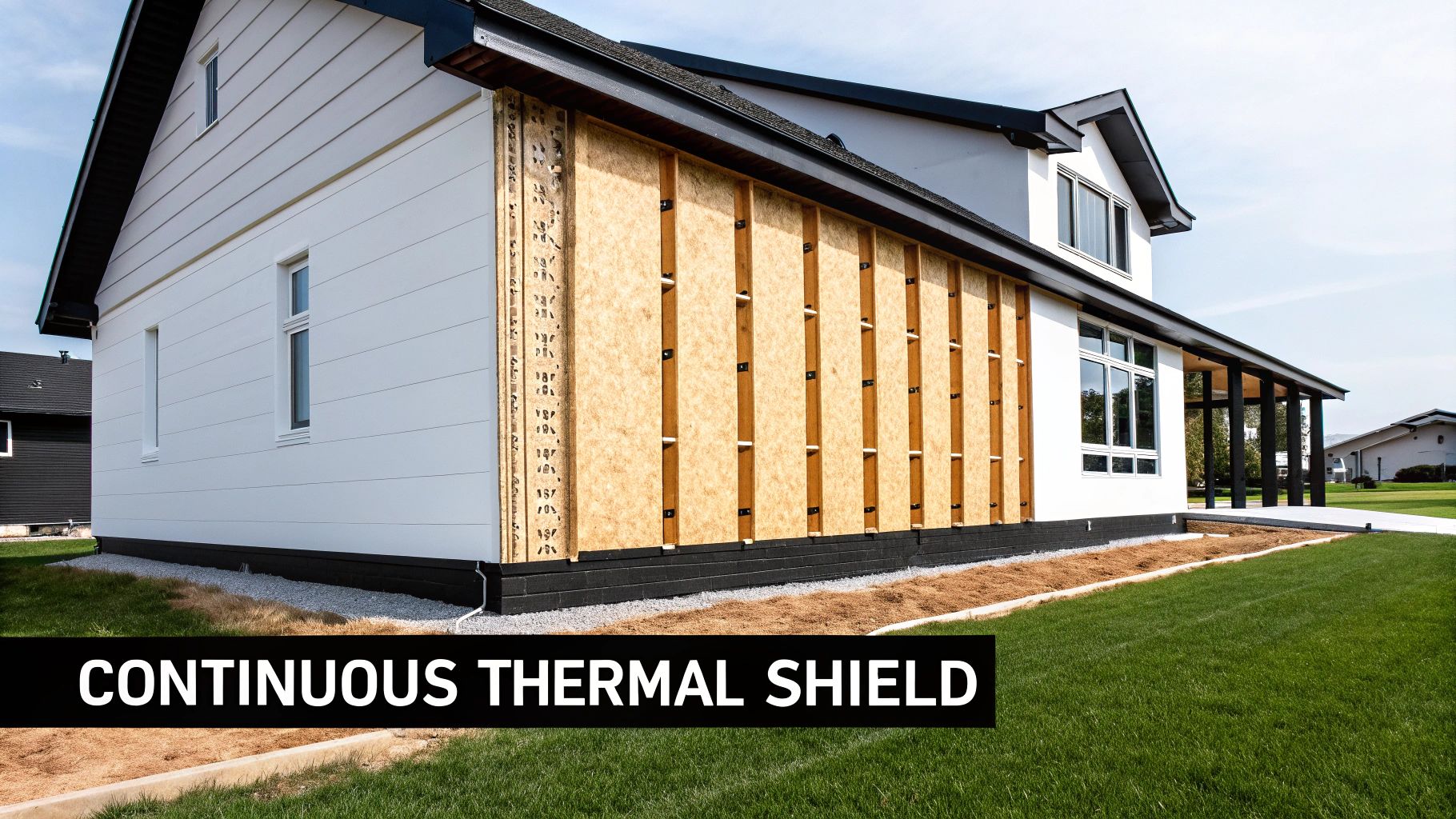
Technical specs and R-values are great on paper, but what do they actually mean for your wallet and your daily comfort? The real value of block foam insulation is how it turns those numbers into tangible benefits you can feel every day in your South Florida home. This isn't just about insulation; it’s about creating a living space that's more comfortable, efficient, and resilient.
Let's start with the most famous number in insulation: the R-value. Think of it simply as heat resistance. The higher the R-value, the better the material is at stopping heat in its tracks. In a place like South Florida, where the sun beats down relentlessly, a high R-value is your home’s first line of defense, keeping that scorching outdoor heat from getting in and making your AC work overtime.
Creating A Superior Air Barrier
Beyond just resisting heat, block foam insulation is a rockstar at creating an almost perfect air barrier. Your home is probably full of tiny, invisible cracks and gaps—around windows, outlets, and where building materials meet. With traditional insulation, the cool air you just paid for leaks out through these gaps, while hot, humid air seeps right in.
When properly installed with taped seams, rigid foam panels form a continuous, solid shield. It’s like putting a windbreaker jacket on your entire house. It stops those drafts cold, keeping your cool air inside where it belongs. This airtight seal is the cornerstone of an energy-efficient home, and it directly leads to lower utility bills and a much more consistent indoor temperature.
Winning The Battle Against Moisture
In South Florida, humidity isn't just a nuisance; it's a constant battle. Moisture can wreak havoc on a home, leading to mold, mildew, and even structural rot. This is where closed-cell rigid foam, like XPS and foil-faced Polyiso, truly shines. These materials are inherently moisture-resistant.
Think of it as a raincoat for your home's structure. Water vapor has an incredibly difficult time passing through these dense panels. This is crucial for preventing condensation from forming inside your walls—a major cause of mold growth and poor indoor air quality. By managing moisture this effectively, block foam helps protect both your property and your family's health.
The ultimate goal is to create a 'continuous insulation envelope'—a complete, unbroken thermal and air barrier that wraps the entire building. This eliminates hot and cold spots, dramatically reduces energy consumption, and provides a level of year-round comfort that other insulation types struggle to match.
Enjoying A Quieter, More Peaceful Home
An often-overlooked perk of dense insulation is its ability to dampen sound. The same solid structure that blocks heat and air also blocks noise. Installing block foam insulation can significantly cut down on the outside noise you hear, from traffic and neighbors to the early-morning lawnmower.
This acoustic dampening creates a much more serene and peaceful indoor environment. In fact, the demand for effective soundproofing is a major driver in the insulation market. The melamine foam block market, known for its superior sound absorption, is projected to hit USD 2.55 billion by 2032. This growth is partly fueled by its role in fighting noise pollution, which affects over 1.6 billion people globally.
For homeowners looking to create a quieter sanctuary, understanding how different materials perform is key. You can learn more about using insulation as a sound barrier in our detailed guide on the topic.
Block Foam vs. Other Common Insulation Types
Picking the right insulation can feel overwhelming. You've got a dozen options, and they all claim to be the best. While block foam insulation is a powerhouse performer, it's not always the perfect fit for every situation. Seeing how it stacks up against other common materials—like spray foam, fiberglass batts, and blown-in cellulose—is the only way to make a smart call for your South Florida home.
The best choice really boils down to your specific goals, whether you're chasing the absolute highest energy efficiency or trying to stick to a tight budget. Let's put these materials side-by-side to see where block foam shines and where you might want to consider an alternative.
Block Foam vs. Spray Foam Insulation
This is a matchup between two heavyweights. Both block foam and spray foam are champions at stopping heat transfer, but they get the job done in totally different ways. Spray foam is applied as a liquid that expands on contact, filling every single nook, cranny, and weird angle. It creates a truly monolithic air seal, kind of like pouring liquid into a mold—it conforms perfectly to any shape it touches.
Block foam, on the other hand, comes in pre-made rigid panels. It delivers fantastic R-value and adds structural strength, but getting a perfect air seal is all about the installation. Every seam where two boards meet and every hole cut for a pipe or wire has to be meticulously sealed with special tapes and adhesives. Even a tiny gap can undermine the whole system.
In short, spray foam inherently creates a seamless air barrier. Block foam requires an installer to build a seamless barrier by perfectly sealing all its joints.
Block foam vs. Fiberglass Batts
This comparison is like pitting a solid steel shield against a wool blanket. Fiberglass batts are those classic fluffy pink or yellow rolls you see stuffed into attics and wall cavities. They’re usually the cheapest option upfront and can work okay when installed flawlessly in a perfectly standard wall.
But fiberglass has some major drawbacks, especially in our humid climate. It's a sponge for moisture, which makes it compress and lose its insulating power. Over time, fiberglass batts are notorious for sagging, slumping, and pulling away from the studs, creating massive gaps where air and heat can just pour through. Block foam’s rigid structure completely avoids this issue. It will not sag, settle, or lose its shape, ever.
Block Foam vs. Blown-In Cellulose
Blown-in cellulose is another go-to, especially for filling up attics. It’s made mostly from recycled paper treated with a fire retardant, so it gets points for being eco-friendly. A machine blows the fluffy material into cavities, letting it settle into irregular spaces a bit better than fiberglass batts can.
The problem is, just like fiberglass, cellulose settles over time, which means its performance drops and you'll eventually need a top-up. It's also a disaster when it gets wet. If you get a roof leak, cellulose will soak up a shocking amount of water, becoming heavy, compacted, and a perfect home for mold. Block foam, especially XPS and Polyiso, is extremely water-resistant, making it a far more durable and resilient choice anywhere moisture is a potential threat. For a deeper dive into these materials, check out our complete guide comparing spray foam vs. blown-in insulation.
Here’s a quick table to break it all down:
| Feature | Block Foam Insulation | Spray Foam Insulation | Fiberglass Batts | Blown-In Cellulose |
|---|---|---|---|---|
| Air Sealing | Excellent (with proper taping) | Superior (Monolithic seal) | Poor (Many gaps) | Moderate (Better than batts) |
| Moisture Resistance | Excellent (Closed-cell) | Excellent (Closed-cell) | Poor (Can absorb water) | Poor (Absorbs water) |
| R-Value per Inch | High (R-4 to R-7) | Highest (Up to R-8) | Low (R-3.1 to R-3.7) | Low (R-3.2 to R-3.8) |
| Longevity | Excellent (50+ years) | Excellent (50+ years) | Fair (Can sag and settle) | Fair (Settles over time) |
| Installation | Moderate to difficult | Professional only | DIY-friendly | Professional or rental |
At the end of the day, while every insulation has its purpose, the brute strength and moisture-fighting power of block foam give it a massive advantage in performance and longevity over traditional options like fiberglass and cellulose.
Proper Installation For The South Florida Climate
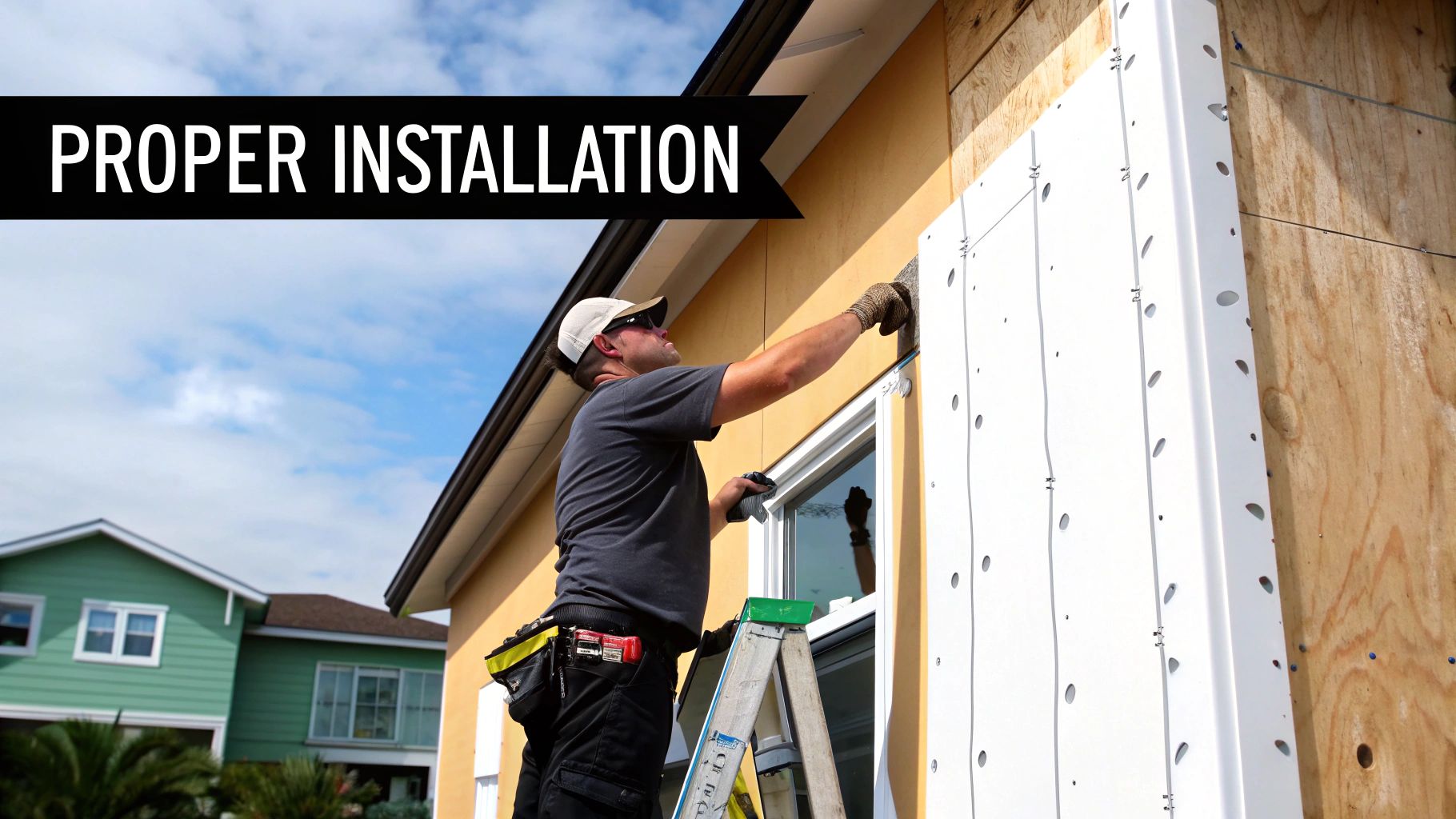
Here’s a hard truth: even the most advanced block foam insulation will fail if it's not installed correctly. The real performance of rigid foam isn't just in the panel—it’s in the precision of the installation. For those of us in South Florida dealing with intense heat, crushing humidity, and hurricane threats, a flawless install isn't just a nice-to-have; it's absolutely critical.
Unlike fluffy insulation that you just stuff into wall cavities, rigid foam panels have to be meticulously cut, fitted, and sealed to create a truly continuous barrier. Every single seam, joint, and hole for pipes or wiring must be perfectly sealed with specialized construction tape and adhesives. This obsession with detail is what turns a stack of individual panels into a single, high-performance shield for your home.
Sealing Seams Against Florida Humidity
In our climate, moisture is the enemy. That heavy, humid air is always trying to push its way into your walls. If the seams between block foam panels aren't perfectly sealed, that humid air sneaks in, cools down, and turns into liquid water right inside your wall assembly.
That trapped moisture is a recipe for disaster. It leads to mold, mildew, and eventually, structural rot. This is exactly why professional installers are so focused on creating an airtight and watertight seal.
- Proper Taping: Every joint where two foam boards meet gets covered with a high-quality sheathing tape designed specifically for this job.
- Sealing Penetrations: Any openings for windows, doors, vents, or electrical boxes must be sealed with compatible liquid flashing or caulk.
- Creating a System: The goal is to make the entire insulation layer act like one unbroken surface, completely stopping air and water vapor from getting through.
A correctly installed block foam system doesn't just insulate; it acts as a robust weather-resistant barrier. It is your home's first line of defense against the relentless moisture pressure of the South Florida environment, safeguarding both your property's integrity and your family's health.
Strengthening Your Home Against Hurricanes
Beyond keeping you cool and dry, rigid foam adds a surprising amount of muscle to your home’s structure. When block foam insulation panels are properly fastened to the exterior sheathing, they add significant rigidity and shear strength to the entire wall.
This process basically creates a stronger, more unified building envelope. The foam helps distribute the immense pressure from hurricane-force winds across a larger surface area, taking the stress off individual connection points. That extra strength can be the difference-maker in protecting your home during a major storm—a huge benefit for any homeowner around here.
The engineering behind this technology is always improving. For instance, specialized syntactic foam blocks used in deepwater environments are projected to become a USD 266.5 million market by 2035, with materials that can handle pressures over 10,000 psi. You can read more about these advanced foam technology findings.
The Role Of Vapor Barriers
In South Florida, managing water vapor is a science. A vapor barrier, or vapor retarder, is a material that stops water vapor from passing through your walls. With block foam—especially closed-cell types like XPS and foil-faced Polyiso—the insulation panel itself often does the job of a vapor barrier.
But where you put it is everything. In our hot, humid climate, the vapor barrier needs to be on the exterior side of the wall to stop moisture from getting in in the first place. Put it in the wrong spot, and you can trap moisture inside the wall, creating the very problem you were trying to solve.
A knowledgeable contractor understands our local building codes and the specific science of our climate. They’ll make sure your entire insulation system is designed to keep your home dry and durable for decades to come.
How To Choose The Right Insulation Contractor
Choosing the right material, like block foam insulation, is only half the battle. The real test of an insulation job is the quality of the installation—that’s what determines whether you get the performance and energy savings you're paying for.
A top-of-the-line insulation product in the hands of an inexperienced contractor can lead to disaster. We’ve seen it all: air leaks, hidden moisture problems, and a whole lot of wasted money.
Your choice of contractor is just as important as your choice of insulation. Here in South Florida, you don't just need a general installer; you need an expert who lives and breathes our specific challenges with brutal heat and relentless humidity. Finding a qualified, trustworthy professional is the key to a project that lasts.
Questions To Ask Every Contractor
Before you sign on the dotted line, it's time to vet your potential installers. Arm yourself with the right questions to separate the true building science pros from the rest. A real professional will welcome your questions and give you clear, confident answers—not a runaround.
Here’s a simple checklist to guide your conversations:
- Experience in South Florida: How many years have you been installing insulation specifically in this region? Our climate has its own set of rules.
- Block Foam Expertise: What’s your specific experience with installing rigid block foam insulation? Ask them to walk you through their process for cutting, fitting, and sealing the panels.
- Air and Moisture Sealing: How do you guarantee a complete air and moisture seal? What specific tapes, adhesives, and flashing techniques do you use?
- Licensing and Insurance: Can you provide proof of your current license and liability insurance? This is non-negotiable. It protects you and your property.
- Project Portfolio: Can I see examples of similar jobs you’ve completed in the area? Photos and references speak volumes.
A detailed, transparent quote is the mark of a trustworthy contractor. It should clearly break down all costs for materials, labor, and any necessary prep work, leaving no room for surprise charges down the line.
Your Trusted Local Authority In South Florida
Making the right choice can feel daunting, but you don't have to figure it out alone. At Airtight Spray Foam Insulation, we’re more than just installers—we are building science specialists with a deep understanding of what South Florida homes need to perform at their absolute best. Our founder, Christian Cates, leads a team dedicated to excellence, backed by over 25 years of hands-on experience.
While our name highlights our expertise in spray foam, we are proficient in all types of high-performance insulation, including rigid block foam. We know exactly when block foam is the ideal solution and have the technical skill to install it flawlessly, creating the continuous thermal and moisture barrier your home demands. We proudly serve homeowners and builders throughout Jupiter, Palm Beach Gardens, and the wider South Florida area.
Our goal is to empower you to make an informed decision. We provide professional consultations that identify the absolute best, most effective insulation solution for your home's unique needs. To get started, you can easily request a free estimate from Airtight Spray Foam Insulation and discover how our expertise can transform your property.
Common Questions About Block Foam
We get asked a lot of great questions about block foam. To help you get the full picture, here are some clear, straightforward answers to the things homeowners wonder about most.
How Long Does Block Foam Insulation Last?
When it's installed right and kept out of the sun, rigid block foam is one of the most durable materials you can put in your home. We're talking a lifespan of 50 years or more—it’s designed to last as long as the house itself.
Unlike old-school fiberglass that can sag, get compressed, or lose its insulating power over time, block foam holds its shape and its R-value. Its closed-cell structure is also incredibly tough against moisture, which is a game-changer here in South Florida for preventing mold and rot.
Is Block Foam Insulation An Eco-Friendly Choice?
It's a fair question, since the foam itself is made from petroleum products. But the real environmental story is in the long-term energy savings. By creating a super-efficient thermal barrier, block foam dramatically cuts down on how much you need to run your AC, lowering your home's carbon footprint year after year.
Plus, manufacturers have made huge strides. Many of today's foam boards include recycled materials and use blowing agents with a much lower global warming potential (GWP) than older versions.
The biggest green impact any insulation can have is its ability to slash energy use for decades. Investing in high-performance block foam is a long-term win for your wallet and the environment.
Can I Install Block Foam Insulation Myself?
For a very small project, a handy DIYer might be able to manage it. But for a whole-home application? We strongly recommend calling in the pros. The real performance of block foam insulation comes from creating a flawless, unbroken air and moisture seal.
Getting that perfect seal means every single board has to be cut precisely, and every seam, joint, and cutout needs to be sealed with specialized tapes and adhesives. One small gap can compromise the entire system, letting in air and moisture—which is exactly what you're trying to prevent. A professional makes sure the job is done right from start to finish.
A pro crew knows how to handle the critical steps:
- Precise Cutting: Making sure boards fit perfectly around pipes, wires, and framing with no gaps.
- Proper Fastening: Using the right anchors to secure panels firmly without crushing the foam.
- Meticulous Sealing: Applying high-performance sheathing tape and sealants to create a truly airtight barrier.
Ultimately, hiring an expert is about protecting your investment. It's the only way to guarantee you get the full thermal performance and moisture resistance you're paying for.
Ready to transform your home’s comfort and energy efficiency? The team at Airtight Spray Foam Insulation has the expertise to design and install the perfect insulation system for your South Florida property. Request your free, no-obligation estimate today.