You're in the attic in July, sweat dripping through your shirt, and the next FPL bill feels like it showed up with a dare. That's the moment most Jupiter and Wellington homeowners start asking the same question, does attic insulation pay for itself, or is it just another home project that sounds good until the invoice lands?
The attic insulation tax credit is the piece that changes the math. Under IRS Section 25C, qualifying insulation and air sealing now get a 30% federal credit, capped at $1,200 per year, claimed with Form 5695 for the year the work is installed, and it's nonrefundable with no lifetime dollar limit (IRS Energy Efficient Home Improvement Credit). In plain English, that means the government helps cover part of the material cost, but only if the project is documented the right way and finished in the right tax year.
That shift matters because attic upgrades in South Florida are rarely just about comfort. They're about turning a hot, leaky attic into a sealed thermal barrier that helps the rest of the house work less. If you're also thinking about window coverings, this guide from The Drapery Company on the best blinds for energy efficiency is a useful companion, because attic insulation and heat-control treatments often work best together.
A hot attic does more than make the upstairs unpleasant. It keeps pushing heat into the rooms below, so the cooling system runs harder just to hold the line. In a South Florida home, that usually means the first smart move is insulation and air sealing, not a larger AC unit.
The tax break matters because the old version of this credit barely moved the needle. The current federal rule is much more useful for a real attic project, since qualifying insulation and air sealing now fall under a 30% credit with an annual cap of $1,200 for those materials, according to industry summaries of the change (Sealed summary of insulation tax credits and rebates). For a homeowner comparing bids for a practical attic job, that means the credit can cover a noticeable slice of the material cost instead of acting like a small afterthought.
The simple way to budget it is this, if the attic work is already needed, the credit should be part of the price conversation from the start.
Timing decides whether the credit helps on your return. The IRS says you claim it for the year the property is installed, not the year you got the estimate, and the credit is nonrefundable, which means it can lower the tax you owe but does not turn into extra cash beyond that amount (IRS Energy Efficient Home Improvement Credit). That is why the calendar matters almost as much as the product choice, especially if the installation lands late in the year.
For a homeowner in Jupiter or Wellington, the math often becomes easier once the attic is part of the full picture. A tighter attic helps the whole house feel less punishing in summer, and the credit can make the project pencil out sooner. If you are also comparing other heat-control upgrades, the guide to the best blinds for energy efficiency shows how window treatments and attic work can support each other, while this guide to the home energy efficiency credit helps connect the attic project to the federal rules that govern the claim.
The attic insulation tax credit is a credit against your federal tax bill, and that difference matters. A contractor does the attic work, but the credit is claimed on your return, so it lowers what you owe rather than changing the price at the job site.
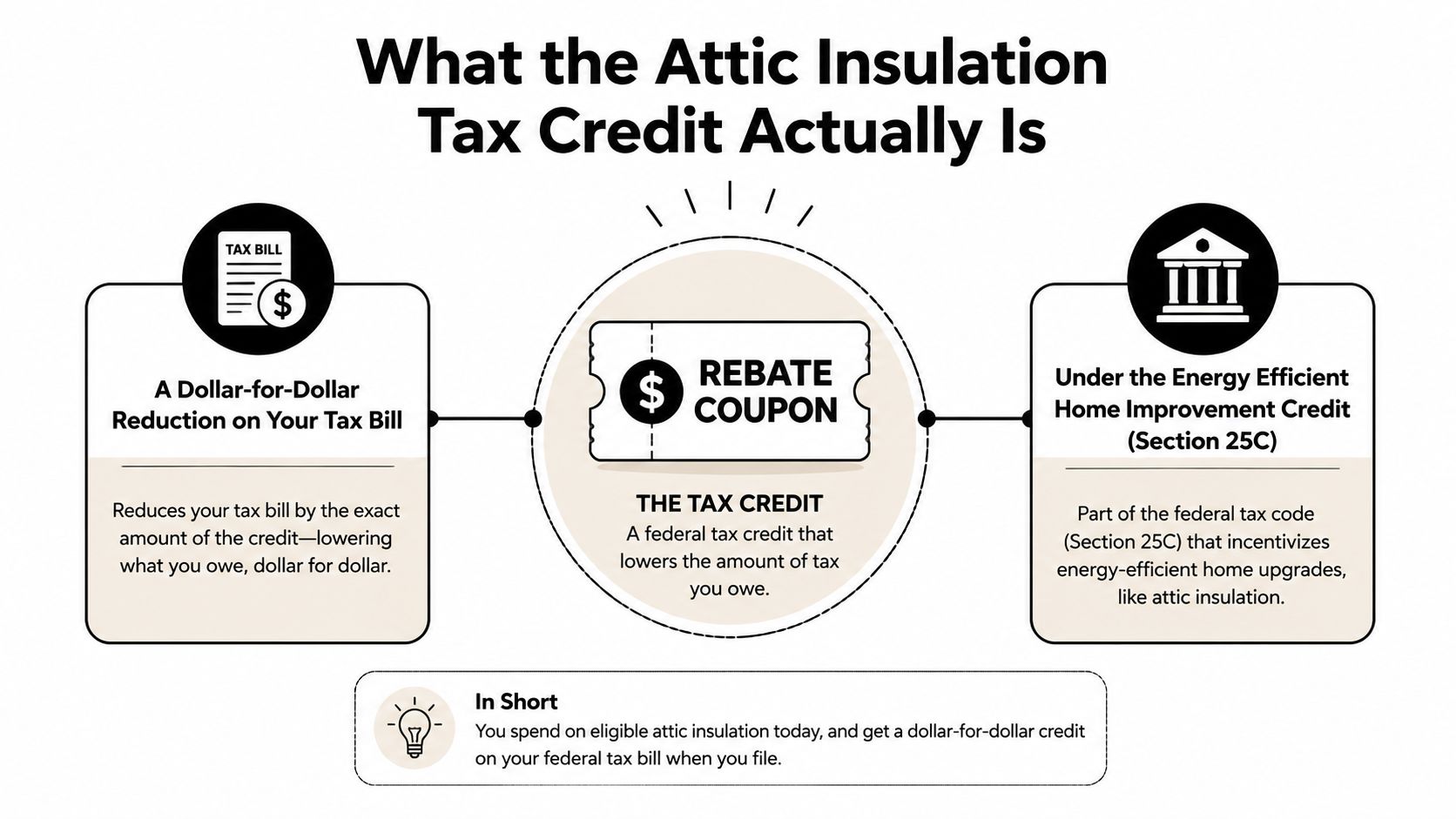
Homeowners also mix up the tax categories, which is where a lot of confusion starts. This credit sits under the Energy Efficient Home Improvement Credit and uses IRS Section 25C rules, while other federal energy credits follow different paths. For a Florida homeowner looking at a hot attic and a real insulation quote, the practical point is simple, the attic project has to fit the rules for this credit, not just seem energy efficient in a general way.
The claim is tied to the year the property is installed, and the credit is nonrefundable. That means it can bring your tax bill down, but it does not pay you more than what you owe. If the credit amount is larger than your tax liability, the unused part does not turn into cash in your pocket.
A quick example helps. If a Jupiter homeowner pays for attic air sealing and insulation in the same season as a bigger cooling tune-up, the federal credit is handled on the tax side, while any utility incentive or local rebate follows its own paperwork. That is why the numbers on the contractor's invoice, the installation date, and the receipts matter together, almost like three pieces of one file.
If you want a plain-English reference while you sort through the paperwork stack, this home energy efficiency credit guide is a useful place to compare the claim steps with your own project records. It is the kind of checklist that makes more sense after an installation estimate is in hand than before you start.
The same idea is explained in a homeowner-friendly way in this explanation from Superior Home Improvement for Utah homeowners, which can help if you are trying to separate the federal credit from contractor marketing language. A credit is a tax rule first, a savings story second, and that is usually where the paperwork gets easier to understand.
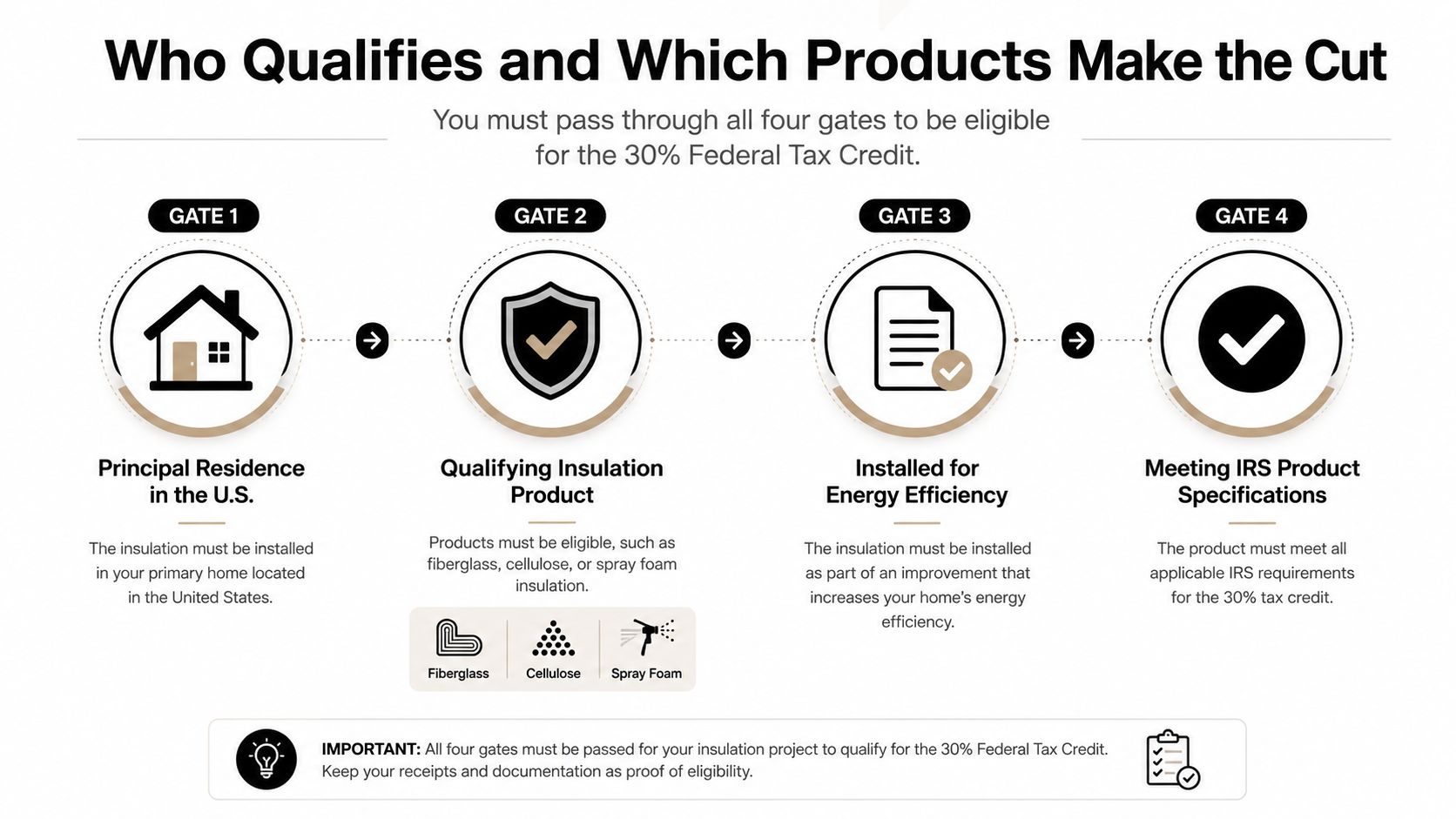
A Jupiter or Wellington homeowner can do the work, spend the money, and still miss the credit if the project starts with the wrong house or the wrong materials. The IRS starts with the home itself, and the rule points to a principal residence in the U.S. That means the attic over the home you live in, not a rental property held for income and not a brand-new house built from scratch. A lot of people assume any insulation job counts, but the credit draws a narrower line than the construction market does.
The next question is what went into the attic. Qualifying items can include insulation materials, air-sealing materials or systems, vapor and air retarders, recessed light covers, and attic hatch covers. The product has to be specifically and primarily designed to reduce heat loss or gain, which is why the material description on the invoice matters as much as the work itself. If the paperwork just says “attic job” or “foam install,” that is too vague for a clean claim.
The IRS does not let you claim labor and installation costs for this credit, even if the project itself is eligible. That is the part that catches a lot of homeowners off guard, especially on a closed-cell spray foam job where the invoice may bundle materials and labor into one total. The practical fix is simple: ask for a split invoice so the eligible product cost is listed separately from the work of putting it in place.
If the attic company can itemize materials separately, your filing job gets easier and your records get stronger.
That matters even more in South Florida, where attic upgrades often start as a comfort project and end up as a paperwork project. A homeowner may add spray foam to cut heat gain, then need to show exactly what product was installed, where it went, and what part of the bill belongs to the material itself. If you want a plain example of how a real attic install is documented, this attic insulation installation overview shows the kind of job details that should line up with the receipt.
There is also a timing rule homeowners should treat carefully. Current IRS guidance says the credit was scheduled to be available through December 31, 2025. If you are planning attic work and want to use the federal credit, the schedule should be built around when the installation is finished and when the documents are in hand, not just when the estimate looks good.
Before you book the project, check your own home with four plain questions. Is it your principal residence, is the product one of the eligible insulation or air-sealing materials, is the work being installed rather than just purchased, and can the contractor separate the materials from the labor? If one of those answers is unclear, get it sorted out before the crew starts.
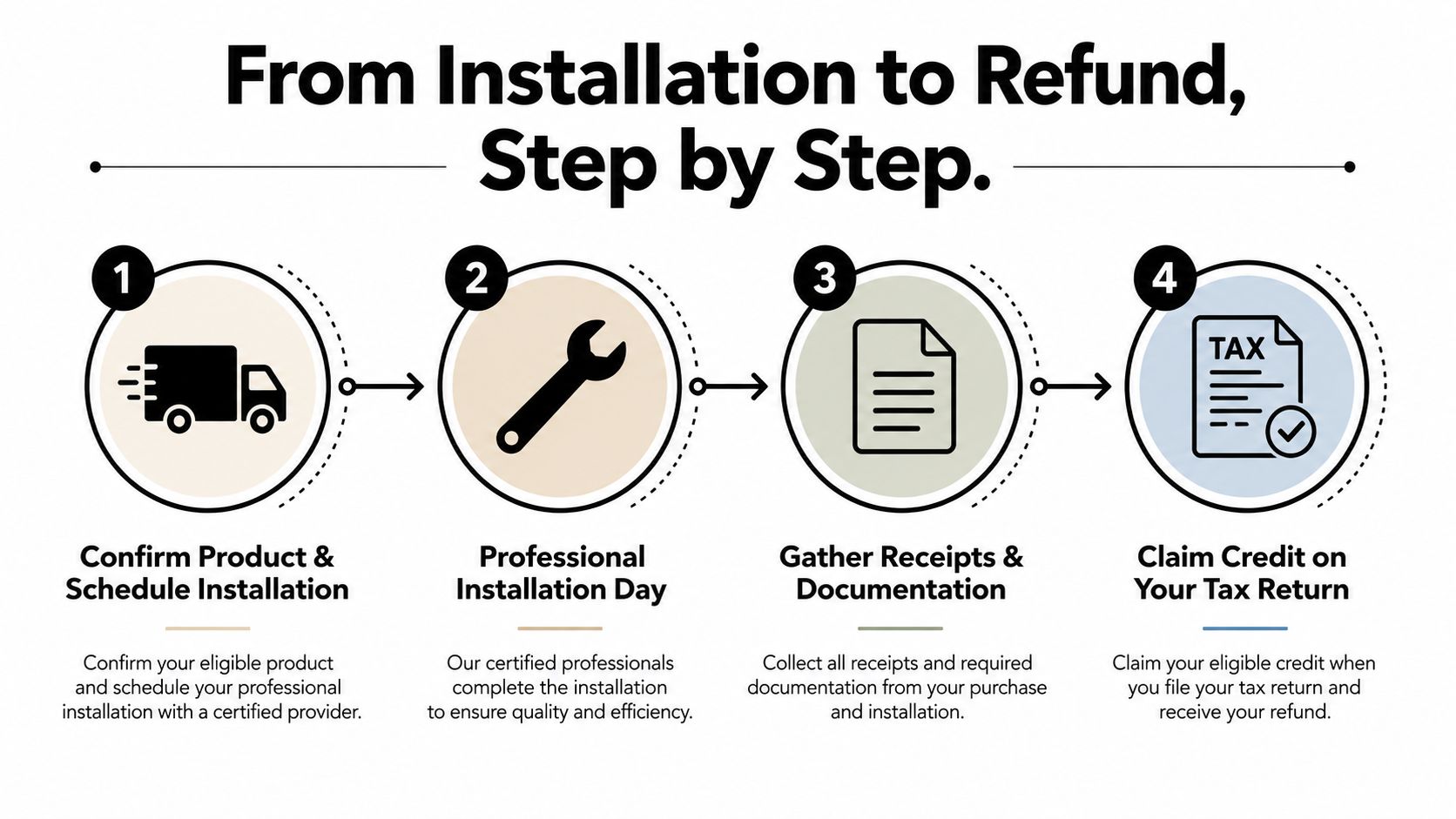
A homeowner can do everything right on the attic project and still lose the credit if the paperwork is messy. The IRS looks at three plain things, whether the product qualifies, whether the home qualifies, and whether the work happened in the right tax year. The recordkeeping needs to begin before the crew unloads the insulation.
The most useful paper in the stack is the manufacturer's certification statement. It is the document that supports the claim that the product line meets the energy-efficiency rule, so ask for it early, while the job is still being scheduled. Keep that statement with the invoice, because the file should show what was installed and when, not just that someone paid for attic work.
A clean file usually has these pieces:
The filing part stays simple once the paperwork is organized. You claim the credit on the return for the year the property was installed, and the IRS says the credit is nonrefundable. If the credit is larger than your tax bill, the extra amount does not turn into a payout, so your CPA or tax preparer needs clean numbers and a careful file.
That is why the installation record matters too. A good attic job should leave behind a receipt that matches the work on the roofline and in the attic, not a vague line item that hides the material. If you want to see how a properly documented job is usually handled from the install side, this attic insulation installation guide is a useful companion. Keep the whole packet together for your records, because tax time is easier when you can hand over one tidy file instead of a stack of mixed receipts.
A homeowner in Jupiter or Wellington can have a solid attic quote and still miss extra savings if the rebate paperwork never gets checked. That is why the federal credit should be treated as the base layer, then local utility offers, manufacturer promotions, and distributor deals can be reviewed one by one. In a South Florida attic project, the order matters. Get the federal piece clear first, then see what else can still be stacked on top.
| Incentive Layer | Who Funds It | Typical Value | Income Limit | Key Requirement |
|---|---|---|---|---|
| Federal attic insulation tax credit | U.S. federal tax system | 30% of qualified costs, capped at $1,200 per year | No income limit in the IRS guidance cited here | Qualifying materials, principal residence, Form 5695 |
| Utility or local rebate | Utility or local program | Varies by program | Often program-specific | Usually requires approved measures and proof of installation |
| Manufacturer or distributor promotion | Product seller | Varies by promotion | Usually none | Often tied to a specific product or purchase window |
That table shows why the federal credit usually sits at the center of the plan. It is the part homeowners can count on most because the rules are written into the tax filing process, while rebate offers can change with the program sponsor. Utility rebates can help, but they are usually tied to a specific approved measure, and the paperwork is often stricter than the sales pitch sounds.
If a homeowner wants to check how a Florida utility program may fit beside the tax credit, a practical starting point is this overview of FPL rebates for insulation. Used correctly, that kind of rebate works like a second layer of insulation on the savings side. It can lower the final bill further, but it should be treated as a bonus, not the main reason to move ahead.
The planning takeaway is straightforward. If your attic project is already priced around a qualifying spray foam or insulation install, the federal credit gives you a reliable baseline for the savings. Any local rebate or special offer improves the total, yet you should still approve the project based on the federal credit alone, since the extra program may disappear, change, or require more documentation than expected.
A Jupiter ranch with a hot, bare attic is an easy house to picture. The owner wants the attic sealed up, the upstairs rooms cooler, and the work to pay off on the tax return if the materials qualify. If that project uses closed-cell spray foam on the roof deck and the eligible materials come in around $6,000, the federal credit would be about $1,200, because the annual cap limits how much can be claimed in a year.
That example matters because it shows how the rule works in a real attic, not just on paper. A homeowner still pays the contractor upfront, then the tax credit reduces part of that cost later. The credit does not erase the whole job, but it does lower the net cost before you factor in the comfort improvement and the lighter load on the cooling system.
A smaller Palm Beach Gardens home may look different, but the math follows the same pattern. If the attic floor gets open-cell spray foam and the eligible materials total about $3,500, the credit would be about $1,050 under the 30% rule, because that project stays below the yearly ceiling. In that case, the credit does not remove the expense, yet it can still take a meaningful bite out of what the homeowner pays.
That is why the material line on the invoice matters so much. Labor can be a large part of an attic job, but the federal credit is tied to the qualifying materials, so a clean invoice and a clear product breakdown help the homeowner see what counts. For a South Florida attic, that usually means looking at the spray foam or insulation product itself, not just the total contract price.
The federal insulation incentive also has a history, and that history helps explain why homeowners hear different numbers online. Before 2023, the credit was smaller, and then the rules changed so the credit rate increased to 30% and the annual ceiling for insulation and air sealing materials rose to $1,200. That change is why newer attic projects can produce a better tax result than older articles or outdated advice may suggest.
In South Florida, the smartest way to judge an attic project is simple, what are the qualifying material costs, what gets installed, and how much comfort do you gain right away?
That is the payback lens most homeowners should use. If your attic project falls somewhere between these examples, the outcome usually lands in the middle, with the credit trimming the cost and the energy savings working month after month.
A lot of homeowners get to the end of the guide and still have the same practical questions. That makes sense, because the attic credit sounds simple until you connect it to a real South Florida job, a real utility bill, and a real tax return.
Can spouses split the credit?
The credit belongs to the tax return that claims the qualifying improvement, so the filing has to line up with the homeowner and the principal residence. If you file jointly, your CPA usually handles it on the joint return, the same way a single attic project is handled as one household expense.
Does a rental property qualify?
No, because this credit is built around a principal residence, not an income property. A rental, a second home, or a new construction project falls into a different bucket, so it should not be treated like the same attic upgrade in a Jupiter or Wellington home.
What if I reach the yearly cap before the attic work is claimed?
Then that tax-year limit has already been used up. If you are combining attic insulation with other envelope upgrades, timing matters because the household limit applies for the year, not project by project.
Can the credit carry forward if it is more than I owe?
The IRS treats the credit as nonrefundable, so it cannot create a refund beyond the credit amount itself. A preparer can tell you how much of it can be used on that return, which is why the paperwork should be organized before filing season starts.
What causes the most rejections?
The usual problems are missing manufacturer certification statements, trying to claim labor, and mixing up the installation year with the tax return year. Keep the invoice split clean, keep the product paperwork, and do not guess at the filing.
The safest habit is simple. If the installer cannot give you clear product documentation, pause before you sign the final paperwork.
The credit only helps if the project is planned around the right product, the right paperwork, and the right install timing. A qualifying closed-cell or open-cell spray foam attic project is one of the clearest ways to use the rule correctly, especially when the contractor is already thinking about the documentation stack.
If you're in Jupiter, Palm Beach Gardens, West Palm Beach, Wellington, or Stuart, the smart move is to ask for a free estimate and confirm which product lines come with the manufacturer certification statement the IRS requires. That turns tax season from a scramble into a filing exercise.
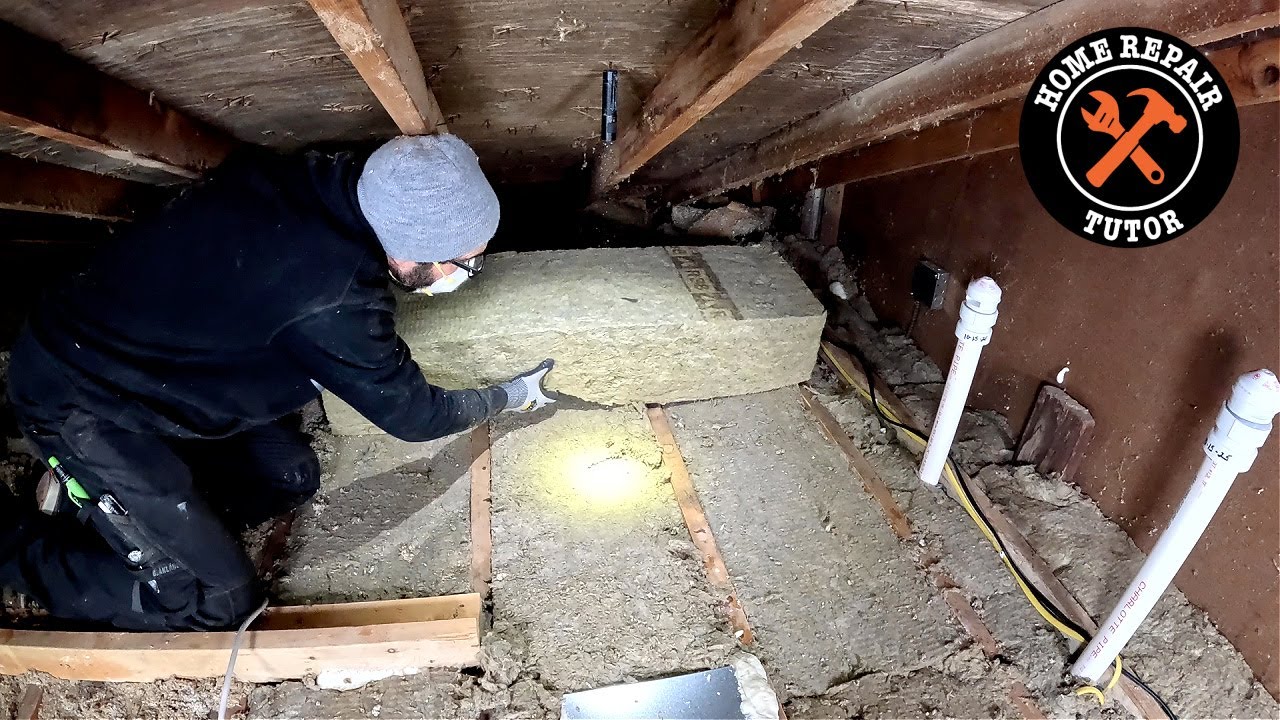
A good attic job should help your home feel cooler, reduce strain on your system, and leave you with the records you need to claim the credit confidently. If you're ready to take the next step, start with a quote, ask the right paperwork questions, and schedule the work while the year is still on your side.
If you want a South Florida insulation team that understands both the attic and the paperwork, reach out to Airtight Spray Foam Insulation for a free estimate. They'll help you choose the right spray foam for your home, confirm the documentation needed for the attic insulation tax credit, and get the installation planned with tax season in mind.