Let's be honest: stepping into your South Florida home shouldn't feel like you just walked into a swamp. But for too many of us, that sticky, heavy air is a daily reality. The fight against humidity here is more than a comfort issue—it's about protecting your home and your health. This isn't just another list of generic tips; this is a complete game plan for diagnosing and finally winning the war on the relentless humidity that plagues homes from Jupiter to West Palm Beach.
To really get control of the moisture in your house, you need a three-pronged attack: start with immediate moisture control (think dehumidifiers and better ventilation), then move to HVAC optimization to make sure your system is actually pulling water out of the air, and finally, seal the deal with long-term air sealing to stop humid air from getting inside in the first place. Getting these steps right is the secret to a drier, more comfortable home in our climate.
We're going to break down exactly how to take back control from that damp, sticky feeling that seems to permeate everything.
In South Florida, high humidity isn't just a summer fling; it's a year-round commitment. Our subtropical climate, combined with common local building practices, creates a perfect storm for indoor moisture problems. Once your indoor relative humidity creeps above 60% and stays there, you're rolling out the welcome mat for mold and mildew.
It’s a bigger problem than you might think. Studies show that nearly 47% of U.S. homes have issues with mold or that musty smell. Down here, that number feels a lot higher. This isn't just about ugly spots on the wall; it's a direct hit to your indoor air quality and can seriously aggravate allergies and respiratory issues.
So where is all this moisture coming from? It's often a mix of things, some obvious and some you might not have considered. While daily life certainly adds to the problem, the way your house is built—or isn't built—can be the biggest factor. To lower the humidity, we have to tackle the sources head-on.
This guide is your roadmap. Whether you're in Wellington, Stuart, or anywhere in between, we'll walk through the immediate fixes you can do this weekend, show you how to get your HVAC system pulling its weight, and explain the most effective long-term solution of all: advanced insulation and air sealing. Consider this your definitive plan to finally make your home dry, healthy, and comfortable.
When your home feels sticky and the air is heavy, you need relief now, not weeks from now during a major renovation. Long-term solutions are absolutely critical, but there are a handful of things you can do today to dramatically lower the humidity inside your home.
Think of this as your first-aid kit for that damp, oppressive feeling. We're focused on two things: getting moisture-rich air out and stopping more moisture from getting in. You’d be surprised what a few small, consistent changes to your daily habits can do for your home's comfort.
Your bathroom and kitchen fans are your best friends in the fight against humidity, but most people don't use them correctly. Their entire job is to pull damp, stale air out of your home.
Here's the key: don't just flip the fan on during your shower and off the second you step out. Leave it running for at least 15-20 minutes afterward. This is non-negotiable. It pulls all that lingering steam out before it has a chance to condense on your walls or drift into other parts of the house. To really understand why this is such a critical habit, it's worth reading up on the role of proper bathroom ventilation in preventing moisture buildup.
The same logic applies to the kitchen. Anytime you're boiling water or simmering a pot of chili, that range hood vent needs to be on. It's a simple flick of a switch that stops a ton of steam from making its way through your living space.
A good portable dehumidifier can be a game-changer, especially for those stubborn problem areas like a musty guest room or a damp laundry closet. But where you put it and how you set it up makes all the difference.
For the best results, stick it in the most humid room and close all the doors and windows in that space. You're creating a contained area, letting the machine work its magic efficiently instead of trying—and failing—to dehumidify the entire house.
Pro Tip: Don't just crank the dehumidifier to its lowest setting. You're just wasting energy. Aim for a target relative humidity between 45% and 55%. Any lower than that and the machine will run constantly without you feeling much of a difference.
A lot of our everyday activities pump moisture straight into our indoor air. It's not about making huge sacrifices; it's about working smarter to cut down on this self-inflicted humidity.
Start with these simple tweaks:
Putting these strategies into practice gives you immediate control over your home's humidity. These quick fixes will provide some much-needed breathing room while you figure out the more permanent solutions needed for a dry, comfortable South Florida home.
Your air conditioner is your number one weapon in the fight against South Florida's relentless humidity, but it’s often misused or completely misunderstood. While an AC's main job is to cool the air, a massive part of that process is removing moisture. If your home feels cool but still clammy, your HVAC system isn't pulling its weight in the dehumidification department.
Making your system an effective dehumidifier isn’t about shelling out for expensive upgrades; it's about optimizing what you already have. With some simple maintenance and the right settings, you can transform your AC from a basic cooler into a powerful moisture-removing machine.
An HVAC system that’s dirty or low on refrigerant simply cannot dehumidify properly. I’ve seen it a hundred times. The magic happens when warm, humid air passes over the cold evaporator coils inside your air handler. Condensation forms on these coils, drips into a pan, and drains away.
But if those coils are caked in dust and grime, two things happen:
Regular professional maintenance isn't an upsell; it's a non-negotiable step for anyone serious about humidity control. It ensures your coils are clean, refrigerant levels are correct, and drain lines are clear.
Have you ever noticed your AC kicking on for just a few minutes, shutting off, and then repeating the cycle over and over? That's short cycling, and it’s a humidity nightmare. It’s especially common in homes that have been recently air-sealed or had new insulation installed.
The problem is that the AC unit is likely oversized for the space. It blasts the room with cold air, satisfying the thermostat's temperature setting so quickly that it shuts down before it has a chance to run long enough to pull significant moisture from the air. You’re left with a room that’s technically cool but feels unpleasantly damp.
The ultimate irony is that making your home more energy-efficient can sometimes worsen humidity issues by reducing AC runtime. A correctly sized unit is paramount; it should run for longer, more consistent cycles to properly cool and dehumidify at the same time.
This visual decision tree offers a quick guide for what to do when your home first feels damp.
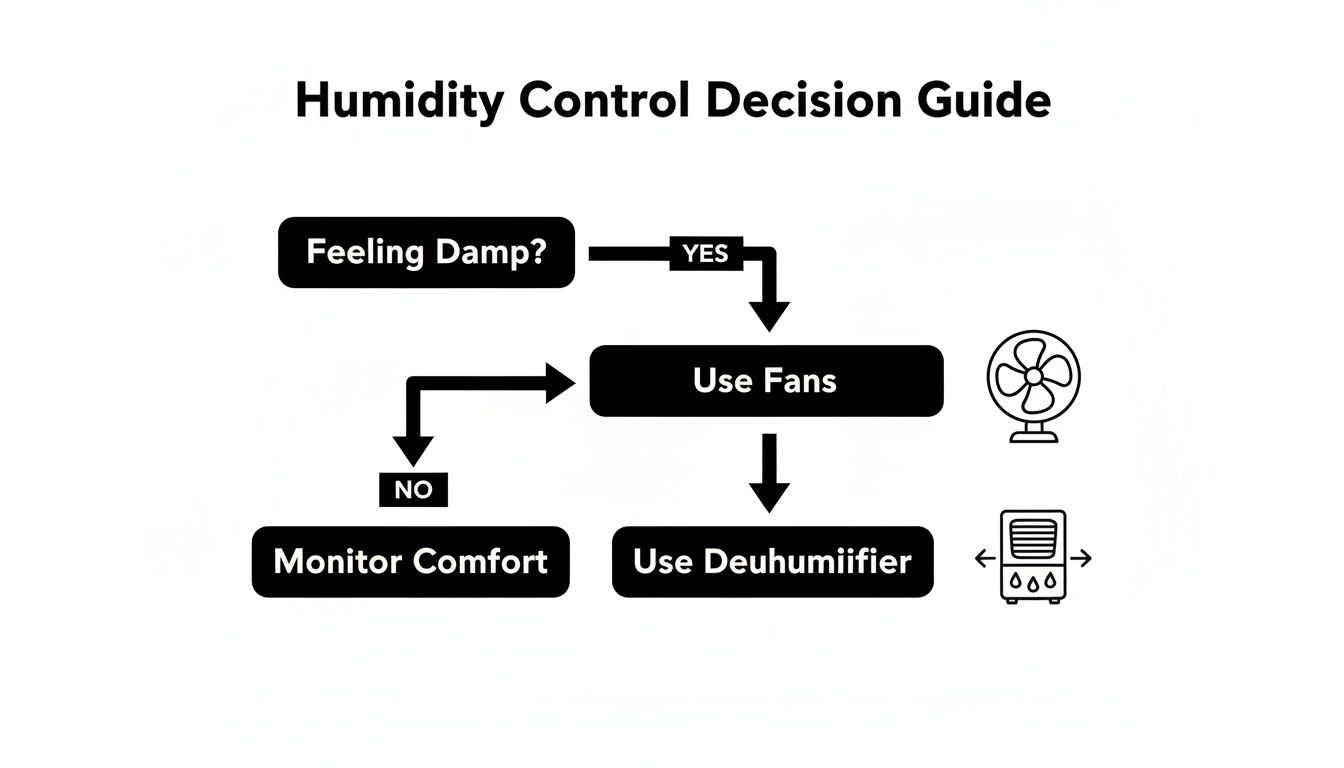
The flowchart simplifies the initial response to high humidity, showing how immediate actions like using fans and dehumidifiers are foundational first steps.
The settings on your thermostat can either help or hurt your dehumidification efforts. It's really worth your time to get comfortable with mastering air conditioning controller functionality. The most common mistake I see homeowners make is with the fan setting.
You have two main options: ON and AUTO.
Always, always set your fan to AUTO. When the fan is set to ON, it keeps blowing air across the wet evaporator coils even after the cooling cycle stops. This just re-evaporates all that moisture your AC worked so hard to collect and blows it right back into your house.
For tightly sealed homes, particularly those with modern insulation like spray foam, an AC alone might not be enough to win the battle. This is where a whole-house dehumidifier comes into play. These units integrate directly into your existing HVAC ductwork and work independently of your air conditioner.
The humidity challenge in spray foam insulated homes is a perfect example. Because spray foam creates such a tight building envelope, moisture from daily activities gets trapped inside. Without proper mechanical ventilation, humidity can spike to 70 percent or higher. This problem gets worse because the AC runs less often in a well-insulated home, meaning it has fewer chances to remove moisture. If you want to learn more, our guide on attic spray foam insulation in Palm Beach County is a great resource.
Studies have shown that in these airtight homes, installing a whole-house ventilating dehumidifier is the most effective solution. It can stabilize humidity in the ideal 50 percent range even during our rainiest seasons. The unit monitors your home’s humidity levels and kicks on only when needed, giving you precise control and ensuring your home stays dry and comfortable, no matter what the weather is doing outside.
While turning up the AC and running fans can give you some temporary relief, it’s a lot like bailing water out of a leaky boat. To really solve the problem for good, you have to stop the humid, sticky air from getting into your house in the first place. This means we need to look at your home’s building envelope—the barrier that’s supposed to separate your cool, comfortable interior from the swampy South Florida air.
Every tiny gap, crack, and unsealed pipe penetration is an open door for moisture. Humid air is relentless; it will worm its way through poorly sealed windows, gaps around your electrical outlets, and especially through your attic. All those small leaks add up, completely undermining your efforts to keep humidity down and forcing your HVAC system to work way harder than it should.
You can start reinforcing your home's defenses with a few simple weekend projects. Putting new weatherstripping around your doors and running a bead of caulk around window frames are great first steps. Honestly, these small jobs can make a surprising difference in cutting down on drafts and moisture.
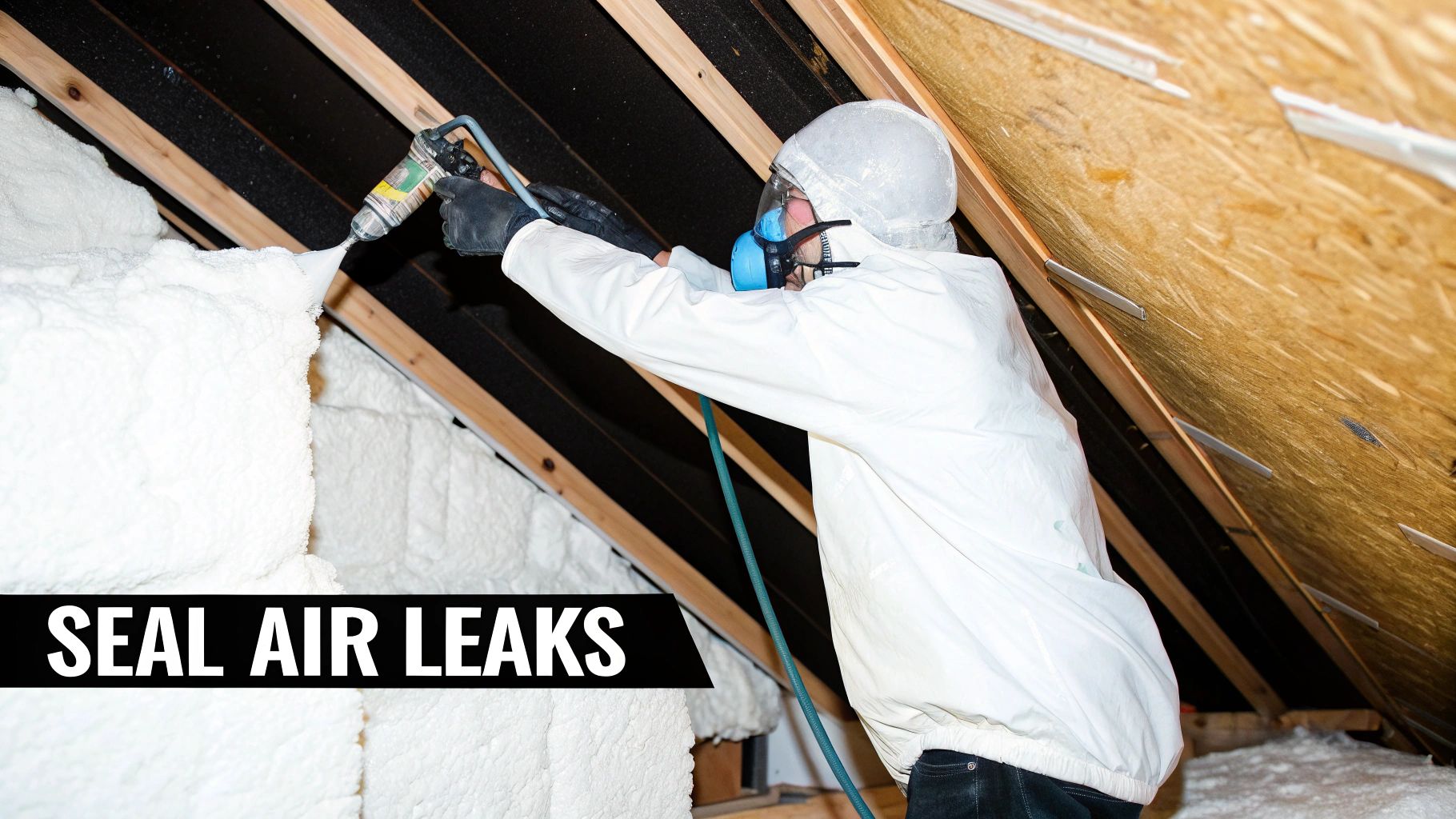
But if you want a permanent fix, you have to think bigger. The real goal is to create a complete, unbroken air barrier around your living space. This is where professional air sealing with a product like spray foam insulation goes from being just an upgrade to a core strategy for lasting humidity control.
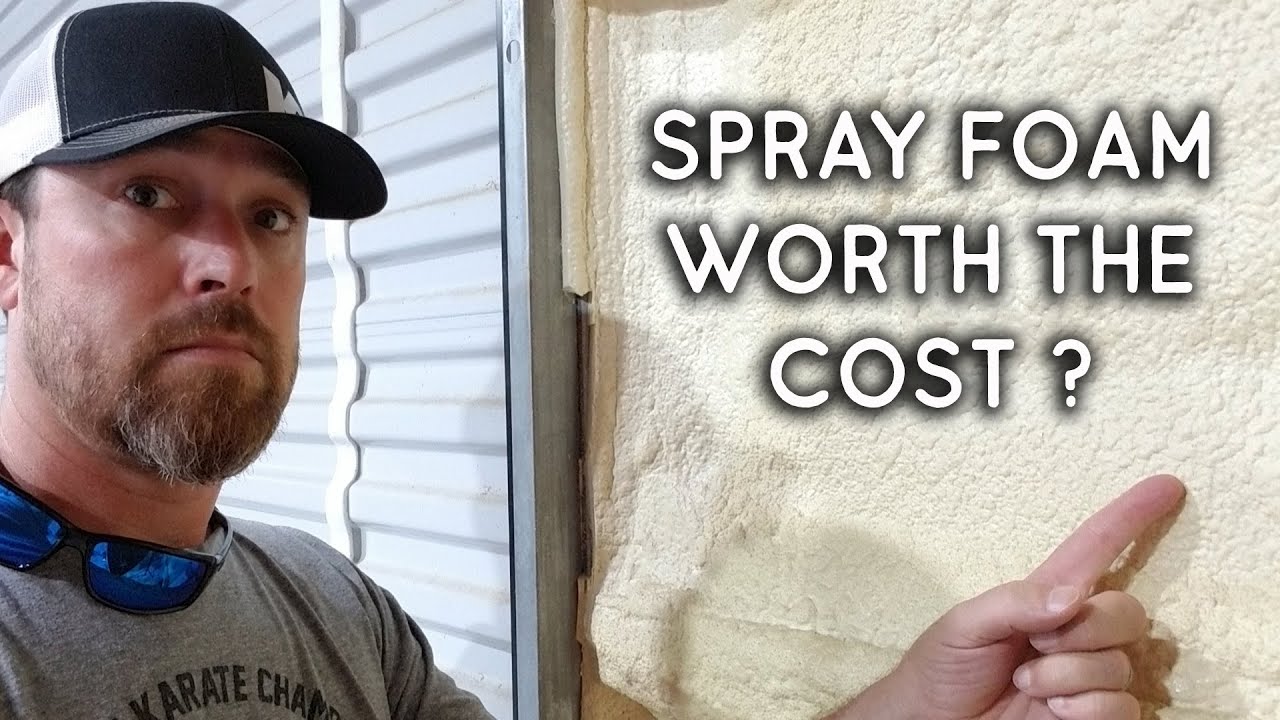
Spray foam is so much more than just insulation. When it's applied, it expands to fill every single crack and gap, creating a solid, monolithic barrier that blocks both air and moisture. Unlike old-school fiberglass batts that can sag, get compressed, and leave gaps over time, spray foam literally becomes one with your home’s structure. It eliminates those air leaks that let humid air creep in.
When you create a truly sealed building envelope, you dramatically reduce the workload on your HVAC system. It no longer has to constantly battle an endless invasion of humid air. It can finally maintain a dry, comfortable environment with far less effort and energy.
This is the central idea behind what we call the Airtight Comfort System—a whole-house approach that integrates high-performance insulation with your home’s mechanical systems for peak performance.
Not all spray foam is the same, and picking the right one for South Florida is absolutely critical. There are two main types—open-cell and closed-cell—and the difference is huge when it comes to controlling moisture.
To really see the difference, let’s put these materials side-by-side.
| Feature | Closed-Cell Spray Foam | Open-Cell Spray Foam | Fiberglass Batt |
|---|---|---|---|
| Air Barrier | Excellent (monolithic seal) | Excellent (seals gaps) | Poor (allows air movement) |
| Vapor Barrier | Yes (impermeable) | No (permeable) | No (absorbs moisture) |
| R-Value (per inch) | 6.5 – 7.0 | 3.5 – 3.8 | 3.1 – 3.4 |
| Structure | Rigid, adds structural strength | Soft, flexible | Soft, compresses easily |
| Best For | Total moisture & air control | Soundproofing, interior walls | Budget projects (low humidity) |
For South Florida homes, the data makes it clear. Closed-cell foam’s high R-value and unmatched moisture resistance make it the superior technical choice for a truly dry and efficient home. It’s built to perform in our climate, maintaining its integrity from -40°F to 200°F. In fact, the U.S. Department of Energy has noted that buildings properly sealed with spray foam can cut energy loss by up to 50%.
Ultimately, by focusing on creating an airtight defense, you stop playing catch-up and start addressing the root cause of your humidity problems. It’s a strategic investment that stops moisture at the door, paving the way for a permanently comfortable, healthy, and efficient home.
Stepping into a crisp, dry house is one thing, but making the strategic investment to get there is one of the smartest financial moves a South Florida homeowner can make. This isn't just about spending money to fix a persistent humidity problem; it’s about upgrading your home’s building envelope in a way that pays you back, month after month.
The return on investment (ROI) you get from using high-performance spray foam insulation is real, and it often comes faster than people expect. By creating a truly airtight seal, you’re drastically cutting the workload on your HVAC system—almost always the single biggest energy hog in any home. That change goes straight to your bottom line.
When your home is properly sealed against our relentless humidity, your air conditioner finally stops fighting a losing battle against incoming moisture. It can maintain the temperature and humidity you want with far less effort. For many homeowners we work with, this translates to energy savings of 30% to 50%.
We’ve seen firsthand how this plays out. One client was able to downsize their replacement AC unit from 2.5 tons to just 2 tons after we installed spray foam. That decision alone saved them money upfront on the new equipment and locked in significant long-term savings from reduced energy costs.
This reduced strain does more than just lower your FPL bill; it extends the life of your expensive HVAC equipment. An overworked air conditioner is an air conditioner destined for an early breakdown. Lightening its load means you can push those major replacement costs further down the road.
The financial upside doesn't stop there, either. By preventing humidity buildup, spray foam also protects anything you have stored in your attic from moisture damage and boosts your home's overall resale value. Most homeowners see a return on their initial investment within just three to five years.
One of the most overlooked financial perks of air sealing comes to light when it's time to replace your air conditioner. Most HVAC contractors size a new unit based on your home's current, leaky, and inefficient state. But after a professional spray foam installation, your home’s cooling needs are slashed.
This creates a huge opportunity. A good HVAC pro can perform a new load calculation (known as a "Manual J") that takes the improved insulation and air tightness into account. In nearly every single case, the result is the same: you can install a smaller, less expensive AC unit. This is especially critical when dealing with our local building materials, and you can learn more about the insulation value of concrete block walls in our guide.
This isn’t just a minor tweak. The benefits compound:
For homeowners in Wellington and Stuart, the message is clear. Investing in a properly sealed home isn’t an expense—it’s a powerful, value-adding upgrade. It delivers tangible financial returns for years and is the most effective way to permanently solve the humidity puzzle while making your home more affordable to own.
Even with the best plan, you're bound to have a few questions when you start tackling your home's humidity. Getting straight answers is the best way to feel confident you're on the right track. We hear these questions all the time from homeowners across South Florida, so let's clear them up.
In our unique climate, the sweet spot for indoor relative humidity is between 45% and 55%. This is where you'll feel most comfortable and keep your home healthy.
When it gets too dry (which is rare here), you might get dry skin or irritated sinuses. But the real enemy in South Florida is when humidity climbs over 60%. That’s the magic number where mold, mildew, and dust mites start to thrive.
Keeping your home in that ideal 45-55% range isn't something that just happens on its own. It takes an active approach: a good AC unit, maybe a dedicated dehumidifier, and a home that's properly sealed from the outside. A cheap digital hygrometer is your best friend here—it's a must-have tool for knowing exactly where your levels are and when you need to act.
Think of spray foam insulation as the foundation for humidity control, not the entire house. It’s absolutely critical, but it’s just one piece of the puzzle.
Spray foam's biggest job is to create an airtight seal, which is a game-changer for stopping humid, swampy outdoor air from seeping into your home. That’s usually the number one source of moisture, so by blocking it, spray foam makes your HVAC system's job a whole lot easier.
But here’s the catch: because it seals your home so well, it also traps moisture that you create inside from everyday life—showering, cooking, even just breathing. If that moisture has nowhere to go, you can still end up with a humidity problem.
The most effective, long-term solution always pairs spray foam insulation with proper mechanical ventilation. You create a perfectly sealed, controllable box with spray foam, and then you use a correctly sized HVAC system or a whole-house dehumidifier to actively manage the air inside that box.
That two-part strategy is the real secret to getting humidity under control for good.
For South Florida, closed-cell spray foam is the clear winner for controlling humidity in almost every situation. It all comes down to its structure.
Closed-cell foam is made of tiny, packed-together cells that are completely sealed. This dense, rigid structure doesn't just block air; it acts as a true vapor barrier, meaning moisture can't pass through it. In our climate, that is a non-negotiable feature for preventing condensation and hidden moisture inside your walls and attic.
Open-cell foam, on the other hand, is softer and feels more like a sponge. While it does a great job of stopping air leaks, its cells aren't sealed, so vapor can move through it. If you have a small roof leak or are just dealing with our constant high humidity, it can absorb and hold onto water—exactly what you don't want.
When it comes to the most important areas for moisture defense, like your attic roof deck and exterior walls, closed-cell foam gives you the robust, resilient protection you need to fight back against our climate.
It’s time to seriously look into a whole-house dehumidifier if your AC seems to be working, but you're still dealing with these issues:
We see this a lot in newer, tightly sealed homes—especially those with spray foam. The house is so energy-efficient that the AC cools the air down fast and shuts off. The problem is, it doesn't run long enough to pull all the moisture out of the air.
A whole-house dehumidifier is the perfect fix. It hooks right into your HVAC system and works independently from your AC, focusing on one job: removing moisture from the air in every room. It gives you precise control, ensuring your home stays dry, healthy, and genuinely comfortable, no matter how soupy it gets outside.
At Airtight Spray Foam Insulation, our specialty is creating the sealed, high-performance building envelopes that are the foundation of true humidity control in South Florida. If you’re ready to permanently solve your home’s moisture problems and create a more comfortable, energy-efficient space, we can help. Request a free estimate from Airtight Spray Foam Insulation today and discover how our expert solutions can transform your home.