Blog
A Homeowner Guide to Insulate Rim Joists

Here’s one of the highest-impact DIY projects you can tackle for a more energy-efficient and comfortable home: insulating your rim joists. So, what’s a rim joist? It’s the wooden frame running along the very edge of your floor system, right where the house walls sit on top of the foundation. When this small, often-overlooked area is left unsealed, it creates a superhighway for air leaks, moisture, and massive energy loss.
Why Insulating Your Rim Joists Actually Matters
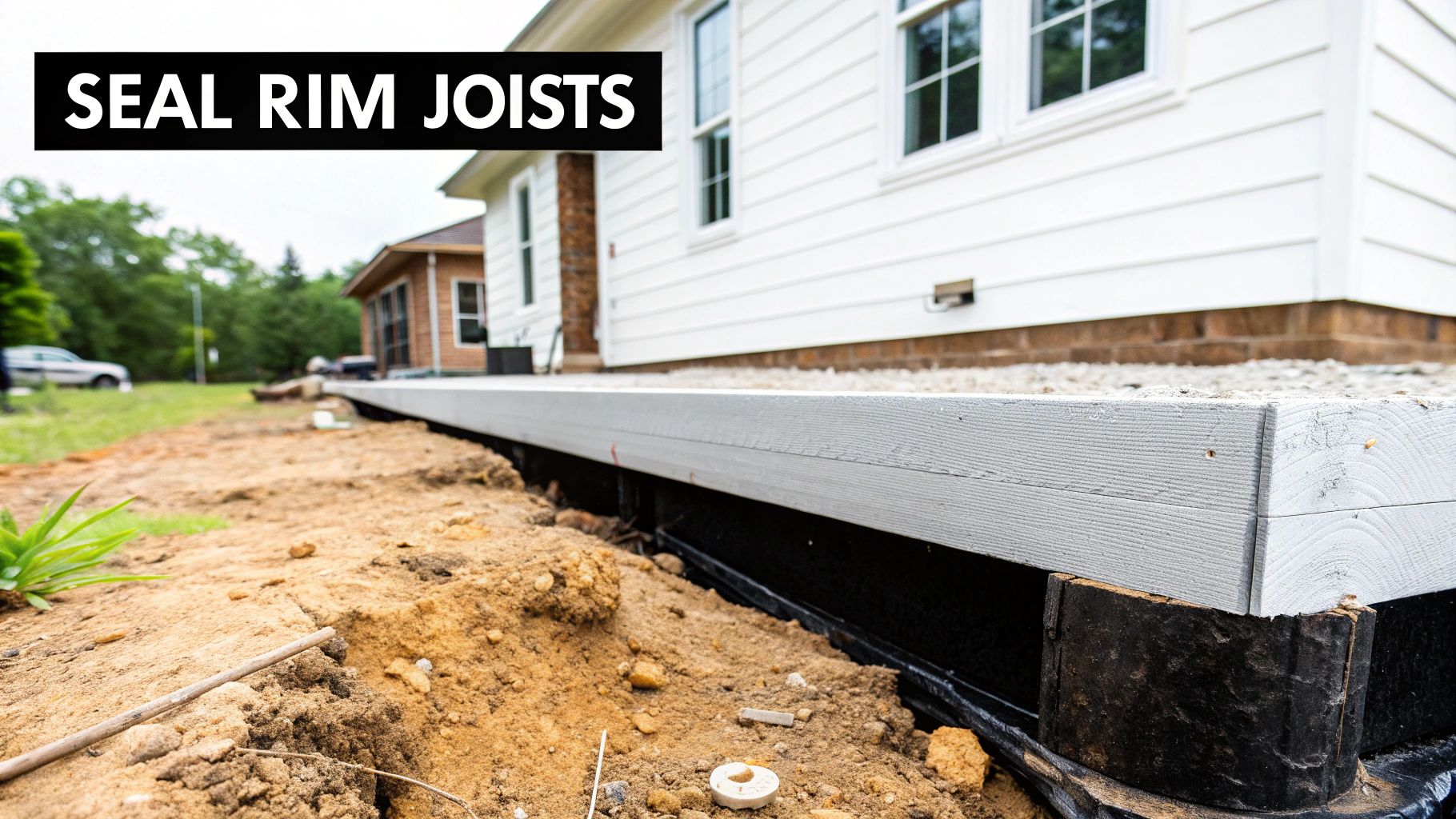
Most people hear “insulation” and immediately think of cold climates—packing attics and walls to keep heat from escaping in winter. But down here in South Florida, that rim joist plays an equally critical role in keeping your home cool, dry, and comfortable. It’s that thin band of wood wrapping around your home’s perimeter, and it’s a major weak point in your home’s thermal envelope.
Without proper insulation, that rim joist acts like a thermal bridge, letting all that oppressive outdoor heat and humidity creep right into your crawl space or basement. This forces your air conditioner to work overtime just to keep up, which translates directly to higher energy bills.
The Impact on Your Home’s Health and Comfort
An unsealed rim joist isn’t just an energy hog; it’s an open invitation for a whole host of other problems that directly mess with your living environment. Seriously, think of it as leaving a window cracked open 24/7.
Here’s what you’re up against when you ignore this spot:
- Persistent Indoor Humidity: All that sticky, humid air from outside finds its way in through tiny gaps and cracks. Your home feels damp, and your AC has to run longer cycles just to pull the moisture out of the air, adding wear and tear to the system.
- Musty Odors and Poor Air Quality: Moisture getting into dark, unventilated crawl spaces is a perfect recipe for mold and mildew. Before you know it, those musty smells start wafting up into your living areas.
- Pest Infestations: Those little gaps are a welcome mat for insects and rodents looking for a place to stay. Sealing and insulating the rim joist puts up a physical barrier that helps keep them out.
“Many homeowners are surprised to learn how much conditioned air they lose through the rim joists. It’s a relatively small area that has a disproportionately large impact on energy bills and indoor air quality, especially in our humid climate.”
The Financial Case for Sealing Rim Joists
The numbers don’t lie—this project pays for itself. While people up north see savings on heating, the savings in a cooling-dominated climate like ours are just as compelling. Properly air-sealing and insulating this zone is a low-cost, high-return investment.
The U.S. Department of Energy estimates that up to 10% of a home’s heat loss happens through uninsulated rim joists. That figure shows just how much energy—and money—is slipping right through this overlooked part of your house. By tackling it, you’re not just making your home more comfortable; you’re making a smart financial move that pays you back every single month.
And it’s not just about energy savings. Insulating your rim joists also helps with noise. The same materials that block air and heat also dampen sound from outside, making for a quieter home. To get a better handle on how this works, check out our guide on using insulation as a sound barrier.
Choosing the Right Insulation for Our Humid Climate
When you’re insulating rim joists in South Florida, picking the right material is absolutely critical. This isn’t just about blocking heat; it’s a battle against moisture. The wrong insulation can trap our thick, humid air right against the wood framing of your house, creating a perfect recipe for mold, mildew, and eventually, wood rot.
Let’s break down the three most common options you’ll see: spray foam, rigid foam board, and the ever-present fiberglass. Each one has its pros and cons, but how they perform in our relentless humidity is what really matters.
The Airtight Champion: Spray Foam
If you’re looking for the best possible solution, two-part closed-cell spray foam is the undisputed winner for rim joists. There’s a good reason for that. When it’s applied, it expands to fill every last crack, seam, and tiny imperfection in the joist bay, creating a single, solid, airtight seal. It’s not just insulation—it’s an air barrier and a vapor barrier all in one go.
That complete seal is what makes it so effective in our climate. It physically stops humid outdoor air from ever reaching the cooler surface of the rim joist, which completely prevents condensation from forming in the first place.
- R-Value: It packs the biggest punch in a small space, with an R-value of R-6 to R-7 per inch.
- Moisture Barrier: The closed-cell structure is waterproof. Moisture simply can’t pass through it.
- Structural Adhesion: It glues itself to the wood, adding a bit of structural integrity to the floor system.
While you can find DIY kits, this is one of those jobs where a professional application really pays off. A pro ensures you get a consistent, thick-enough layer without any gaps. If you’re weighing your options for other areas of your home, it’s worth understanding the difference between spray foam vs. blown-in insulation, as each method is designed for different situations.
The DIY Favorite: Rigid Foam Board
For the hands-on homeowner, rigid foam board is an excellent choice. This method, often called “cut and cobble,” involves carefully cutting pieces of foam to fit inside each joist bay and sealing all the edges with canned spray foam. It delivers great results when you take your time and do it right.
You’ll generally run into two types that work well here:
- Extruded Polystyrene (XPS): This is the pink or blue board you see at the home improvement store. It has a solid R-value (around R-5 per inch) and is great at resisting moisture.
- Polyisocyanurate (Polyiso): This is the foil-faced board. It offers a slightly higher R-value (around R-6.5 per inch). While it can lose a bit of performance in extreme cold, that’s not something we worry about much down here.
The success of a rigid foam project comes down to one thing: the quality of the seal. A tiny gap left around the edge is all it takes for humid air to sneak in, hit the cold rim joist, and get trapped. Sealing every single edge with canned foam isn’t just a suggestion—it’s absolutely essential.
An Honest Look at Fiberglass Batts
Now, we have to talk about fiberglass. You see it stuffed in rim joists all the time because it’s cheap and looks easy. But for our climate, using fiberglass here is one of the worst mistakes you can make unless you take some serious extra steps.
Fiberglass doesn’t stop air. It just slows down heat moving through it. Our humid South Florida air will drift right through the fluffy batts.
When that warm, moist air hits the rim joist—which is kept cool by your air conditioning—it condenses. The water soaks the fiberglass like a sponge and keeps the wood damp, creating the ideal breeding ground for mold and rot. The only way to use fiberglass safely here is to install a flawless, perfectly sealed air and vapor barrier over it, which is incredibly difficult to pull off in the small, awkward spaces between joists.
Comparing Insulation Methods for Rim Joists
Here’s a simple table to help you compare the materials head-to-head, focusing on what really counts in South Florida.
| Insulation Type | Best For | R-Value per Inch | Moisture Resistance | DIY Friendliness |
|---|---|---|---|---|
| Spray Foam | The ultimate, permanent air and vapor seal with zero gaps. | R-6 to R-7 | Excellent | Low (Pro install recommended) |
| Rigid Foam (XPS) | A detail-oriented DIYer who will meticulously seal every edge. | R-5 | Very Good | High |
| Fiberglass | Extremely tight budgets only if a perfect air barrier can be installed. | R-3 to R-4 | Poor | High |
For homeowners in our area, the decision really comes down to two options. Both closed-cell spray foam and a perfectly sealed rigid foam installation will give you the thermal performance and moisture control you need to protect your home from the Florida heat and humidity.
For DIY enthusiasts looking to tackle rim joist insulation, the “cut and cobble” method is one of the most effective approaches out there. It perfectly blends the high R-value and moisture resistance of rigid foam board with the air-sealing magic of canned spray foam.
When done right, you get a solid air and thermal barrier that really boosts your home’s comfort and efficiency. It’s definitely more hands-on than hiring a pro, but for a homeowner who appreciates a good project, the results are incredibly satisfying. The goal here isn’t just to cram insulation into a space; it’s to build a sealed system from the ground up.
Here’s a quick look at the common materials you’ll be choosing from, including the rigid foam used in this method.
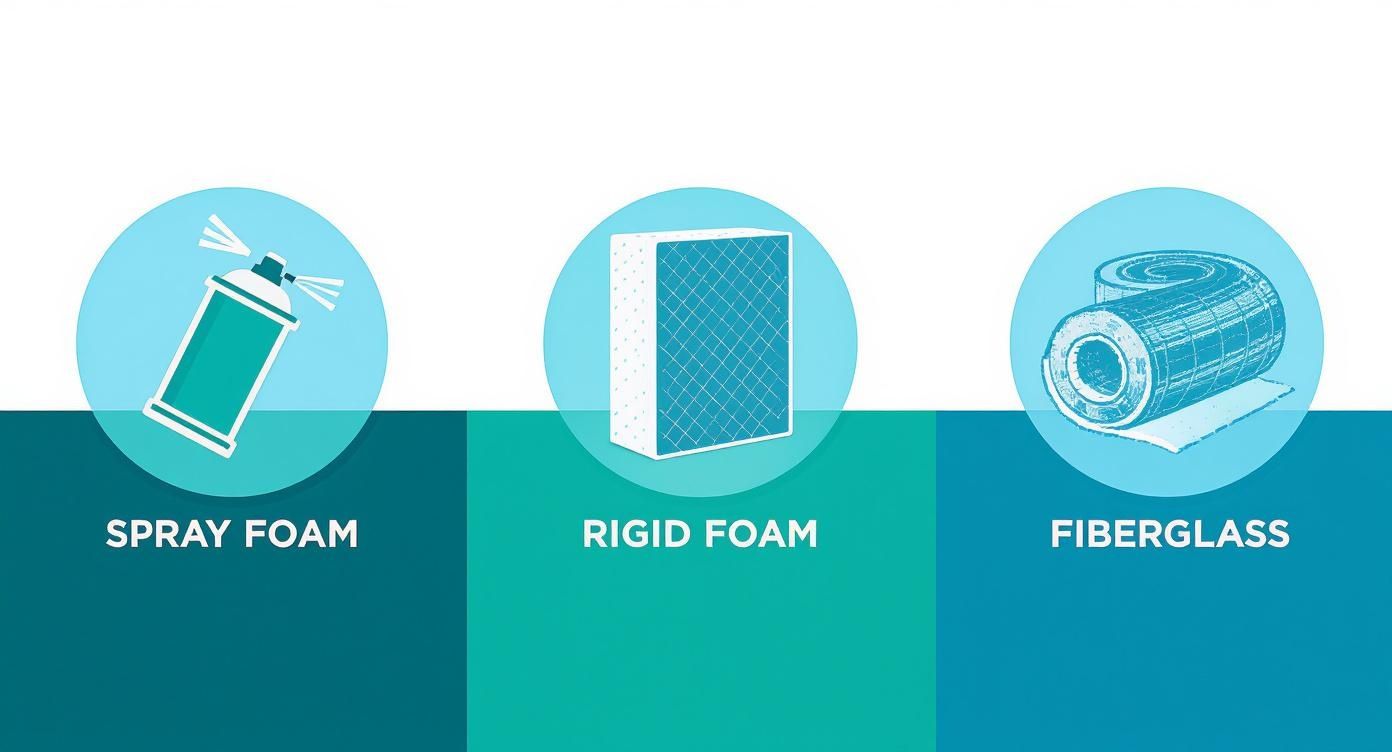
As you can see, rigid foam hits that sweet spot between performance and DIY-friendliness, especially when compared to professional spray foam or old-school fiberglass that can trap moisture.
First Things First: Prep the Joist Bays
Before you even touch a piece of foam, you have to prep the area. This step will make or break your project. A clean, dry surface is absolutely essential for getting a good, lasting seal. Start by pulling out any old, failing insulation—especially if it’s fiberglass batts, which are notorious for holding moisture against the wood.
Next, get in there with a good flashlight and a wire brush. You need to clean everything: the rim joist itself, the top of the foundation wall (that’s the sill plate), and the subfloor above. Clear out all the cobwebs, dust, and any crud so your sealant can form a tight bond.
This is also your chance to play building detective. Give the wood a thorough inspection for any signs of trouble.
- Water Stains or Soft Wood: These are major red flags for leaks. You must find and fix the source of the water before you seal up the bay.
- Termite Tunnels: Look for thin mud tubes snaking across the wood or foundation. If you see anything suspicious, stop and call a pest control professional immediately.
- Mold or Rot: Any wood that looks compromised needs to be handled. Sealing mold inside a wall cavity will only let it fester and spread.
Measure Twice, Cut Once (for a Snug Fit)
Here’s a rookie mistake I see all the time: assuming every joist bay is the same size. Trust me, they never are. Even in new construction, there are always slight variations. You have to measure each bay individually.
Take height and width measurements in a few spots within the same bay and use the smallest numbers. The goal is to cut your piece of rigid foam about 1/2 inch smaller than the opening on all sides. That gap isn’t a mistake—it’s the most important part of the process. It’s where the canned spray foam will go to create that critical airtight seal.
To cut the foam board, a long utility knife with a fresh blade works great. Score the board a few times against a straightedge, then you can usually snap it cleanly. If you’re using thicker 2-inch XPS foam (which I highly recommend), a fine-toothed handsaw or a jigsaw will make your life a lot easier.
Remember, the foam board is your thermal barrier, but the canned spray foam is your air barrier. A perfect fit for the foam board is less important than leaving a consistent, sealable gap around the entire perimeter.
The Art of Sealing Every Single Edge
With all your foam pieces cut and ready, it’s time for the main event: sealing. Do a quick test-fit of each piece in its designated bay to make sure you have that consistent 1/2-inch gap. If it’s too tight anywhere, trim it down.
When you’re ready to install, run a bead of low-expansion canned spray foam around the inside perimeter of the joist bay. Gently press your cut foam board into place, pushing it back until it sits flush with the inside edge of the floor joists. The spray foam will squish out a bit, forming your initial seal.
Now for the final step. From the inside, go back and apply a continuous, careful bead of spray foam into that gap around all four sides of the rigid foam. Be thorough. This is what stops humid South Florida air from sneaking in and condensing on the cool rim joist.
What About Pipes and Wires?
It’s a guarantee: you’ll run into pipes, wires, or maybe even ductwork passing through a rim joist. Don’t just try to stuff insulation around them and call it a day.
Here’s the right way to handle it:
- Cut the Main Piece: Cut your foam board to size as if the obstacle isn’t there. Then, hold the board up to the bay and mark exactly where the pipe or wire is.
- Make a Clean Opening: Use your utility knife or a hole saw to create a notch or hole for the penetration. If you need to fit the board around a pipe, you can even cut the foam in half, fit the two pieces into the bay, and seal the seam later.
- Seal Like You Mean It: This is where you can’t be shy with the canned foam. Seal the gap between any foam pieces, seal the entire outer perimeter, and most importantly, seal completely and generously around the pipe or wire itself.
Every tiny gap is a potential air leak. Taking your time on these tricky spots is what separates a professional-quality job from one that could cause moisture issues later. When you’re done, you should have a solid, airtight, and fully insulated barrier ready to stand up to our demanding climate.
Setting Up Your Workspace for a Safe Project

Before you even think about cutting your first piece of foam or cracking open a can of sealant, we need to talk about safety. A successful project to insulate rim joists isn’t just about getting a good seal; it’s about finishing the job without any injuries. Proper prep is non-negotiable, especially when you’re working in tight, poorly lit spots like crawl spaces or basements.
The very first step is getting your Personal Protective Equipment (PPE) together. Don’t just grab it—make sure it fits right and you’re comfortable wearing it. Canned spray foam, in particular, has chemicals you definitely don’t want on your skin or in your lungs.
Your Essential PPE Checklist
Having the right gear is the foundation of a safe DIY job. Think of this as your uniform—every piece has a critical purpose.
- Safety Glasses or Goggles: This is a no-brainer. You need to shield your eyes from foam overspray, dust, and any other debris you kick up. A stray drop of sealant can cause serious eye irritation.
- Chemical-Resistant Gloves: Your average work gloves won’t cut it here. Nitrile gloves are a must to keep that incredibly sticky foam off your hands.
- Respirator Mask: A simple dust mask is not enough. You need a proper respirator fitted with organic vapor cartridges to protect your lungs from the chemical fumes (isocyanates) released while the foam cures.
- Long Sleeves and Pants: Keep your skin covered. This prevents accidental contact with foam sealant, which is a nightmare to get off once it hardens.
Using this gear correctly prevents the most common DIY injuries. You can find more details on professional safety standards in our Learning Center.
Don’t ever compromise on your PPE. Spending a few extra dollars on a quality respirator and gloves is a tiny price to pay to avoid a chemical exposure headache—or worse.
Preparing the Work Area
Once you’re geared up, it’s time to prep the space itself. Basements and crawl spaces are often cluttered and dark, creating tripping hazards that make it tough to work efficiently. A few minutes of setup can save you hours of frustration.
Start by clearing a path to the rim joists. Move any boxes, tools, or stored items out of your immediate work zone. You need room to move without knocking things over.
Next, focus on lighting. A single bare bulb hanging from the ceiling won’t be enough. Bring in a portable work light or a powerful headlamp so you can see every single nook and cranny you need to seal.
Finally, protect your surroundings. Lay down drop cloths to catch foam drips or overspray, especially if you have a finished floor or anything valuable nearby. Get all your tools—your foam gun, utility knife, measuring tape, and foam boards—organized and within easy reach. This simple step keeps you from constantly climbing in and out of the space, making the whole job smoother and safer.
Navigating Building Codes and Knowing When to Call a Pro
Finishing a DIY project like insulating your rim joists feels great, but getting it done right means it’s not just effective—it has to be safe and up to code. Building codes aren’t just red tape; they are there to protect your home and your family, especially from fire hazards.
When you use foam-based insulation, whether it’s rigid boards or spray foam, you’re introducing a plastic material into your home’s structure. While these materials are fantastic insulators, they absolutely must be protected from fire. This is where the term “thermal barrier” becomes critical.
The Non-Negotiable Step: Fire-Blocking Codes
Local building codes almost universally demand that foam insulation be covered by an approved thermal barrier. The goal is simple: to slow the spread of a potential fire. This is a crucial step that many DIYers accidentally skip, creating a serious safety risk and a major problem that will get flagged during a future home inspection.
Your best bet is usually 1/2-inch drywall. It’s cheap, easy to find, and meets the fire-resistance standards in most places. Other materials might be acceptable, but you need to be sure:
- Plywood or OSB: A minimum thickness of 3/8-inch is often allowed.
- Mineral Wool: Some dense-pack mineral wool products can also act as a fire block.
- Intumescent Paint: This is a special fire-retardant paint that can be applied directly over spray foam, but it must be specifically rated as a thermal barrier. Not all fire-retardant paints qualify.
Before you buy anything, call your local building department. Seriously, just make the call. Confirm which materials are approved in your area. Guessing wrong here could mean tearing out all your hard work.
Don’t assume your project is “too small” for a permit or inspection. When it comes to fire safety, you always want to verify the requirements. It’s a simple phone call that keeps your home safe and avoids headaches down the road.
This isn’t just a local issue, either. The push for energy efficiency is global. In Europe, the Energy Performance of Buildings Directive (EPBD) has been tightening insulation standards for years, making properly insulated rim joists a priority in new construction and major renovations. You can read more about the growing global thermal insulation market on Future Market Insights.
When to Step Aside for a Professional
Having a can-do attitude is great, but true wisdom is knowing your limits. While cutting and fitting rigid foam is a fantastic DIY project for many, some situations absolutely require a professional. Hiring an expert isn’t giving up; it’s making the smart, safe decision for your home.
You should seriously consider hiring a pro if you run into any of these scenarios:
- You Find Structural Damage: If you pull back the old insulation and discover soft, spongy wood, obvious rot, or signs of active termite damage, stop what you’re doing. This isn’t an insulation problem anymore. You need a structural engineer or a licensed pest control company to fix the root cause first.
- The Job is Big or Complicated: If your home has a massive crawlspace or the joist bays are a tangled mess of plumbing, wiring, and ductwork, a DIY job can quickly turn into a nightmare. Pros have the tools and experience to navigate these obstacles efficiently, ensuring every nook and cranny is perfectly sealed.
- You’re Considering Two-Part Spray Foam: Forget the DIY kits you see at the big-box stores. They can be incredibly tricky to use correctly. Professional installers use high-pressure equipment that mixes the two chemicals at the perfect temperature and ratio. This guarantees a durable, effective, and properly cured final product. A bad DIY spray foam job is an expensive, sticky mess to clean up.
At the end of the day, the goal is a perfectly sealed and safe installation. If you have any doubt about your ability to get there on your own, investing in a professional is the best move you can make.
Answering Your Top Questions About Rim Joist Insulation
Once you decide to take on insulating your rim joists, a few common questions always seem to surface. It’s smart to ask them—especially in South Florida, where the details make all the difference between a job well done and a future headache.
Let’s clear up the confusion so you can move forward with confidence.
Do I Need a Vapor Barrier on My Rim Joist Insulation?
This is probably the most important question for anyone insulating a home in our humid climate. The answer really depends on the type of insulation you’re using. A vapor barrier’s entire job is to stop humid air from hitting a cooler surface where it can condense and cause problems.
If you go with closed-cell spray foam or rigid foam boards like XPS or Polyiso, you’re in luck. These materials are “vapor impermeable,” which is a technical way of saying they stop moisture all by themselves. They act as their own built-in vapor barrier. Trying to add another plastic sheet over them is not only a waste of time but can actually trap moisture between two non-breathing layers, which is the last thing you want.
Now, if you’re tempted to use fiberglass batts (which, as we’ve talked about, is a risky move here), then a perfectly installed air and vapor barrier is absolutely mandatory. Without it, our thick, humid air will drift right through the fluffy fiberglass, hit the cooler rim joist, and create a perfect breeding ground for mold and rot.
The bottom line is simple: With foam insulation, the material is the vapor barrier. With fiberglass, you have to add one—and it better be flawless.
What Should I Expect to Pay for This?
The cost to insulate rim joists can swing quite a bit depending on your home’s size, how complicated the job is, and whether you’re a DIYer or hiring a pro. Knowing the ballpark figures helps you budget and see the real long-term value.
Here’s a realistic breakdown of the costs involved:
- DIY “Cut and Cobble” Method: Using rigid foam board and some cans of spray foam sealant is your most wallet-friendly route. For materials, you’ll probably land somewhere between $1.50 and $3.00 per square foot.
- Professional Open-Cell Spray Foam: This is a solid step up in performance. Hiring a professional crew to apply open-cell foam usually costs between $3.00 and $5.00 per square foot.
- Professional Closed-Cell Spray Foam: This is the top-tier option for moisture resistance and R-value. Expect to pay a pro anywhere from $5.00 to $8.00 per square foot for a closed-cell application.
Yes, the upfront cost for a professional job is higher. But the investment often pays for itself with guaranteed performance and real energy savings. Many homeowners find the project pays for itself in about 5 to 10 years.
Can Insulating My Rim Joists Actually Cause Problems?
It can, but only if it’s done wrong. A proper installation is one of the best things you can do for your home. A botched job, however, can create the exact issues you were trying to prevent. The biggest danger, particularly in our climate, is trapping moisture against the wood framing.
This usually happens one of two ways:
- Using the Wrong Stuff: Like we mentioned, just stuffing fiberglass batts in there without a perfect air seal is asking for condensation and mold.
- Leaving Gaps: Even with the right materials, like rigid foam, if you leave small gaps around the edges, you’re giving humid air a pathway to sneak in, condense, and get stuck behind the foam.
It’s also critical to fix any existing problems before you seal everything up. That means repairing water leaks from the outside, addressing any foundation cracks, and dealing with signs of termites. Sealing up an existing problem will only make it ten times worse.
Finally, you can’t ignore local fire codes. Exposed foam insulation is a fire hazard and almost always needs to be covered by a thermal barrier like 1/2-inch drywall. Skipping this step isn’t just a code violation; it’s a major safety risk that will definitely cause problems when you sell your home. When done right, insulating your rim joists is a huge win.
Ready to stop energy loss and make your home more comfortable for good? The expert team at Airtight Spray Foam Insulation provides professional, high-performance spray foam solutions designed specifically for South Florida’s demanding climate. We guarantee a perfect seal every time. Request your free, no-obligation quote today!
Rim joists are a major source of air leakage in homes throughout Wellington, FL, especially in older houses and properties with raised floors. Airtight Spray Foam Insulation helps Wellington homeowners seal these gaps to reduce drafts, improve comfort, and lower energy bills.
👉 Learn more about our services in Wellington:
https://yourwebsite.com/spray-foam-insulation-wellington/