Your AC has been running all afternoon, but the hallway still feels muggy, the bedrooms never quite even out, and the ceiling seems to radiate heat after sunset. In West Palm Beach, that usually isn’t just an air conditioner problem. It’s an attic problem.
A lot of homeowners chase the wrong fix first. They service the AC, replace a thermostat, or close vents in rooms that feel too warm. Meanwhile, the attic keeps loading the house with heat and humidity from above. If the insulation is thin, damp, poorly installed, or full of gaps, the house never gets ahead of the climate.
That’s why attic insulation west palm beach homeowners choose needs to do more than slow heat. It has to deal with moisture, air leakage, and the punishment that South Florida attics take for most of the year. Generic advice from colder markets misses that. In this climate, the wrong material or the wrong install can create mold, trapped moisture, roof deck damage, and indoor comfort problems that don’t go away.
A common call goes like this: “My electric bill is high, the AC won’t stop, and the house still feels sticky.” Then the attic hatch opens, and the problem is obvious. The insulation is patchy, compressed, pulled back from edges, or never sealed around penetrations.
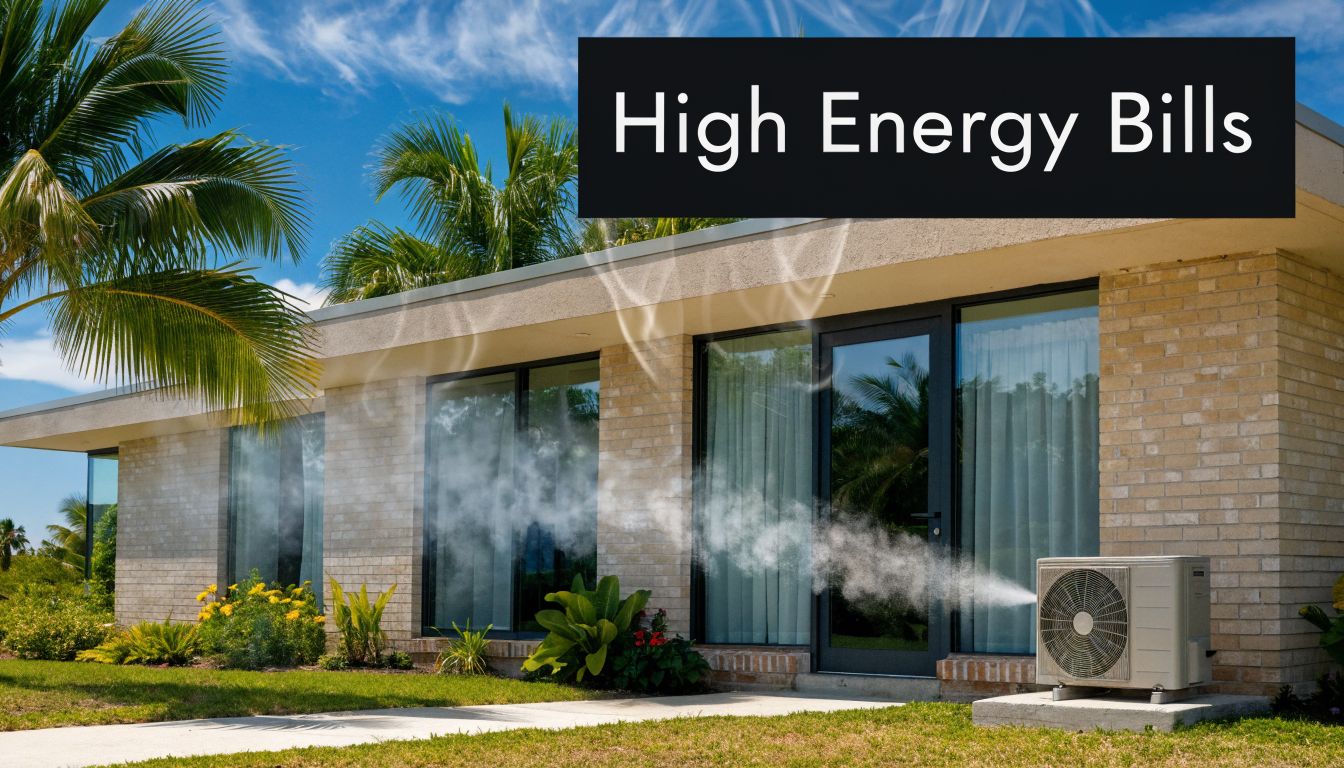
In West Palm Beach, attics without proper insulation can reach 120-130°F, and up to 60% of a home’s heat or cold air loss can happen through the attic and walls. Correcting that can reduce energy bills by up to 20%, according to this local attic insulation reference for West Palm Beach.
It's common to notice the symptoms before understanding the cause:
That’s why insulation and air sealing belong in the same conversation. If you only add material and ignore leakage paths, you leave part of the problem in place. A lot of homeowners start by addressing obvious bypasses first, and this guide on how to seal attic air leaks helps explain where those weak points usually are.
Practical rule: If your AC seems undersized only during the hottest, muggiest part of the year, check the attic before you blame the equipment.
West Palm Beach homes don’t just battle heat gain. They battle solar load, humid outdoor air, and long cooling seasons. If you’re already looking at broader efficiency upgrades, it also helps to understand how insulation works alongside West Palm Beach solar energy solutions. Lowering the heat load from above makes every other efficiency investment work harder.
The attic isn’t a background issue. It’s one of the first places to inspect when a house feels expensive to cool.
Think of your attic like a cooler. A cheap cooler warms up fast because heat moves through the walls and lid easily. A high-performance cooler resists that heat flow longer. R-value is the insulation version of that resistance.
In West Palm Beach, that matters because the attic is exposed to extreme roof heat for long stretches. But in South Florida, R-value alone doesn’t solve the full problem. Air movement matters just as much.
Insulation works by resisting heat transfer through the ceiling assembly. More effective insulation makes it harder for attic heat to push into the rooms below.
For this climate, the U.S. Department of Energy specifies R-30 to R-49 for West Palm Beach attics. Spray foam delivers about R3.5 to R6.5 per inch, compared with fiberglass at R2.9 to R4.3 per inch, and it adds an air-sealing layer that traditional insulation doesn’t provide, as explained in this West Palm Beach attic insulation guide.
That “per inch” part matters in real houses. If the attic has awkward framing, tight eaves, or limited depth in problem areas, a higher-performing material can solve layout issues that loose-fill or batt products struggle with.
A humid climate changes the job. Heat isn’t the only thing moving through your attic assembly. Air is moving too.
When hot, damp air leaks through openings around wiring, duct boots, framing joints, plumbing penetrations, and top plates, it doesn’t just waste cooling. It carries moisture into places where you don’t want it. That’s where comfort problems become building problems.
A helpful perspective:
A lot of bad attic work comes from treating insulation like a blanket and ignoring the holes underneath it.
West Palm Beach’s subtropical climate can push humidity above 80%, and some insulation materials don’t handle that well. Cellulose is vulnerable to moisture in these conditions, while closed-cell spray foam creates a superior moisture barrier, acts as an impermeable vapor retarder, and adds structural strength, based on this cost-benefit analysis of attic insulation in humid conditions.
That doesn’t mean every attic needs the same product or the same assembly. It means the local climate punishes weak moisture management fast. If the insulation can hold moisture, sag, settle, or leave air pathways open, the house often shows those consequences in comfort, indoor air quality, and roof-related wear.
Homeowners usually compare insulation by price first. In West Palm Beach, that’s not enough. The better question is how each material handles heat, humidity, and air leakage in a real South Florida attic.
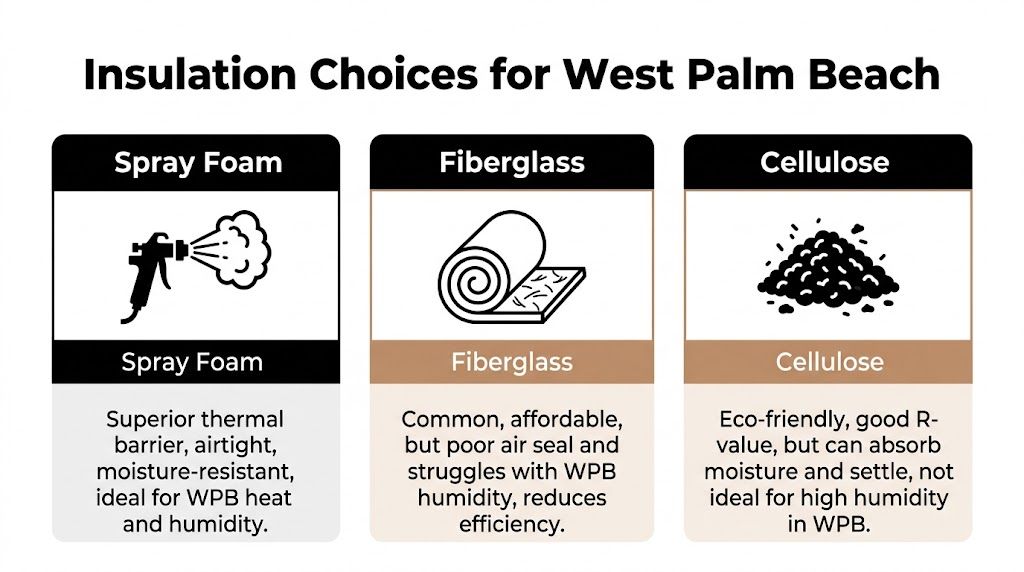
| Material | R-Value per Inch | Moisture Resistance | Air Sealing | Typical Lifespan |
|---|---|---|---|---|
| Spray Foam | R3.5-R6.5 per inch | Strong, especially closed-cell in humid conditions | Excellent | Long-term when properly installed |
| Fiberglass | R2.9-R4.3 per inch | Moderate, but can underperform if affected by moisture or air movement | Poor | Can last, but performance depends heavily on installation and attic conditions |
| Cellulose | Qualitatively good thermal performance | More vulnerable to moisture in humid climates | Limited compared with spray foam | Can settle and is less forgiving in damp environments |
The raw thermal range comes from the same DOE-based West Palm Beach reference already cited earlier. The bigger difference in practice is how each product behaves once real attic conditions get involved.
Spray foam is the premium option because it insulates and seals at the same time. In this climate, that combination matters more than many homeowners realize.
It works well when the attic has:
Closed-cell foam is especially useful where humidity control and rigidity matter most. It also helps in assemblies where you don’t want humid air migrating into the structure.
If you want a side-by-side breakdown of performance differences, this page comparing spray foam vs fiberglass is worth reviewing.
Spray foam usually solves more than one problem at once. That’s why it often outperforms cheaper materials in difficult attics.
Fiberglass is common for a reason. It’s familiar, available, and often less expensive upfront. In a clean, dry, simple attic with good detailing and proper airflow, it can do the job.
But in West Palm Beach, fiberglass runs into three common issues:
A batt that looks fine from the hatch can still perform badly if it’s compressed, miscut, or pulled away from the framing. That’s a common field problem.
Cellulose has useful thermal characteristics, but West Palm Beach isn’t an easy market for it. In a humid attic, moisture vulnerability is a real concern. If the assembly takes on moisture, cellulose is less forgiving than many homeowners expect.
It can still appear attractive on paper because of cost and coverage. But in local conditions, material choice has to account for roof heat, attic humidity, and whether the attic has any history of leaks, pests, or contamination.
For attic insulation west palm beach homes depend on long term, the best material is usually the one that fits the attic’s moisture profile, ventilation design, and leakage conditions, not just the cheapest line item on an estimate.
Once a homeowner decides on spray foam, the next question is usually which type belongs in the attic. Open-cell and closed-cell are both foam, but they don’t behave the same way.
Think of open-cell like a dense sponge. It expands well and can help with sound control, but it’s more vapor permeable. Think of closed-cell like a waterproof hiking boot. It’s denser, more rigid, and built to resist moisture movement.
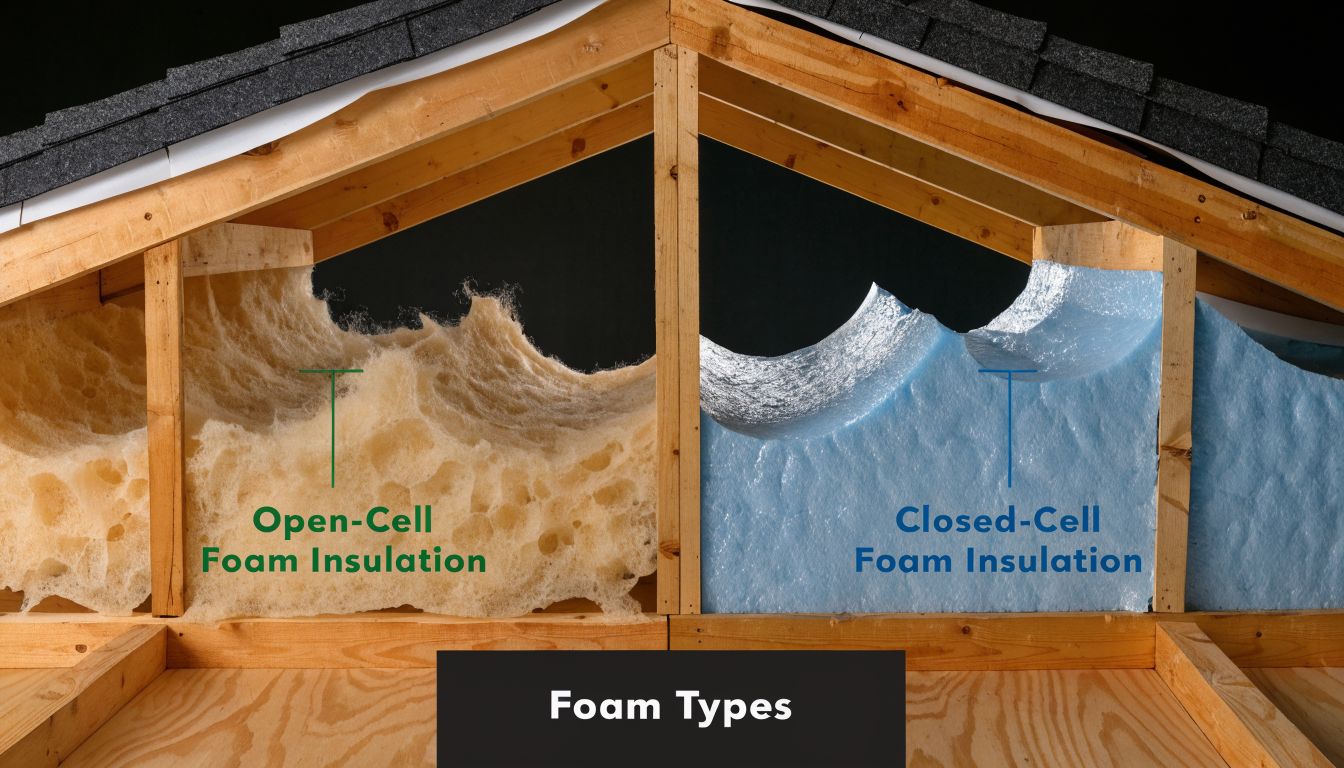
Open-cell has its place. It expands aggressively, fills irregular cavities well, and can be useful in assemblies where sound dampening matters.
It often makes sense for:
What it doesn’t do as well is block moisture movement the way closed-cell does. In a dry interior wall, that may be fine. In a South Florida attic or roof deck assembly with higher moisture risk, that trade-off matters.
Closed-cell is the product I’d look at first when the attic has any of the following:
It cures denser, adds structural strength, and handles humid conditions better. That’s why it’s often the essential choice in assemblies where moisture resistance matters more than anything else.
If the attic has a history of dampness, leaks, or moisture staining, don’t treat foam type as a cosmetic decision.
A quick visual helps make the distinction easier:
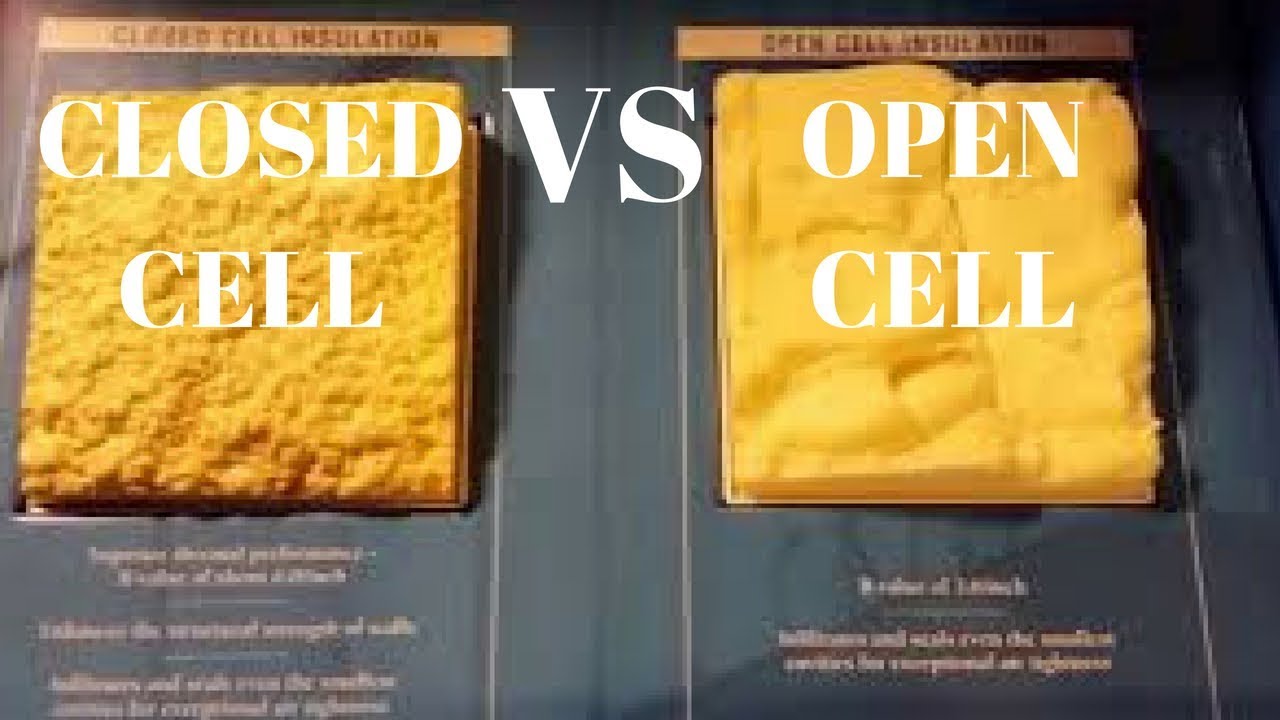
The right answer depends on where the foam is going and what the assembly needs to do.
Ask these questions:
A lot of confusion comes from homeowners hearing “spray foam” and assuming all foam performs the same. It doesn’t. The foam type has to match the location, the roof design, and the moisture behavior of the house.
A good attic insulation job starts before any material shows up. The attic has to be evaluated as a system. Heat, moisture, existing insulation, ventilation, and contamination all affect what should happen next.
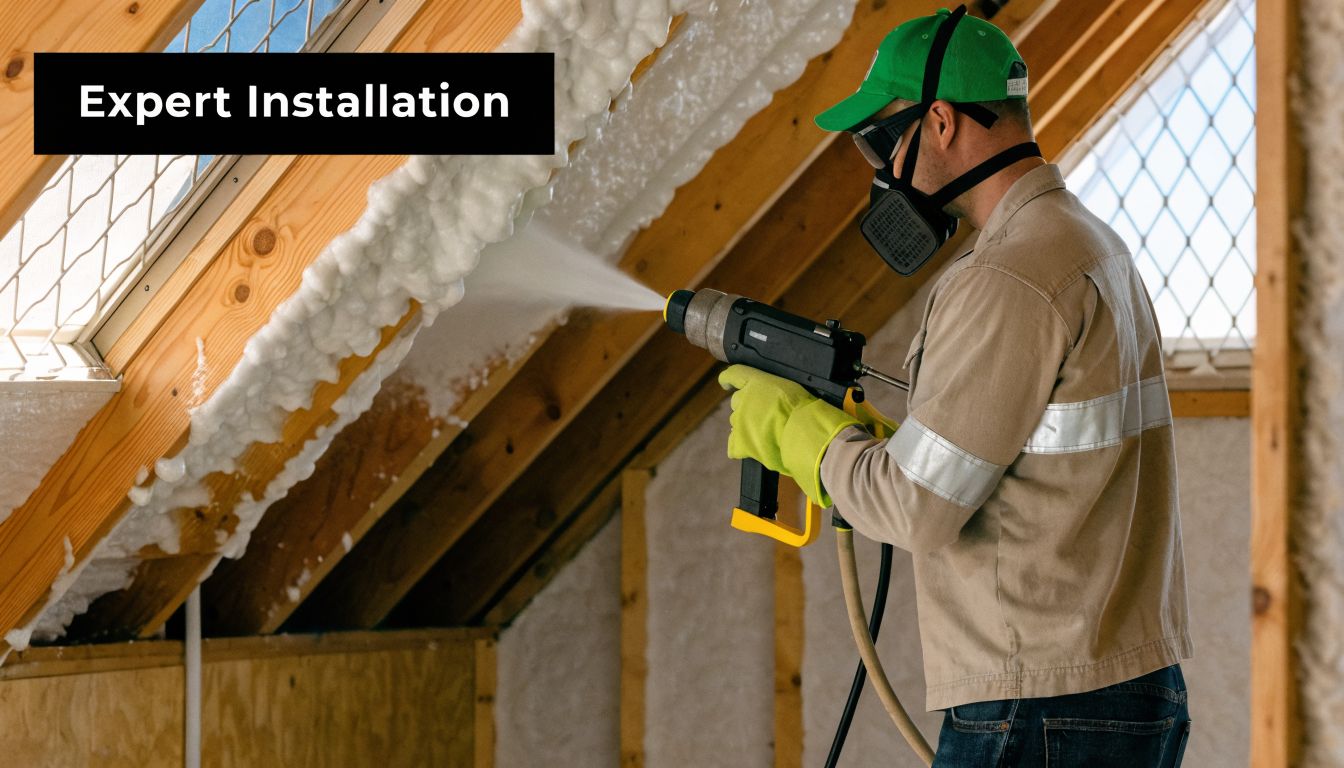
The process should be straightforward and transparent.
Initial evaluation
The first step is inspecting the attic, not guessing from the square footage listed on a property appraiser site. The installer should look for thin spots, bypasses, signs of moisture, duct issues, and any old insulation that may need attention.
Prep work
The attic may need cleaning, access protection, air leak prep, or removal of problem insulation. If the old material is contaminated, wet, or deteriorated, covering it isn’t a real fix.
Installation
Proper spray pattern, lift thickness, coverage consistency, and safety protocols matter. This isn’t the place for shortcuts.
Final walkthrough
The homeowner should be shown what was done, where it was applied, and what conditions were found.
One provider in this market, Airtight Spray Foam Insulation, follows that type of step-based approach for spray foam projects and attic evaluations.
For a standard attic insulation project in West Palm Beach, the average cost ranges from $1,290 to $1,474, according to this local cost breakdown for attic insulation. For a larger 2,500 sq ft attic, professional installation can range from $1,800 to $4,600, and that investment can lead to up to 20% in annual energy bill reductions from the same source.
Those numbers are useful for budgeting, but they don’t tell the whole story.
Price changes based on the attic, not just the address.
Common cost drivers include:
The cheapest quote often assumes the attic is clean, simple, dry, and ready. A lot of West Palm Beach attics aren’t.
A solid estimate should answer practical questions:
Those details matter more than a low number at the bottom of the page. In this climate, a bad install can cost more to undo than the original job cost to begin with.
Insulation advice gets sloppy when it turns into “more is always better.” In West Palm Beach, that mindset causes real problems.
The attic is part of a system. If insulation is added without thinking about ventilation, vapor behavior, and the roof assembly, the house can end up with trapped moisture instead of better performance.
The biggest mistakes usually look harmless at first:
Those are the jobs that lead to callbacks, odor complaints, staining, and hidden damage.
Over-insulating a West Palm Beach attic without proper ventilation can trap moisture, accelerate mold growth, and cause structural rot. Improper R-value stacking can lead to 20-30% higher mold remediation costs and may violate projected 2026 Florida Building Code updates, according to this West Palm Beach attic insulation contractor article.
That’s the part many generic guides skip. They talk about R-value like it exists in a vacuum. It doesn’t. If a vented attic is supposed to move air and the installation chokes that airflow off, the insulation package can create the very moisture conditions you were trying to avoid.
More insulation only helps when the assembly can still manage moisture the way it was designed to.
Some attic insulation work may require permit review depending on scope, assembly changes, and whether the project affects code-related parts of the home. Homeowners should ask the contractor directly whether permit pull, inspection, or ventilation review is part of the job.
Maintenance after a proper spray foam installation is usually limited. The main task is periodic attic inspection. Look for roof leaks, signs of new pest activity, and any mechanical work that may have cut or disturbed the insulated area.
A clean install lasts longer than one done over old problems. That’s why the prep work matters so much in South Florida. Moisture issues don’t stay small for long in this climate.
A hot, humid house in West Palm Beach often starts at the top. If the attic is underperforming, the AC ends up fighting a losing battle. Rooms stay uneven. Indoor air feels damp. Utility bills stay annoying.
The fix isn’t just adding more material and hoping for the best. The right attic insulation west palm beach homes need has to match the climate, the attic design, and the moisture conditions in the structure. That usually means paying close attention to air leakage, ventilation, and whether the insulation choice can hold up in a humid environment.
Spray foam stands out when the attic has gaps, irregular framing, moisture concerns, or a need for stronger overall control. Fiberglass and cellulose can still fit some projects, but they need the right conditions and careful installation. In South Florida, those details decide whether the job performs or turns into a problem later.
A good attic upgrade does more than lower strain on the cooling system. It helps stabilize indoor temperatures, supports healthier indoor air, and protects the building from moisture-related damage that’s easy to miss until repairs get expensive.
If your house feels hard to cool, the attic is one of the first places worth checking. A proper inspection will tell you whether the issue is thin insulation, leakage, moisture, contamination, or a combination of all four.
It can, depending on the roof system and how the attic assembly is changed. The safest move is to verify warranty terms before work starts, especially if the project changes the roofline assembly or ventilation approach. A contractor should be able to explain how the insulation plan fits the existing structure.
That should be addressed before new insulation goes in. Covering contaminated insulation is not a real fix. If the attic has droppings, nesting, visible mold, water staining, or damaged material, the space needs cleanup and evaluation first so the new insulation isn’t installed over an existing problem.
Homeowners usually ask this because they want to know what’s being applied in the house and how the job is managed. The key is professional installation, proper product selection, and following jobsite safety procedures. Ask the installer what preparation is needed, how the area will be managed during application, and when the space can be reoccupied.
That depends on the material and the conditions around it. A professionally installed system can perform for years, but roof leaks, pest intrusion, high moisture, and poor installation shorten service life. In this climate, attic inspections matter because heat and humidity expose weak work quickly.
Sometimes yes, sometimes no. If the existing insulation is dry, clean, and compatible with the new plan, adding to it may be possible. If it’s compressed, contaminated, wet, or interfering with the intended assembly, removal is often the better call. The attic has to be inspected before anyone gives a responsible answer.
If your home stays hot, humid, or expensive to cool, start with the attic. Airtight Spray Foam Insulation provides attic evaluations and spray foam solutions for South Florida homes, with a focus on air sealing, moisture control, and insulation that fits local conditions. Request a quote and find out what your attic is doing to your comfort and energy use.