Imagine turning your damp, musty South Florida basement into a dry, comfortable, and truly usable part of your home. For homeowners from Jupiter to West Palm Beach, high humidity isn't just a minor annoyance—it’s a constant battle. Basement foam insulation is the answer, acting like a seamless wetsuit for your foundation that completely locks out moisture and air.
Think of spray foam as a liquid-applied shield for your below-grade spaces. Unlike traditional insulation like fiberglass, which can soak up water and become a breeding ground for mold, spray foam creates one solid, continuous barrier. It expands into every last crack and gap in your concrete walls, stopping both humid air and water vapor right in their tracks.
For properties in our coastal climate, this single upgrade delivers huge benefits. We're going to dive into how it provides unmatched moisture control, drives down energy bills, and even improves the air quality throughout your entire house. If you're in Wellington or Stuart, getting control of basement dampness is one of the smartest moves you can make to protect your home's value.
With over two decades of hands-on experience right here in South Florida, I've seen what works and what doesn't. My goal is to cut through the technical jargon and show you the real-world value this brings to your home. Here’s what we’ll cover:
A properly sealed and insulated basement doesn't just give you more livable space—it makes the entire house healthier and more efficient. When you control moisture at the source, you’re investing in long-term protection against mold, pests, and even structural issues.
Throughout this guide, I'll walk you through exactly how to protect your home from Florida’s unique climate. Understanding how insulation acts as a vapor barrier is a critical first step, and you can learn more about vapor barriers and insulation in our detailed article. We'll cover everything from the installation process to the real return on investment, giving you a clear path to a drier, better home.
When most people think of insulation, they picture pink fiberglass batts or rigid foam boards being wedged between studs. That's not what we're talking about here. Professional spray foam insulation is a completely different animal.
It starts out as two separate liquids that we keep in different drums. On-site, our technicians mix these liquids together inside a specialized spray gun. The moment they combine, a chemical reaction kicks off, and what comes out is a liquid that expands on contact—up to 100 times its original volume in just a few seconds. It hits your basement walls as a liquid and almost instantly turns into a solid, seamless layer of insulation that fills every single crack, gap, and imperfection.
To really get why spray foam is so effective, you need to understand the two main types. They might sound similar, but their performance is night and day, especially for a tough environment like a South Florida basement.
Think of open-cell foam as a dense, flexible sponge. Its cells aren't fully sealed, which makes it soft and great for sound dampening. But just like a sponge, it can hold water. That structure lets water vapor pass right through, making it a terrible choice for below-grade walls where moisture is always the biggest threat.
Now, picture closed-cell foam as a solid, rigid shield. Every one of its tiny cells is completely sealed off. This creates an incredibly dense and strong material that is completely impermeable to both bulk water and vapor. It's why closed-cell foam is the undisputed champion for basements.
Closed-cell spray foam insulation doesn't just block heat; it acts as an all-in-one air barrier, vapor retarder, and insulator. This multi-functionality is what makes it such a powerful tool for protecting basements from moisture, mold, and energy loss.
A key benefit of basement foam insulation is its ability to deliver moisture control, energy savings, and improved air quality simultaneously.
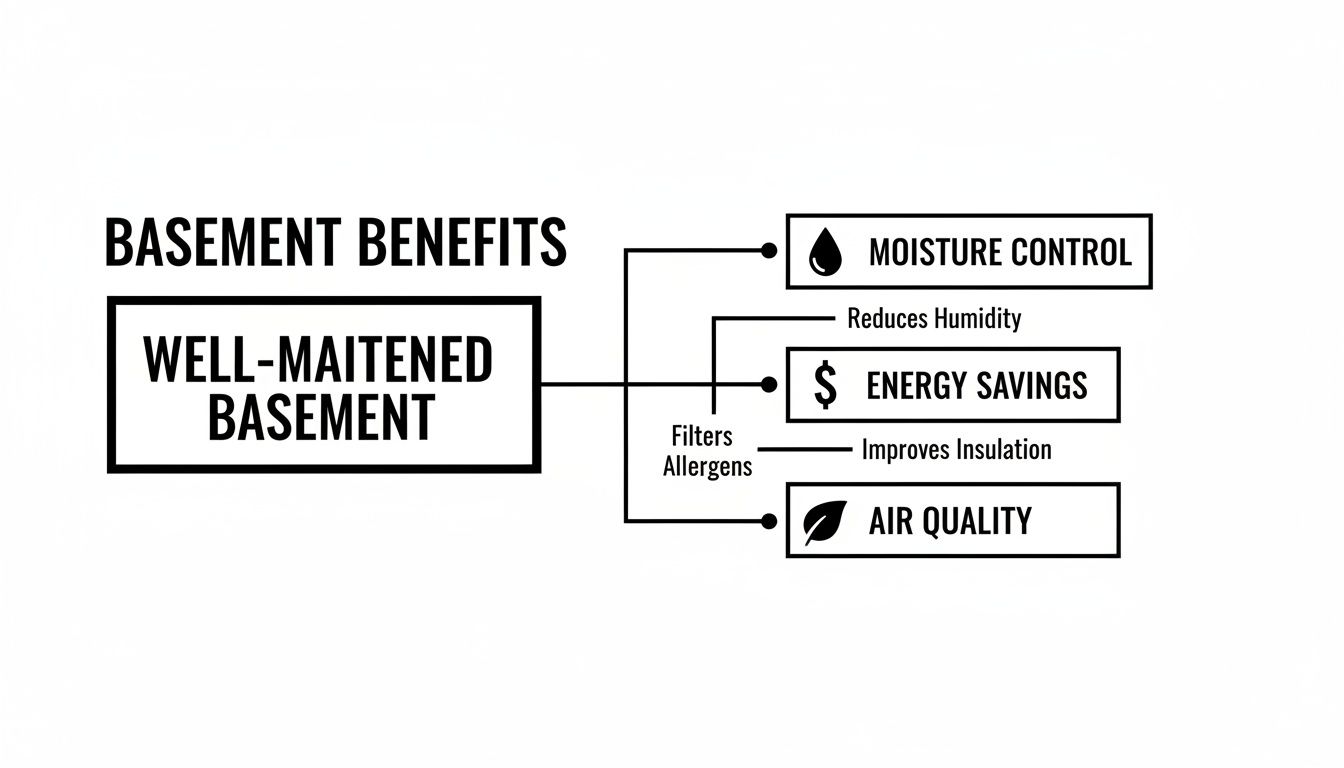
The benefits are all connected. When you seal your basement from the outside, you create a healthier and more efficient home from the ground up. By stopping moisture where it starts, you take a huge load off your HVAC system and prevent the growth of airborne mold spores that can plague a home.
For a quick reference, here’s how the two types of foam stack up for basement applications in our climate.
| Feature | Open-Cell Foam | Closed-Cell Foam |
|---|---|---|
| Structure | Soft, spongy, flexible | Rigid, dense, strong |
| Water Permeability | Permeable (absorbs water) | Impermeable (waterproof) |
| Vapor Barrier | No, it's a vapor-permeable material | Yes, a true vapor retarder |
| R-Value per Inch | Approx. R-3.5 | Approx. R-6.0 to R-7.0 |
| Best Use in Basements | Not recommended | Ideal for walls, rim joists |
As you can see, when it comes to protecting a basement from the ground up, the choice is clear.
Beyond just blocking moisture, an insulation's main job is measured by its R-value—its ability to resist heat flow. The higher the R-value, the better it insulates. This is where the difference between the two foams becomes even clearer.
What does that mean in the real world? With just two or three inches of closed-cell foam, you can hit an R-value of R-13 to R-21, which easily meets or beats building codes for basement walls. That superior thermal resistance is crucial for separating your living space from the constant temperature of the ground. More importantly, its structure provides that rock-solid vapor barrier that open-cell foam just can't.
We get into the weeds on the application process in our guide on how spray foam insulation works. But the bottom line is this: thanks to its high R-value and unmatched moisture-blocking power, closed-cell foam is the only smart choice for any South Florida basement. It's a durable, long-term solution built to handle our unique climate challenges.
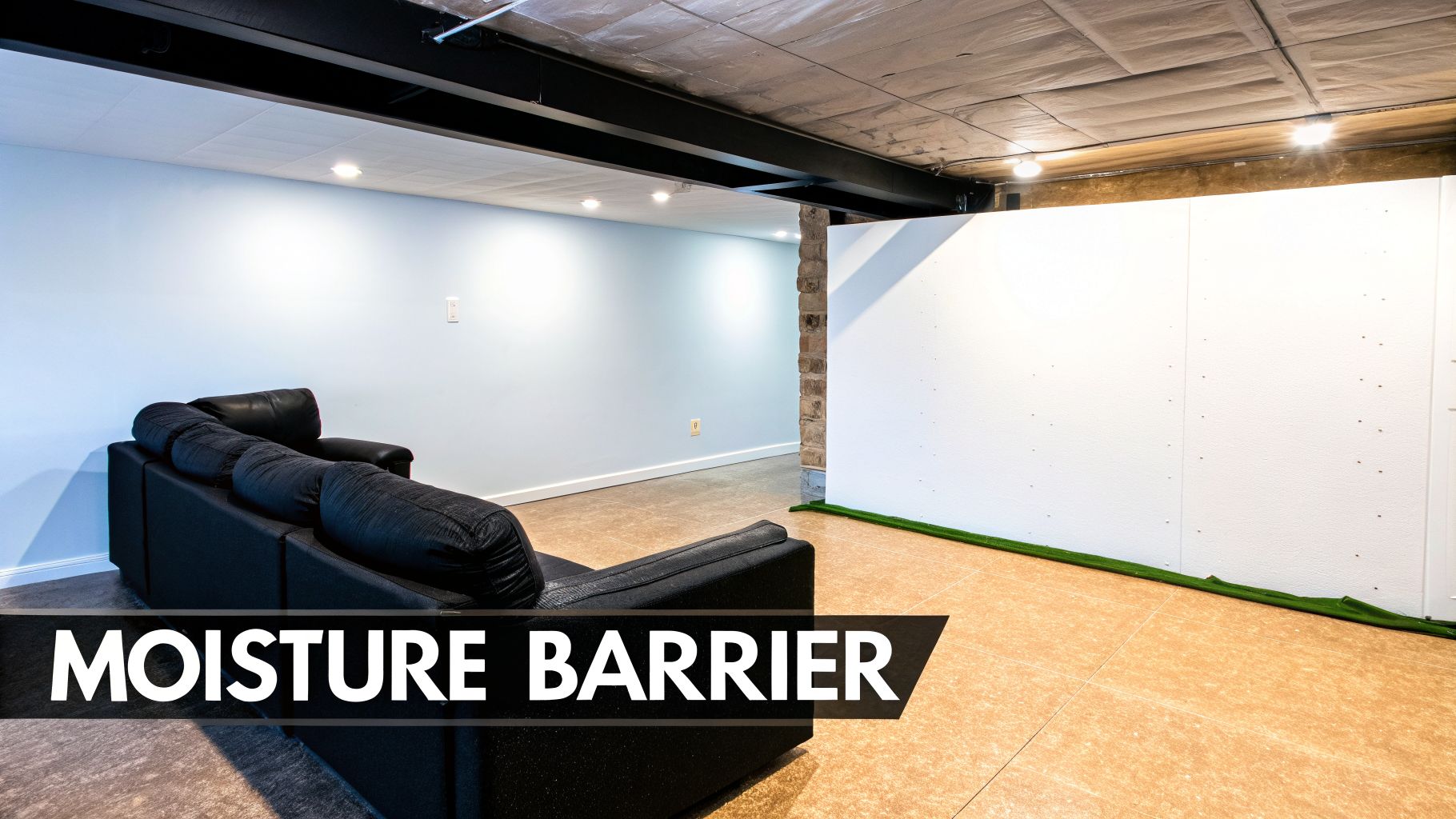
For anyone with a home in Palm Beach Gardens or Wellington, you know the basement isn't just about temperature. The biggest battle is against moisture, and that’s where basement foam insulation completely changes the game. It creates a single, unbroken seal that turns a damp, risky space into a genuinely valuable part of your home.
Think of closed-cell spray foam as a waterproof skin sprayed directly onto your foundation. It stops that sticky, humid air from creeping through the tiny pores in your concrete walls. By doing that, you prevent the condensation that leads to musty smells, mildew, and eventually, destructive mold. You're not just managing moisture; you're building a healthier environment from the ground up.
Down here in South Florida, humidity is the sworn enemy of any below-ground space. Concrete is naturally porous, which means it lets water vapor pass right through it. It’s why so many basements feel damp and smell musty, even when there are no obvious leaks.
This is where closed-cell basement foam insulation offers a real solution. It forms a solid vapor barrier that doesn’t just resist moisture—it blocks it completely.
Traditional insulation like fiberglass just can't compete. In fact, fiberglass can act like a sponge, absorbing moisture, losing its insulating power, and becoming a breeding ground for the very mold you're trying to prevent.
That same airtight seal that blocks moisture also stops air leakage—one of the biggest energy vampires in any home. The cool air you're paying for escapes right through your foundation, while hot, humid air seeps in, forcing your AC to work overtime just to keep up.
By creating a powerful air barrier, closed-cell foam can dramatically cut down the work your air conditioner has to do. We see it all the time—this translates directly into lower monthly energy bills, often from the very first month.
This isn't just a local trend. The global market for high-performance foam insulation is exploding and projected to hit USD 40.39 billion by 2031. Builders and homeowners are looking for ways to meet stricter energy codes and slash cooling costs, with some seeing their bills cut by up to 50%. You can read more about the growing demand for foam insulation and see how it's changing how we build.
Beyond keeping your basement dry and efficient, closed-cell foam adds a couple of other surprising benefits that bring a ton of value.
First, its rigid structure actually adds strength. When the foam is applied, it sticks like glue and cures into a hard, dense material. This essentially reinforces the wall, adding racking strength and helping it stand up to the constant pressure from the soil outside. While it’s not a fix for major foundation damage, it adds a serious layer of resilience.
Second, the dense foam is a fantastic sound barrier. It absorbs airborne noise, significantly quieting a basement. This can turn a loud, echo-prone space into the perfect spot for:
By making your basement quiet, dry, and comfortable, basement foam insulation lets you finally reclaim that square footage and turn it into living space you'll actually want to use.
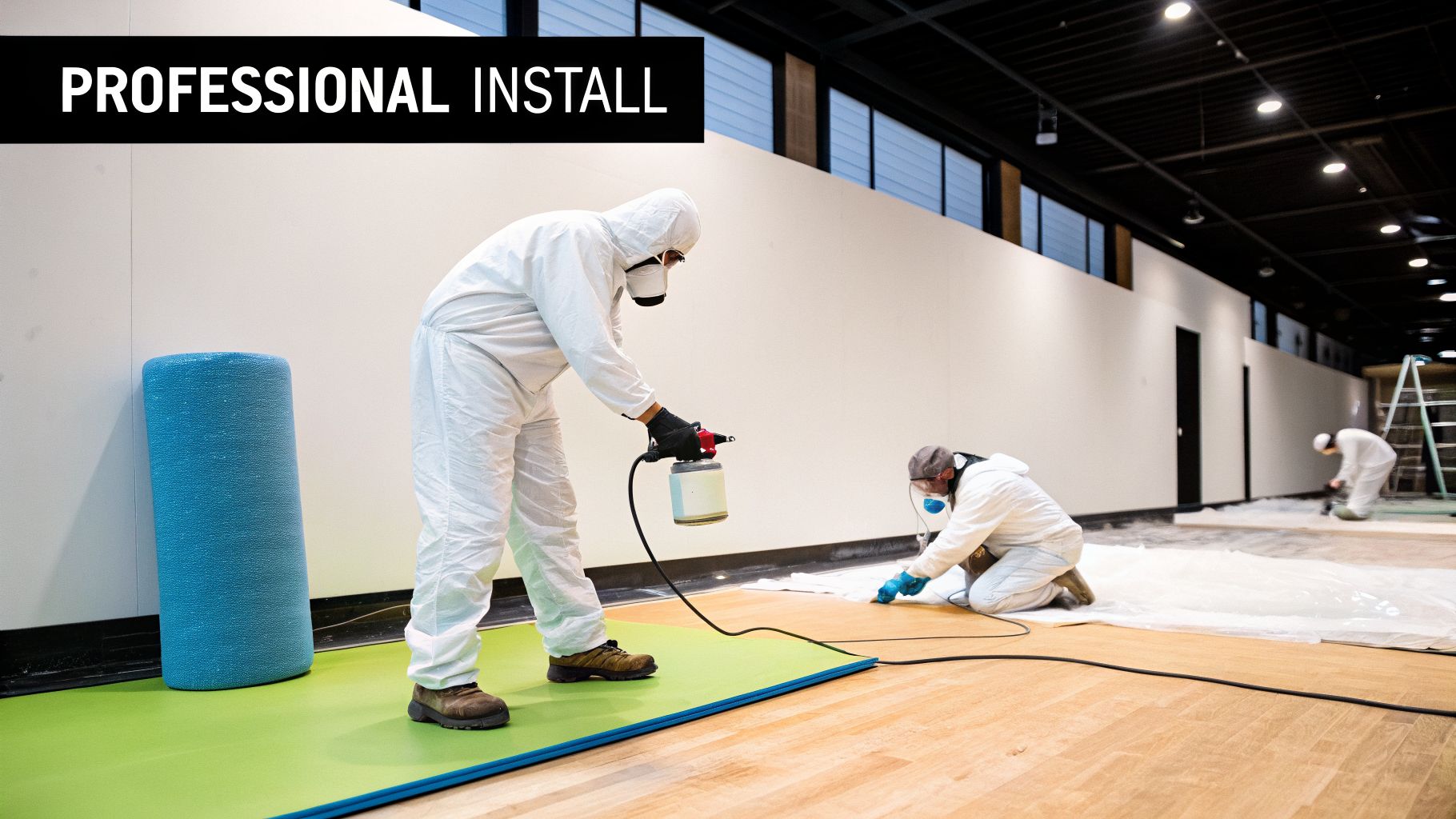
Watching a professional team install basement foam insulation really pulls back the curtain on why this is absolutely a job for experts. This isn’t a simple weekend project—it’s a technical application that turns your foundation into a single, high-performance barrier. Honestly, the final result is only as good as the crew behind the spray gun.
The whole process starts long before we ever bring a truck to your home. It begins with a detailed on-site consultation where one of our technicians will visit your property in Jupiter or Wellington to get a true feel for the space. We’ll measure everything, hunt for any existing moisture problems, and pinpoint tricky spots like pipe penetrations or small foundation cracks. This first visit is what allows us to give you a solid, accurate quote and a clear game plan.
Once you give us the green light, our work begins with careful site prep. This is, without a doubt, one of the most critical stages. It’s what ensures the foam sticks like it should and protects the rest of your home. A professional crew never cuts corners here.
First, we clear out the work area and give all the walls a thorough cleaning. Any dust, dirt, or efflorescence—that chalky white stuff you sometimes see on concrete—has to go. If there’s old, failing insulation like fiberglass batts, we’ll carefully remove and dispose of it. Basement foam insulation needs a clean, dry surface to form that permanent, super-strong bond.
Next up, we meticulously mask and cover everything that isn't getting sprayed. This means protecting:
This heavy-duty plastic sheeting is our insurance against overspray, keeping your property clean and guaranteeing a sharp, professional finish.
With the prep work done, it's time for the main event. Our technicians will arrive with a self-contained rig holding all the specialized equipment and the two liquid components that create the foam. You’ll see them gear up in full-body protective suits, respirators, and gloves—the mark of a team that puts safety first.
Using a heated, high-pressure hose and a specialized spray gun, our applicator gets to work. This is where experience and a steady hand make all the difference. The technician applies the foam in controlled "lifts" to build it up to the right thickness. For most basements here in South Florida, we aim for a 2 to 3-inch layer of closed-cell foam to create an incredible thermal break and a rock-solid vapor barrier.
The real goal is to create one seamless, monolithic shield. A skilled applicator knows exactly how to control the spray so the foam expands perfectly into every last crack, gap, and imperfection in the concrete and up in the rim joists. This is what creates that signature airtight and watertight seal that makes spray foam so powerful.
After the foam is on the wall and fully cured, we’re still not finished. The job shifts into a quality control and finishing phase. The crew leader will carefully inspect every square inch of the application, looking for any spots that might need a quick touch-up to ensure a perfect, unbroken seal.
We’ll then trim back any minor overspray or areas where the foam expanded a bit too far. This leaves you with a neat, flat surface that’s ready for drywall or any other finish you have planned. Finally, all the protective plastic and masking comes down, and we give the entire area a thorough sweep-up, leaving your basement cleaner than we found it. We’ll do a final walkthrough with you to make sure every detail is perfect, giving you total peace of mind in your newly insulated space.
Let's get right to it—the first question on everyone's mind is always about the price. I'll be upfront: basement foam insulation requires a bigger initial investment than traditional materials like fiberglass batts. But looking at it as just another line-item expense is missing the bigger picture. This isn't a cost; it's a long-term investment in your home's health, efficiency, and overall value.
The final price for a professional job here in Palm Beach County really comes down to a few things. We'll look at the total square footage of your basement, which type of foam makes the most sense (closed-cell is our go-to for its superior moisture protection in basements), and how complex the layout is—like having to work carefully around a lot of plumbing or HVAC equipment.
While the upfront number is higher, your return on investment (ROI) starts showing up almost immediately and just keeps growing. The most obvious return is on your monthly energy bills. When we create that perfect, airtight seal, your HVAC system doesn't have to work nearly as hard. We regularly see savings in the 20-40% range, and in the thick of a South Florida summer, that adds up fast.
But the real financial wins go way beyond your FPL bill. You’re also making a smart investment in preventing future disasters.
The most powerful ROI from basement foam insulation isn't just what you save—it's what you avoid. Preventing one major mold or water damage event can pay for the entire insulation project several times over. It’s proactive protection for your biggest asset.
The market is already catching on. This isn't just a trend; it's a shift backed by hard data showing massive energy savings. For property managers from Palm Beach Gardens to Stuart, this means real money. Studies show that properly insulated basements can slash utility bills by 15-25% annually, and the sound-dampening qualities are a huge bonus for livability in condos and townhomes. With 38% of foam now going into residential retrofits and new construction, the movement is clear. You can dig into the data on the spray foam insulation market to see why it's becoming the new standard.
Finally, never underestimate the impact on your home's resale value. For buyers looking in Jupiter, West Palm Beach, or Wellington, a dry, comfortable, and energy-efficient basement is a massive selling point. It tells them the home has been meticulously cared for and promises them lower bills, making your property stand out.
Beyond all the numbers, there’s the simple, priceless benefit of better comfort and healthier air for your family to enjoy every single day. For a more detailed breakdown of the financial side, you can read more about spray foam insulation costs in Palm Beach County in our complete guide.
By now, you see the potential of basement foam insulation. It's your best line of defense against our relentless South Florida humidity, a solid investment in your home's value, and a huge step toward a healthier living space. But here’s the thing we’ve learned over the years: the best materials in the world won't matter if the installation isn't perfect.
The quality of the application is everything. A flawless job gives you the airtight seal and performance you paid for, but a shortcut or a mistake by an inexperienced crew can cause major headaches down the road. This is one of those jobs where the "who" is just as important as the "what."
When you’re vetting an insulation company, you have to look past the price tag. You need a team that lives and breathes this stuff, especially in our local climate. This isn't a weekend project for a handyman—it’s a specialized trade that demands real expertise.
Think of your insulation contractor as a long-term advisor for your home's health. The right team doesn't just spray foam; they deliver a perfectly sealed building envelope that will protect your investment and save you money for decades to come.
It's also worth noting that a well-organized company that knows how to run its business efficiently often provides a much smoother customer experience. If you’re curious about what goes on behind the scenes, this is a great read on modern lead generation for contractors that shows how the best in the business operate.
In the end, it all comes down to experience. We invite you to take the next step and see what a professional, correctly installed system can do for your home. Reach out for a free, no-obligation quote and let us show you what 25 years of hands-on expertise really looks like.
Deciding on a big home improvement like basement foam insulation always comes with questions. It’s a significant investment, and you need to be confident you're making the right call for your home’s health and your budget. As experts in South Florida insulation, we hear these questions all the time from homeowners around Jupiter and West Palm Beach, so let's get you some clear, straightforward answers.
Yes, it’s completely safe once it’s properly installed and fully cured. The installation itself is a chemical process that creates fumes, which is why our professional crews wear full protective gear and use powerful ventilation systems. But that’s a temporary state.
After about 24 hours, the foam hardens into a solid, inert plastic. It’s stable, non-toxic, and doesn't "off-gas" any harmful substances. At that point, it’s perfectly safe for your family, kids, and pets to be in and around the space.
I can't stress this enough: please do not attempt to install spray foam yourself. This isn’t a weekend warrior project like putting up drywall or even cutting fiberglass batts. It's a precise chemical application that requires a deep understanding of building science and very expensive, specialized equipment.
Our professional rigs cost tens of thousands of dollars for a reason—they heat and mix the two components at the exact temperature and pressure needed for a perfect reaction. Getting it wrong can lead to serious problems:
Hiring a certified professional isn't just a matter of convenience. It’s the only way to guarantee the safety, effectiveness, and long-term performance of your insulation. The risks of a DIY job just aren’t worth it.
When our team installs it, basement foam insulation is a lifetime product. It becomes a permanent, integral part of your home’s structure. Unlike other materials that can compress, sag, or degrade over time, spray foam holds its shape and R-value for decades.
This incredible durability is why it’s become a go-to material for builders and homeowners alike. Residential construction now makes up 38% of the entire foam insulation market, especially for sealing up basements against air leaks and humidity. For a homeowner in Wellington, the powerful R-6+ value and vapor-blocking properties of closed-cell foam can stop up to 95% of air infiltration and cut AC costs by 20-40%. It’s a solution built to last, driven by a global push for more energy-efficient homes. You can read more about how global energy mandates are driving this trend and changing how we build.
Ready to transform your damp, inefficient basement into a comfortable and valuable living space? The experts at Airtight Spray Foam Insulation have the local knowledge and technical skill to deliver a perfect, lasting solution for your South Florida home.
Request your free, no-obligation quote today and discover the Airtight difference!