Blog
Will Spray Foam Insulation Keep Mice Out? A Practical Guide

Yes, spray foam insulation is a fantastic tool for keeping mice out, but it’s important to see it as part of a larger strategy, not a standalone fix. Unlike traditional insulation that mice can happily shred for nesting, spray foam hardens into a dense, solid barrier. This seals up the tiny cracks and gaps that rodents use as their personal superhighways into your home.
The Straight Answer on Spray Foam and Mice
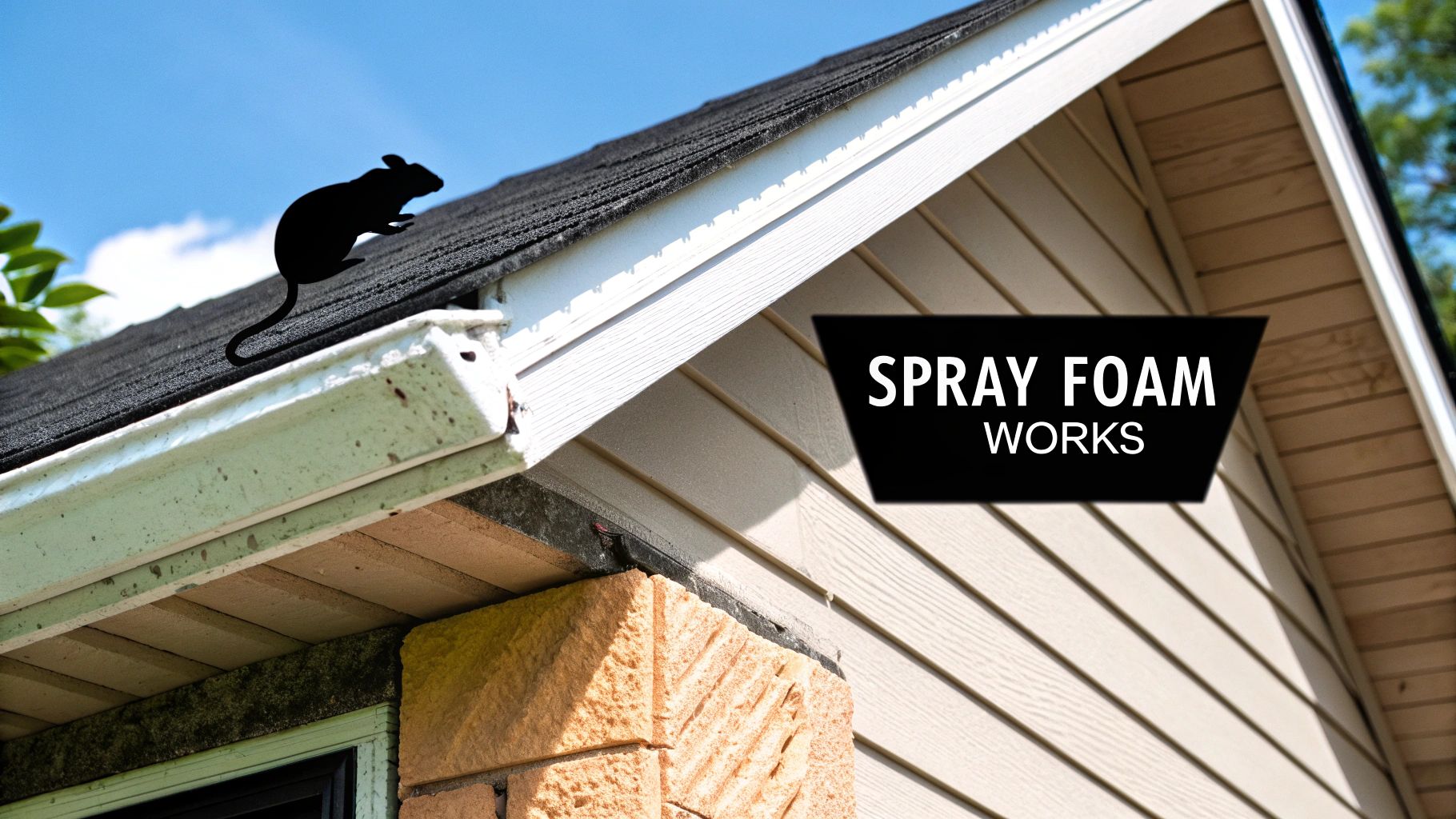
When people ask me if spray foam really stops mice, the simple answer is that it creates a tough physical barrier that old-school materials just can't compete with.
Think of your home's structure like a fortress. Old, fluffy insulation like fiberglass is like having gates made of straw. Mice tear right through it and make themselves at home without a second thought.
Spray foam, on the other hand, is like upgrading those gates to solid stone. As it’s applied, the foam expands into every hairline fracture, awkward gap around pipes, and tiny crevice in your foundation or attic. Once it cures, it becomes a rigid mass that mice find almost impossible to chew through. It has zero food value for them and makes for terrible nesting material, so your home suddenly becomes a much less inviting target.
This completely changes your home's defense system. Instead of just providing thermal resistance, your insulation becomes an active part of your pest control plan. It's a proactive move that seals entry points before determined rodents can even think about exploiting them for warmth and shelter.
Rodent Control A Quick Comparison
See how spray foam and traditional materials like fiberglass or cellulose compare when it comes to stopping mice. The differences in their structure and function tell the whole story.
| Feature | Spray Foam Insulation | Fiberglass and Cellulose Insulation |
|---|---|---|
| Pest Barrier | Forms a hard, solid, and airtight seal that rodents cannot easily chew or burrow through. | Soft, fibrous material that mice can easily tear apart, tunnel into, and use for nesting. |
| Gap Sealing | Expands to fill every crack and crevice, eliminating common rodent entry points completely. | Sits between studs but does not seal small air gaps, leaving pathways for pests to enter. |
| Nesting Potential | Offers zero appeal as nesting material due to its rigid and inedible composition. | Provides an ideal, warm, and comfortable environment for mice to build nests and raise young. |
It's pretty clear that when it comes to creating a solid defense, spray foam is in a different league. It doesn’t just insulate; it actively seals your home off from unwanted guests.
How Spray Foam Creates a Rodent-Proof Barrier
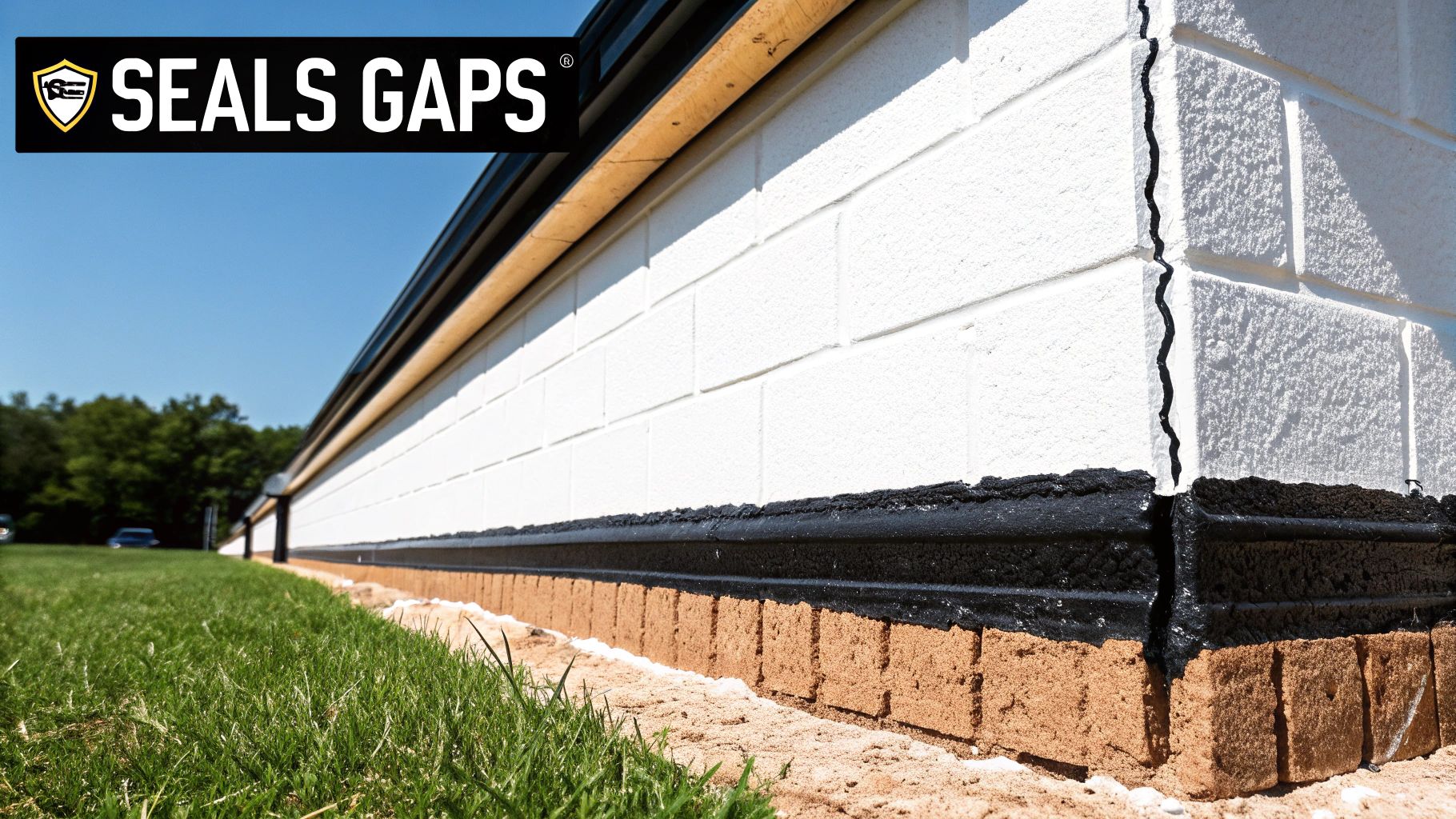
Think about the difference between a solid concrete wall and a loose pile of hay. For a mouse, that’s the same difference between spray foam and old-school insulation. The magic isn't complicated—it's about creating a single, unbroken, rock-solid barrier.
Your home's exterior shell is a lot like the hull of a boat. Even one tiny hole lets water in. For a house, those holes—small gaps around pipes, hairline foundation cracks, and little voids in the attic—are wide-open invitations for rodents. You can learn more about how we apply it in our guide on how spray foam insulation works.
When we apply spray foam, it starts as a liquid. It then expands lightning-fast, seeping into every single one of those weak points. It doesn't just fill a gap; it molds itself perfectly to the space, creating a custom-fit seal that’s both airtight and watertight.
Turning Weak Points into Fortresses
This barrier really shows its strength at the most common places rodents sneak in. Mice are little ninjas, experts at finding the path of least resistance.
- Utility Penetrations: Those tiny gaps around your plumbing, electrical wires, and HVAC lines are basically highways for pests. Spray foam expands around them, forming a solid, impenetrable collar they can't get past.
- Rim Joists: The spot where the wood frame of your house sits on top of the foundation is often riddled with small gaps. Foam seals this entire seam, effectively shutting down a major mouse thoroughfare.
- Attic and Soffit Vents: Vents are crucial for airflow, but if they aren't properly screened, they're just open doors. Sealing the structure around the vents ensures the only way in is through a screen mice can't chew through.
This all-encompassing seal is a total game-changer for pest control. And while we're on the topic of sealing gaps, it's a good idea to also look into expert window weatherization tips to make sure your entire home is buttoned up.
Once it cures, spray foam isn't just insulation anymore. It becomes a structural part of your pest defense. It's rigid, dense, offers zero food value, and is incredibly difficult for a mouse to chew or burrow through. It makes your home fundamentally unwelcoming.
A Proven Barrier Against Mice
This isn't just talk; the results are clear. The structural integrity of spray foam has proven to be incredibly effective at stopping mouse infestations before they start.
In fact, after a proper installation, about 90% of homes insulated with spray foam never deal with mice again. That kind of success rate comes from creating an environment that mice simply can't stand, unlike the soft, inviting fiberglass they love to tunnel through. It’s all about turning those once-vulnerable spots into an impenetrable shield.
Choosing the Right Foam for Mouse Prevention
When you're looking at spray foam insulation as a way to keep mice out, it’s absolutely critical to know that not all foam is the same. The type you pick will make or break how effective your rodent barrier is.
Your two main options are open-cell and closed-cell foam. One is the clear winner for pest control, and it's not even close.
Think of open-cell foam as a sort of dense, rigid sponge. Its structure is "open," which means the tiny bubbles inside the foam aren't completely sealed off from each other. While it's a solid insulator and air barrier, that softer, more pliable texture is a weak spot a determined mouse can exploit. With enough time, a persistent rodent could definitely chew or tear its way through.
The Clear Choice: Closed-Cell Foam
On the flip side, closed-cell spray foam is the undisputed champion when it comes to stopping rodents. Its internal structure is completely different. The cells are totally sealed and packed incredibly tight, which creates a dense, hard, and rigid material once it cures.
It's like the difference between trying to punch through a block of Styrofoam versus a solid sheet of hard plastic. That’s essentially the challenge a mouse faces with closed-cell foam. It’s just too tough for them to get a grip on, chew, or burrow through. It creates a solid, non-porous wall that basically tells them, "entry denied."
For us here in South Florida's humid climate, this gives you two huge advantages.
- A True Physical Barrier: Its sheer density and hardness physically stop rodents in their tracks.
- Moisture Resistance: Closed-cell foam is also a vapor barrier, meaning it doesn't absorb moisture. This helps prevent the damp, musty conditions that attract mice, insects, and mold in the first place.
Choosing closed-cell foam isn't just about filling a gap—it's a strategic investment in a long-term pest solution. It fortifies your home against both pests and moisture, making it a much less inviting place for intruders.
Making an Informed Decision
This distinction is something you need to bring up when talking to an insulation contractor. Make it clear that pest prevention is a primary goal. That conversation should point directly to closed-cell foam as the right material for the job.
While open-cell has its place, it just doesn't cut it as a reliable rodent barrier. Knowing the difference is the first step toward creating a truly mouse-proof home. To dive deeper, you can check out our detailed comparison of open-cell vs. closed-cell foam. Asking the right questions from the start ensures your investment actually delivers the peace of mind you’re paying for.
Understanding the Limits of Spray Foam
To build a truly mouse-proof home, we first have to be honest about what spray foam can and can’t do. It’s an incredibly powerful tool for sealing up your home’s weak spots, but it's just one piece of a bigger puzzle. Think of it as a barrier, not a poison.
Let me put it another way. Using spray foam is like upgrading every lock on your doors and windows to a high-security system. It makes it extremely difficult for anyone to break in. But even the best lock is useless if you've already got an intruder hiding in the closet or you leave the front door wide open.
It Is Not an Extermination Tool
This is the most important thing to get straight: spray foam is a preventative measure. It’s designed to stop mice from getting in, not to deal with the ones already there.
If you have an active infestation—mice nesting in your walls, scurrying around the attic, or setting up shop in your crawl space—insulation isn’t the answer. In fact, spraying foam over an existing nest can actually trap them inside your walls, creating a much bigger problem. You absolutely must call a pest control professional to get rid of the current mouse population before a single drop of foam is sprayed.
Spray foam is always the second step. First, you get rid of the mice. Then, you seal up their entry points so they can never come back.
It Cannot Fix Poor Habits
Spray foam addresses the hidden cracks and gaps in your home's structure. It won't, however, stop a mouse from waltzing right through an open garage door or a patio slider you’ve propped open for the breeze.
Human habits play a huge role. Keeping doors closed, storing pet food in sealed containers, and not leaving crumbs all over the kitchen counter are just as critical to a successful rodent-proofing plan.
At the end of the day, spray foam is a star player in an integrated pest management strategy, but it can't win the game on its own. Understanding its limitations allows you to use it smartly alongside other good practices for a truly impenetrable defense. For a deeper dive into what mice can and can’t get through, check out our guide that answers the question: will mice chew through spray foam? This realistic approach is your best bet for long-term success.
Building an Impenetrable Home Defense System
Alright, let's move from theory to action. Getting real rodent control isn't about just one thing. While closed-cell spray foam is a seriously powerful tool in your arsenal, it works best when it's part of a complete, multi-layered defense strategy. When you combine it with other proven methods, you turn your home from an easy target into a fortress.
Think of spray foam as the mortar holding the stones of your fortress together. It’s fantastic for sealing up all those tiny, hairline cracks. But some of the bigger openings—like the gaps around pipes or utility lines—need some extra muscle. This is where a professional approach really shines.
Fortifying High-Risk Entry Points
The most vulnerable spots in any home are almost always where utilities come in. A determined mouse, smelling the warmth inside, might just decide to gnaw at the edges of the foam in these areas. To create a truly impenetrable seal, we use a simple but brilliant strategy: embedding gnaw-proof materials right into the foam itself.
- Steel Wool or Copper Mesh: Before any foam is sprayed, we'll pack coarse steel wool or copper mesh tightly into the gap around the pipe or wire. Mice hate chewing on this stuff.
- Encapsulation: Next, the spray foam is applied directly over and around this mesh. As the foam expands and hardens, it completely swallows up the metal, creating a solid plug that's simply impossible for a rodent to chew through.
This two-in-one punch combines the airtight seal of foam with the raw physical toughness of metal. It effectively locks down these rodent superhighways for good.
A layered defense is always stronger. By embedding steel wool into the foam, you are creating a barrier that addresses both the need for an airtight seal and the reality of a rodent's persistent chewing.
Recent research really drives this point home. Studies have shown that homes insulated with spray foam had 50% fewer rodent sightings compared to those with traditional insulation. That's a massive drop, and it comes from swapping out soft, nest-friendly fiberglass for a solid, inhospitable barrier.
This simple chart breaks down the process for taking your home back from pests.
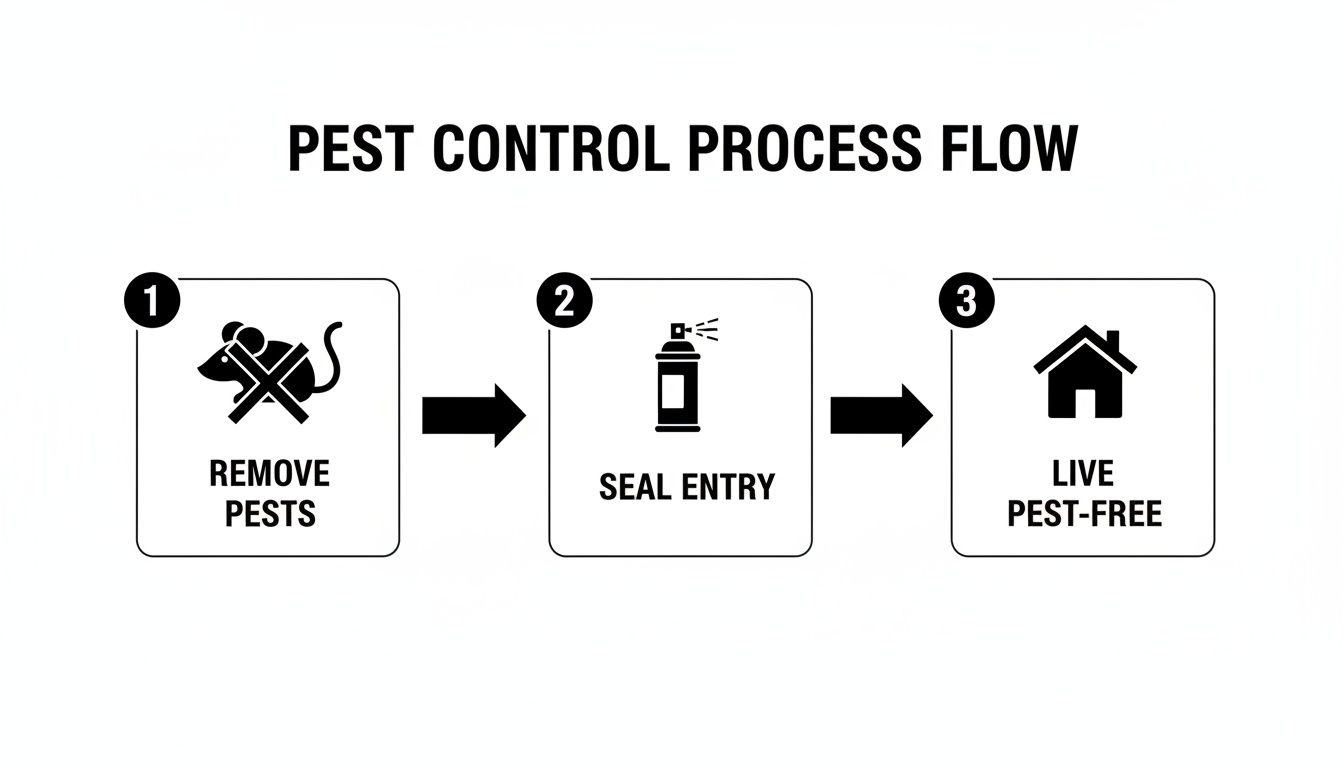
The biggest takeaway here? Sealing entry points is the critical step that turns a temporary fix into a permanent solution.
Essential Complementary Strategies
With your home's hidden gaps sealed tight, the final step is to secure the more obvious entry points. Think of these as the finishing touches that complete your defense system.
- Install Secure Vent Covers: Dryer vents and attic soffits need sturdy, gnaw-proof covers. Flimsy plastic just won't cut it.
- Add a Chimney Cap: An open chimney is basically a welcome mat for mice, squirrels, and even raccoons. A professionally installed cap is non-negotiable.
- Upgrade Door Sweeps: That tiny gap under your garage or exterior doors? It’s more than big enough for a mouse to squeeze through. Install heavy-duty door sweeps with a solid rubber seal.
While spray foam is fantastic for rodent entry, don't forget to maintain your home's first line of defense against bugs and the Florida weather by keeping your window screens in good repair. When you combine these physical barriers with a professionally installed spray foam seal, you create a comprehensive defense that leaves pests with no vulnerabilities to exploit.
Got Questions About Spray Foam and Rodents? We’ve Got Answers.
When you're thinking about using spray foam to keep mice out, a lot of questions pop up. It's a big investment, so getting clear, honest answers is essential. Let’s tackle the most common questions we hear from homeowners so you can make a decision you feel good about.
Can Mice Really Chew Through Closed-Cell Spray Foam?
This is the big one, right? The short answer is: it’s extremely unlikely. A determined mouse will try to chew through just about anything, but dense, rigid closed-cell foam is a whole different ballgame.
Think of it like trying to chew through a bowling ball versus a loaf of bread. The foam is incredibly hard, offers them zero food value, and doesn't shred apart like fiberglass or soft open-cell foam. There’s simply no reward for all that effort.
That said, for those extra-vulnerable spots like where pipes come through the wall, we always recommend a double-down approach. A true pro will pack steel wool or copper mesh into the gap before spraying the foam. As the foam expands and cures, it hardens around the metal, creating a completely impenetrable, gnaw-proof seal. It’s the best of both worlds: the airtight seal of foam plus the brute strength of metal.
Should I Rip Out My Old Insulation Before You Spray?
Yes, 100%. This isn't a step you can skip if you want the job done right. Old insulation, especially if it’s been a playground for pests, is a real problem. We’re talking droppings, urine stains, and nests.
It’s like trying to paint over a dirty, moldy wall. You just can’t do it. Spraying new foam over that contaminated mess would trap nasty bacteria, allergens, and funky odors inside your home’s structure, which could cause health issues down the road.
A professional job always starts with a full tear-out of the old stuff, followed by a thorough cleaning and sanitizing of the entire area. This gives us a fresh, clean slate to work with, ensuring the new foam barrier is safe, healthy, and as effective as possible.
Starting fresh also guarantees the spray foam gets a perfect bond to the surfaces, and it ensures you’re not just wallpapering over an existing problem. It's a critical move for both pest control and your home's air quality.
Will Spray Foam Get Rid of the Mice I Have Now?
This is a really common mix-up. Spray foam insulation is a preventative measure, not a pest control service. Its job is to permanently lock the door on mice trying to get in, but it can’t do anything about the ones who are already throwing a party in your attic.
Think of it as building a fortress. It's fantastic at keeping invaders out, but you have to clear the castle of enemies first.
Getting the order of operations right is everything:
- Evict the Pests: First things first, bring in a licensed pest control professional to get the current rodent population completely out of your home.
- Seal the Fortress: Once you have the all-clear, it's time for us to apply closed-cell spray foam and seal up every last crack and crevice they used to get in.
Following these steps ensures you don't accidentally trap mice inside your walls. Trust me, you don’t want that problem. Sealing the home is the final, crucial step to make sure they can never come back.
Is Cured Spray Foam Safe for My Family and Pets?
Your family's safety is always the top priority, and the answer here is a firm "yes." The application process requires us to use professional-grade safety gear, like respirators and full suits, but once the foam is fully cured, it’s completely safe.
During the curing phase, which usually takes about 24 hours, the chemical reaction finishes. After that, the foam becomes an inert solid. That just means it’s stable—it doesn’t release harmful fumes, off-gas, or leach any chemicals. It's as safe as any other plastic-based material you’d find around a modern house.
Any reputable installer will follow strict safety rules, making sure the area is properly ventilated during and after the job. They'll give you clear instructions on when it's safe for everyone—including your pets—to come back home. The end result is a healthier, more comfortable home, secure from both pests and harmful chemicals.
At Airtight Spray Foam Insulation, we specialize in creating impenetrable barriers that protect your South Florida home from pests and high energy bills. If you're ready to secure your property, contact us for a free, no-obligation quote and discover how our professional installation can deliver lasting peace of mind.