Blog
A Homeowner’s Guide to a Spray Polyurethane Roof


A spray polyurethane roof, or SPF roofing as we call it in the industry, is a unique system that we apply as a liquid directly over your existing roof. In just a few moments, it expands and hardens into a solid, forming a seamless, waterproof, and highly insulated layer.
You can think of it as a custom-molded, protective shell for your building—one that seals every potential leak point and can dramatically slash your energy bills.
What Exactly Is a Spray Polyurethane Roof?
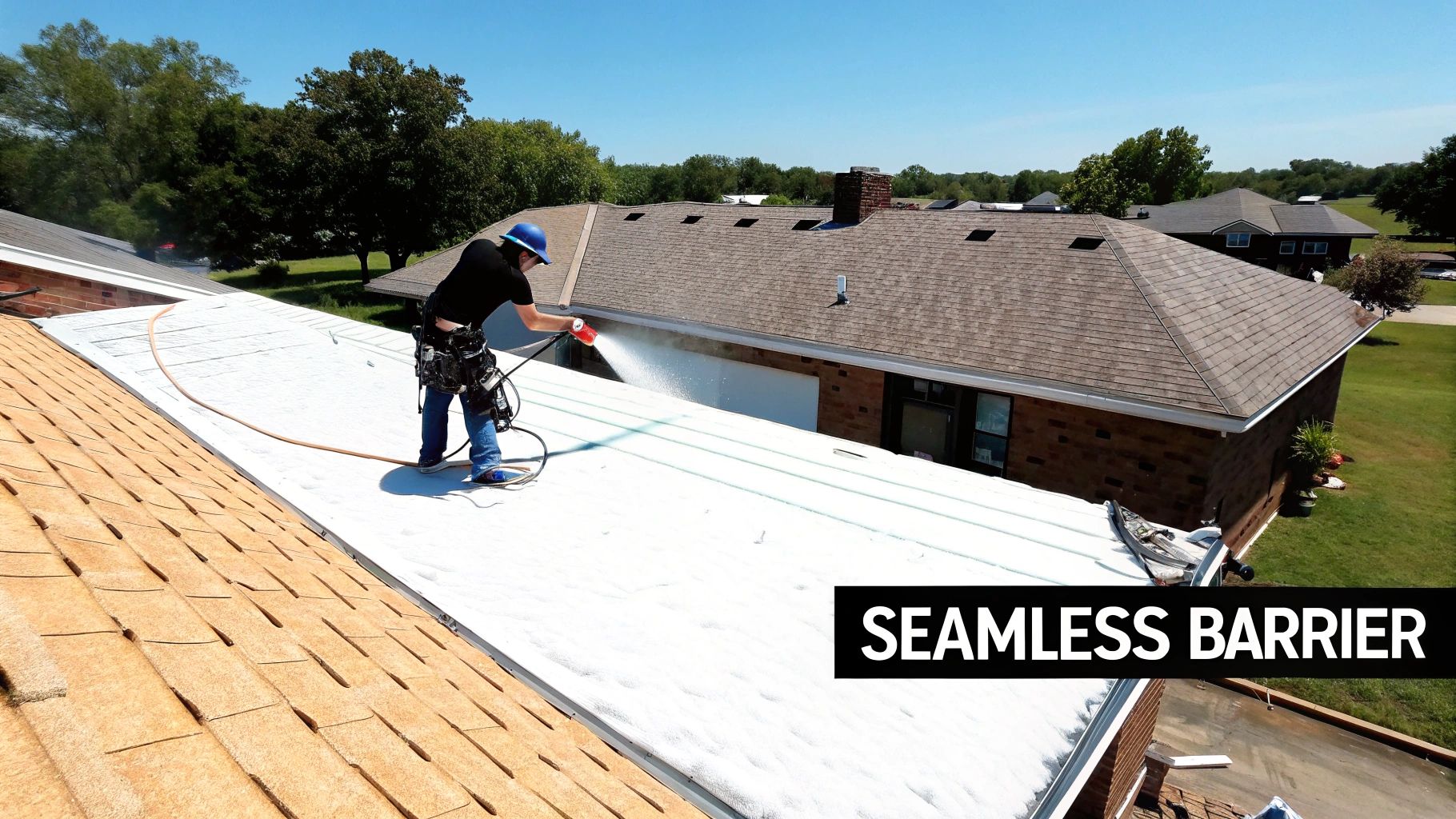
Imagine a roofing material that starts as two separate liquids, combines at the tip of a spray gun, and transforms into a solid, rock-hard shield right before your eyes. That’s the reality of an SPF roof. We’re not laying down shingles or rolling out heavy membranes; we’re creating a single, monolithic barrier that perfectly conforms to every single inch of your roof.
The process is pretty incredible to watch. We mix two liquid components—a polyol and an isocyanate—right at the nozzle. When they hit the roof surface, a powerful chemical reaction kicks off, causing the liquid to expand to more than 30 times its original volume. What’s left is a lightweight, incredibly strong, and completely seamless foam layer.
The Magic of On-Site Creation
The on-site application is what really sets SPF apart from everything else. Because we create the foam right on your roof, it bonds directly and tenaciously to the existing surface, whether it's metal, concrete, or an old built-up roof.
It flows like water around every vent, pipe, and AC curb, creating a perfect, watertight seal around these common problem areas. This self-flashing capability means we eliminate the need for extra caulking or sealants that break down over time.
This process gets rid of all the seams and joints you find in traditional roofing systems. Those seams are almost always where leaks start. With an SPF roof, you have one continuous, unbroken surface, giving you a level of waterproofing that systems relying on fasteners, glues, or heat-welded seams just can't match.
Frankly, this seamless, self-flashing characteristic is the biggest advantage of an SPF system. When you get rid of the seams, you get rid of the weakest link in almost every other roof out there—especially here in South Florida where we get hammered by heavy, wind-driven rain.
More Than Just a Waterproof Barrier
While keeping water out is job number one, an SPF roof is also one of the best insulators on the market. The dense, closed-cell structure of the foam provides an incredibly high R-value (the measure of thermal resistance) per inch. This creates a powerful thermal shield that drastically reduces the amount of heat beating down on your building.
For property owners in South Florida, this is a game-changer. It means:
- Less Strain on Your AC: Your air conditioning system doesn't have to run constantly just to keep the building cool and comfortable.
- Real Energy Savings: Less AC usage means a noticeable drop in your monthly FPL bill. Many of our clients find their new roof can pay for itself in as little as five years through energy savings alone.
- Better Indoor Comfort: The insulation helps get rid of hot spots and keeps the temperature consistent from room to room.
At the end of the day, a spray polyurethane roof isn't just a covering. It's a high-performance system that protects, insulates, and even adds a bit of structural strength, all while being perfectly suited for the challenges of our local climate.
Why Closed-Cell Foam Is the Only Choice for Your Roof
When we talk about spray foam roofing, it’s not a one-size-fits-all situation. The world of spray polyurethane foam (SPF) is really split into two camps: open-cell foam and closed-cell foam. While both have their place, only one is built tough enough to protect your property from the brutal South Florida elements. For roofing, closed-cell foam isn't just the best choice—it's the only one that makes sense.
Let me give you an analogy. Think of open-cell foam as a kitchen sponge. It’s soft, lightweight, and full of tiny, connected air pockets. This structure makes it fantastic for soaking up sound inside your walls, but what happens when a sponge gets wet? It absorbs water and holds onto it. You’d never use a sponge to protect your house from a downpour, and for that exact reason, open-cell foam has absolutely no business being on a roof.
Closed-cell foam, on the other hand, is a completely different beast. Imagine a solid, dense block of waterproof plastic. Its cells are individually sealed and packed together so tightly that nothing gets through—not air, and definitely not water. This dense, rigid structure is what gives it incredible strength and makes it a true barrier against moisture.
Structural Integrity and Moisture Defense
The real difference comes down to how each foam handles moisture and physical stress. Open-cell foam is vapor-permeable, which is a technical way of saying moisture can pass right through it. For a roof, that's a recipe for disaster, leading to a saturated roof deck, mold, and eventually, rot.
Closed-cell foam, however, is a vapor barrier. Water simply can't penetrate its tightly sealed cell structure. This is why a closed-cell spray polyurethane roof is legendary for its seamless, monolithic waterproofing. It doesn't just shed water like shingles; it completely blocks it.
A key takeaway here is that closed-cell foam actually adds significant structural strength to your roof. Its rigid, dense nature bonds everything together, reinforcing the entire roof assembly. This dramatically increases its resistance to wind uplift—a critical feature during a hurricane.
That added resilience is non-negotiable here in South Florida. Open-cell foam offers zero structural benefit. If you want to dive deeper into the impressive insulating power of this material, check out our guide on closed-cell foam R-values.
Closed-Cell vs Open-Cell Foam At a Glance
To make the distinction crystal clear, here’s a straightforward comparison of the key characteristics that set these two foam types apart. This should help you see exactly why one is for roofs and the other is for walls.
| Feature | Closed-Cell Foam (Ideal for Roofs) | Open-Cell Foam (Best for Attics/Walls) |
|---|---|---|
| Density | High-density (1.5-3.0 lbs per cubic foot) | Low-density (0.5 lbs per cubic foot) |
| Structure | Rigid, strong, and waterproof | Soft, flexible, and sponge-like |
| Water Permeability | Acts as a complete water and vapor barrier | Will absorb and hold water if exposed |
| R-Value | Very high (R-6.5 to R-7 per inch) | Good (R-3.5 to R-4 per inch) |
| Primary Use | Roofing, exterior walls, demanding environments | Interior walls, attics for sound dampening |
It’s clear which one you want protecting your building from the sky.
The market for this robust material is growing fast, and for good reason. Stricter building codes are demanding better energy efficiency, and spray foam delivers. In North America, which holds a 38.5% share of the global market, U.S. demand is expected to climb from USD 761.2 million in 2025 to USD 1.3 billion by 2035. This surge is driven by new energy codes and local retrofit policies, like those in Florida, that can cut roof removal costs by 30%. You can discover more insights about the spray polyurethane foam market to see where things are headed.
Ultimately, choosing closed-cell foam for your roof gives you a powerful combination of benefits: total waterproofing, serious structural reinforcement, and elite-level insulation. It’s a trifecta of protection that open-cell foam simply can't touch.
What an SPF Roof Actually Does for Your Building
Okay, so we've covered the science behind it. But what does a spray polyurethane roof really do for you as a property owner? The answer is a lot more than just keeping the rain out. An SPF roof system delivers some serious real-world benefits that solve the biggest headaches we face here in South Florida.
From drastically cutting your FPL bill to creating a fortress-like barrier against our infamous downpours, the advantages are immediate and they last. Let's break down the three biggest reasons this system is such a smart investment for your property.
A Truly Seamless Waterproofing Shield
Think about your average roof for a second. It's a patchwork of shingles, panels, or membranes, all fastened together with thousands of nails, screws, and seams. Every single one of those connection points is a potential leak waiting to happen. Give it a few years of South Florida sun and shifting, and those weak spots start to fail, letting water find its way in.
A spray polyurethane roof completely eliminates that fundamental problem. Because it’s sprayed on as a liquid, it creates a single, continuous, monolithic surface that's custom-fit to every inch of your roof. There are absolutely no seams, no joints, and no fasteners.
- Self-Flashing by Nature: The liquid foam flows into and around every vent, pipe, drain, and AC curb, wrapping them in a perfect, watertight seal. You're not relying on caulk or traditional flashing that will inevitably crack and fail.
- Stands Up to Ponding Water: The closed-cell foam itself is 100% waterproof. Even if you get some ponding water in low spots after a storm, it can't soak through and saturate the materials underneath.
- Built for the Long Haul: By getting rid of the weak links you find in every other roofing system, an SPF roof gives you a much more reliable and durable waterproofing solution that will protect your building for decades.
Radical Energy Efficiency and Lower Bills
In South Florida, our air conditioners work overtime, and they're the undisputed king of our energy bills. A huge chunk of that cost comes from your AC fighting the brutal solar heat that bakes your roof all day. An SPF roof attacks this problem from two angles: incredible insulation and powerful reflectivity.
First, the foam itself is one of the best insulators you can get, with a high R-value of around R-6.5 per inch. This creates a serious thermal barrier that dramatically cuts down on the heat transferring into your building. Your AC unit can finally take a break instead of running nonstop just to keep things comfortable.
Second, the whole system is topped with a highly reflective, white elastomeric coating. This isn't just for looks—it reflects up to 85% of the sun's intense heat before it even has a chance to be absorbed by your building.
This one-two punch of insulation and reflectivity is a game-changer. Studies have shown an SPF roof can slash a building's cooling costs by as much as 40%. For many property owners, the system actually pays for itself in energy savings in as little as five to seven years.
Impressive Durability and Hurricane Resilience
The final piece of the puzzle is strength. A spray polyurethane roof is surprisingly lightweight, but it's incredibly tough and resilient—especially when faced with the kind of weather we get here.
Because the foam is sprayed directly onto the roof deck, it fuses to it, creating a powerful bond that provides exceptional resistance to wind uplift. During a hurricane, the main reason roofs fail is because high winds get under the edge of a shingle or panel and rip it clean off. With a seamless SPF roof, there are no edges for the wind to grab onto, making it one of the most hurricane-resistant roofing systems you can install.
This level of performance is why roofing applications make up a massive 42.80% of the entire spray polyurethane foam market. Its ability to insulate and waterproof almost any roof shape is driving its growth all over the world, especially in places with tough climates and strict energy codes. You can discover more insights on the global SPF market to see just how big this technology has become.
How a Spray Polyurethane Roof Is Installed
A high-performance spray polyurethane roof isn't something you can just buy off a shelf. It’s a complete system that’s manufactured right on your roof by highly skilled technicians. The final result is only as good as the process—and the people—who put it all together.
Understanding these steps pulls back the curtain on the installation and really drives home why professional expertise is absolutely non-negotiable for a flawless, long-lasting roof.
Stage 1: Meticulous Surface Preparation
You can't build a strong house on a shaky foundation, and the same principle applies here. The very first, and you could argue most critical, step is preparing the existing roof. This isn’t just a quick sweep with a broom; it’s a deep-cleaning process to guarantee the new foam can form an unbreakable bond.
Our team starts by pressure washing the entire roof surface, blasting away years of dirt, grime, and any loose debris. We then address and repair any blisters, saturated areas, or other damage to the existing substrate. The whole point is to create a clean, dry, and structurally sound canvas for what comes next.
Stage 2: Applying the Bonding Primer
Once the roof is perfectly clean and dry, we lay down a specialized primer. Think of this as the ultimate "super glue" that ensures the spray foam fuses permanently to whatever material is already there, whether it's metal, concrete, or an older membrane.
Different roof materials require different primers, so a true pro will select the exact formula needed to create the strongest possible chemical link. This step is what prevents any chance of the layers separating down the road.
This is how the layers work together to deliver the incredible waterproofing, efficiency, and durability an SPF roof is known for.
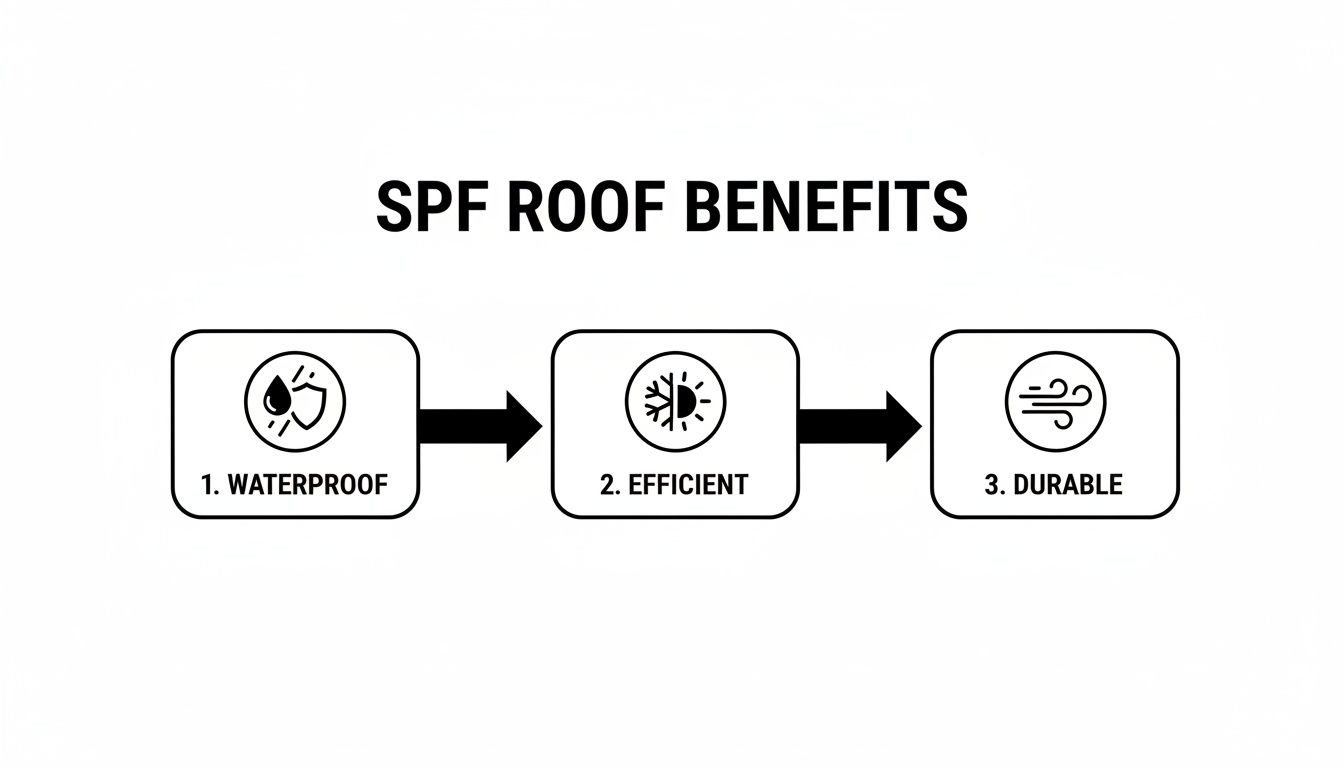
As you can see, the system's strength comes from how seamlessly each layer integrates with the next.
Stage 3: The Foam Application
Now for the main event. Our certified technicians use specialized equipment to spray a two-part liquid polyurethane foam directly onto the primed surface. The moment the liquid hits the roof, it triggers an immediate chemical reaction, expanding more than 30 times its original volume to form a solid, rigid, and completely seamless layer of insulation.
This is where true craftsmanship shines. The technician applies the foam in controlled, even passes, building it up to the specified thickness—usually 1.5 to 2 inches—to hit the target R-value and structural strength. This meticulous application is what creates the single, continuous membrane that makes a spray polyurethane roof so effective. To see how this process works on different structures, you can learn more about insulating a metal-roofed building in our detailed guide.
Stage 4: The Protective Topcoat
The final layer is just as crucial as the foam itself. Raw polyurethane foam is an amazing insulator, but it wasn't designed to handle the sun's relentless UV rays. To protect it, we apply a thick, durable layer of elastomeric coating, typically a high-solids silicone or acrylic.
This protective topcoat does two vital jobs: it shields the foam from UV degradation, and its bright white color reflects up to 85% of solar heat, which dramatically boosts the roof's energy efficiency.
We apply this coating in two separate coats to ensure complete and uniform coverage. Once cured, you're left with a tough, flexible, and brilliant white surface that’s ready to stand up to the South Florida elements for decades.
Understanding SPF Roofing Costs and Long-Term Value
When you're looking at a new roof, the initial price tag is always front and center. But with a spray polyurethane foam (SPF) roof, it's crucial to see it not just as an expense, but as a long-term investment in your building's performance and durability. While the upfront cost can be similar to other high-end roofing systems, the real story is how it pays you back over the decades.
A traditional roof replacement just hits the reset button on future problems. An SPF system is a genuine upgrade that starts delivering value from the day we finish. The conversation quickly shifts from "How much is this going to cost me?" to "What's my return on this investment?"
Breaking Down the Initial Investment
There's no single price tag for a spray polyurethane roof. The final cost is tailored to your specific building, so you're only paying for exactly what you need. Several key factors come into play.
- Roof Size and Complexity: A huge, flat warehouse roof is a different beast than a smaller roof crowded with vents, pipes, and AC units. The more complex the layout, the more time and material are needed to get it right.
- Foam Thickness: We're not just putting down a roof; we're adding a powerful layer of insulation. The R-value you need determines the foam's thickness. Here in South Florida, we typically install 1.5 to 2 inches to create a serious thermal barrier against our relentless sun.
- Substrate Condition: The shape your current roof is in matters a lot. If it's clean and stable, prep work is minimal. But if there's damage, ponding water, or saturated materials, we'll need to address that first before applying the foam.
- Access to the Roof: How easy is it to get our crew and equipment up there? Straightforward access versus a complex setup can influence the project's bottom line.
The real financial power of an SPF roof lies in its ability to generate returns. Think of it less like a maintenance expense and more like an energy-saving appliance for your entire building.
Calculating Your Long-Term Return on Investment
The initial cost is only half of the story. A spray polyurethane roof delivers its most compelling value through sustained, long-term savings that directly impact your bottom line.
First and foremost are the energy savings. By creating a seamless, super-insulated shield over your building, an SPF roof can slash your cooling costs by up to 40%. In our sweltering, humid climate, that adds up to thousands and thousands of dollars over the life of the roof. This drive for efficiency is a big reason North America holds a 38.5% revenue share in the global SPF market. For a property owner in South Florida, a spray polyurethane foam roof can cut air leakage by up to 50%, leading to a huge drop in your FPL bill. You can find out more by exploring the latest research on the spray polyurethane foam market.
Then there's the minimal upkeep. Forget about replacing shingles or constantly patching seams. A simple annual inspection and cleaning are usually all it takes to keep things in top shape. Every 10-15 years, a quick re-coat of the protective top layer renews the roof's waterproofing and UV protection, essentially resetting its lifespan for a fraction of what a full replacement would cost.
When you add it all up—the energy savings, low maintenance, and longevity—the lifecycle cost of an SPF roof is often 10% to 50% lower than traditional alternatives. For a deeper dive into the numbers, check out our guide on the cost of spray foam insulation.
How to Choose a Qualified SPF Roofing Contractor
The high-performance materials we’ve discussed are only one half of the equation. The other, more critical half is the skill of the team installing your spray polyurethane roof. With SPF, the roofing system is literally manufactured on-site, right on top of your building. This means the contractor's expertise, precision, and training directly determine its success and longevity.
An amateur can turn the best materials into a costly, leaking failure. Choosing the right contractor isn't just a good idea—it's the most important decision you'll make in this process. You're hiring a mobile manufacturing plant that will operate on your roof, and that requires a level of professionalism that goes far beyond traditional roofing.
You need a partner who protects your investment and delivers a perfect, high-performance roof that lasts for decades.
Your Contractor Vetting Checklist
Finding a true SPF professional means looking for specific credentials that prove their expertise. Don't be afraid to ask direct questions and demand documentation. Use this checklist to separate the real experts from the rest.
Proper Licensing and Insurance: This is non-negotiable. Verify they hold the correct state and local roofing licenses and carry both general liability and worker’s compensation insurance. This protects you from any liability if an accident happens on your property.
Manufacturer Certifications: Top-tier material manufacturers don't let just anyone spray their products. They require contractors to go through rigorous training and certification programs. Ask to see proof of their current certifications from the manufacturers of the foam and coatings they plan to use.
A Proven Local Portfolio: Ask for a list of recent SPF roofing projects they've completed right here in South Florida. A qualified contractor will be proud to show you their work and give you references you can actually call. Better yet, drive by a few of the properties to see the quality for yourself.
When you look at their past work, check for smooth, uniform surfaces. You shouldn't see noticeable drips, an uneven "popcorn" texture, or sloppy overspray on nearby walls and windows.
Red Flags to Watch Out For
Just as important as knowing what to look for is recognizing the warning signs of an inexperienced or untrustworthy contractor. Be wary of anyone who does the following.
An experienced contractor understands the science behind the application. They can explain why they do what they do—from selecting the right primer for your specific roof substrate to constantly monitoring weather conditions like temperature and humidity, which are absolutely critical for a successful installation.
Pay attention to how they run their business, too. A professional roofing company might use tools like an AI receptionist for general contractors to make sure they never miss a client's call, even when the crew is on a job site. That level of organization often says a lot about their overall professionalism and commitment to service.
Finally, keep an eye out for these deal-breakers:
- Vague or Unprofessional Quotes: A proper quote is detailed. It should clearly break down material costs, labor, and the entire scope of work.
- Lack of Safety Protocols: A professional crew always prioritizes safety. They'll have the right equipment and clear procedures to manage risks like wind and overspray.
- High-Pressure Sales Tactics: A confident expert will educate you and answer your questions, not try to rush you into signing a contract.
Answering Your Top Questions About Spray Polyurethane Roofs
Making a big decision like replacing your roof naturally comes with a lot of questions. Even after you understand the basics, you want to be sure you're making the right call for your property. It's a major investment, and you deserve to feel completely confident.
To help you get there, we’ve put together a few of the most common questions we hear from South Florida property owners when they're considering a spray polyurethane roof. Here are some clear, straightforward answers.
How Long Does a Spray Polyurethane Roof Last in the Florida Sun?
With proper installation and basic maintenance, you can expect an SPF roof to last 20 to 30 years—and often much longer. The real secret to its longevity is the tough, reflective topcoat that shields the foam from the sun's brutal UV rays. Think of it as industrial-strength sunscreen for your roof.
About every 10-15 years, that coating gets a simple and affordable "re-coat." This quick process basically hits the reset button on your roof's lifespan without the massive expense and hassle of a full tear-off. It’s what makes this system such a sustainable, long-term asset.
Can You Walk on a Spray Foam Roof?
Absolutely. The closed-cell foam we use for roofing is incredibly dense and durable. It can easily handle normal foot traffic from someone servicing an AC unit or cleaning out the gutters. In fact, it's far more puncture-resistant than many other flat roofing materials.
If you have areas with heavy equipment or constant foot traffic, we can install reinforced walkway pads. These distribute the weight and add an extra layer of protection, keeping the roof in perfect shape no matter what.
Is a Spray Polyurethane Roof an Eco-Friendly Choice?
Yes, it's considered a green roofing solution for a few key reasons. The biggest win for the environment is its incredible insulating power. By drastically cutting down your building's energy use for cooling, it shrinks your carbon footprint right away.
Plus, because we almost always apply the foam directly over the existing roof, we're keeping tons of old roofing materials out of our local landfills. Add in the long lifespan and renewable re-coating process, and you’re generating far less waste over the decades compared to the endless cycle of tearing off and replacing traditional roofs.
An SPF roofing system is a prime example of sustainable building practices. It reduces energy waste, minimizes landfill contributions, and extends the functional life of the existing structure, making it a responsible choice for any property owner.
How Well Does an SPF Roof Handle Hurricanes?
It’s one of the best systems you can have. The foam is sprayed as a liquid, so it expands and fuses directly to the roof deck, creating a single, seamless, and solid surface. It molds perfectly around every pipe, vent, and penetration.
This monolithic adhesion creates incredible resistance to wind uplift, which is what causes most roofs to fail during a hurricane. There are simply no seams, edges, or fasteners for the wind to grab onto and start peeling back. That powerful bond makes a spray polyurethane roof one of the toughest, most resilient options for hurricane-prone areas like South Florida. When choosing an SPF contractor, you'll want one who is responsive and organized; for instance, some general contractors even use an AI receptionist for general contractors to ensure they never miss a call while on a job site.
Ready to see how a high-performance spray polyurethane roof can protect and enhance your South Florida property? The team at Airtight Spray Foam Insulation is here to provide a detailed, no-obligation assessment and answer any other questions you may have.